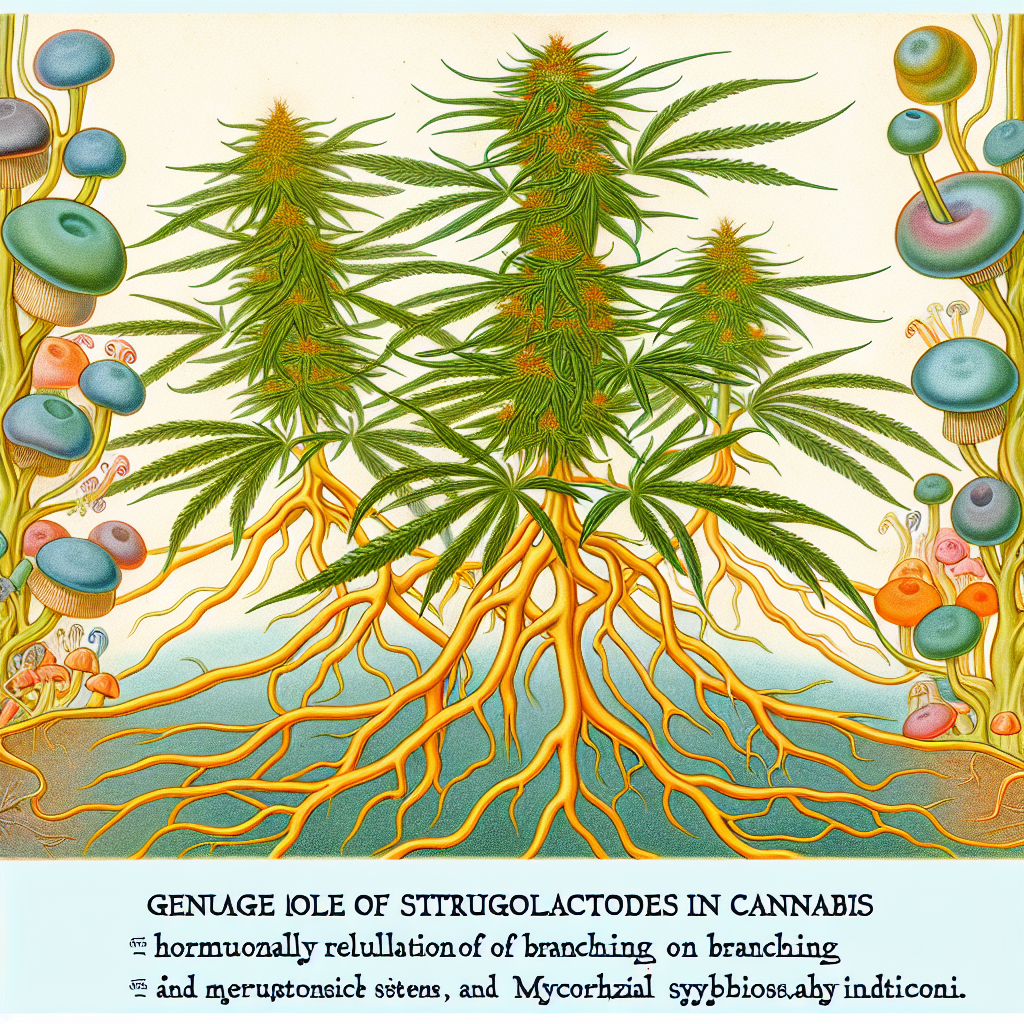
The Role of Strigolactones in Cannabis: Hormonal Regulation of Branching and Mycorrhizal Symbiosis
Introduction
Recent advances in plant hormone research have significantly deepened our understanding of how internal signaling molecules influence plant behavior and interactions with their environment. Among these signaling compounds, strigolactones—a specialized group of carotenoid-derived hormones—have gained attention for their dual role in controlling shoot branching and facilitating beneficial relationships with soil fungi.
In Cannabis sativa, these hormones have become increasingly relevant as cultivators seek more efficient, sustainable methods of farming. Originally discovered for their role in promoting parasitic weed seed germination, strigolactones have since been recognized for their broader biological function, including *suppressing axillary bud development* (hence impacting the plant’s branching habit) and facilitating colonization by arbuscular mycorrhizal fungi (AMF), which enhances access to vital soil nutrients, especially phosphorus.
For indoor cannabis growers looking to optimize plant shape for light absorption and airflow, and for outdoor cultivators focused on soil health and organic methods, understanding strigolactones holds major promise. By influencing how cannabis plants form branches and interact with microorganisms in the soil, strigolactones offer a powerful avenue for improving both yield and quality.
Cannabis producers aiming for medical-grade products may also benefit. Recent research hints that efficient nutrient uptake via mycorrhizal networks supported by strigolactones may positively influence the synthesis of key therapeutic compounds. Moreover, using strigolactone-friendly cultivation techniques could reduce the industry’s dependence on synthetic fertilizers—enhancing both sustainability and purity in the final product.
Features: Medical and Professional Studies
The function of strigolactones has been well-characterized in traditional model organisms like Arabidopsis, rice, and tomato. These plants have helped researchers map the pathways by which strigolactones inhibit excessive lateral branching. In a pivotal study published in Nature, Gomez-Roldan et al. (2008) revealed that plants deficient in strigolactones showed disproportionate branching due to dormant buds becoming active without hormonal suppression.
In the context of cannabis, this has significant implications. Too much branching can crowd grow spaces, reduce light penetration, and impair airflow—contributing to mold issues and inconsistent bud development. Therefore, understanding—and possibly manipulating—strigolactone levels could help growers maintain ideal plant shape without extensive training or pruning.
Emerging studies tailored to Cannabis sativa are beginning to validate this framework. A 2020 paper published in Plants highlights the complex hormone interplay involved in cannabis morphogenesis. While research is ongoing, preliminary results suggest that hormone modulation—possibly even through nutrient additions or microbial stimulants—can affect shoot formation and flowering patterns in cannabis.
An equally important function of strigolactones is in establishing mycorrhizal symbiosis. Research in Nature by Akiyama et al. (2005) and follow-up work in Agronomy (Bücking and Kafle, 2015) demonstrate that strigolactones secreted into soil by roots serve as chemical signals that trigger AMF hyphae branching, allowing symbiosis initiation. Once colonized, these fungi extend the root system’s reach, enhancing access to water and minerals like phosphorus and nitrogen.
This is especially valuable for cannabis grown in hydroponic systems or coco coir, where nutrient retention and microbial diversity are often limited. By integrating AMF inoculants and promoting strigolactone-supported colonization, cultivators can reduce their dependence on chemical fertilizers while improving plant vigor and product purity.
In fact, strigolactone levels are influenced by environmental cues—particularly phosphate levels in the soil. This opens up strategies for growers to manipulate strigolactone biosynthesis naturally by modulating substrate composition. Cannabis plants, when exposed to low phosphate conditions, tend to increase strigolactone production, which in turn increases their symbiotic affinity to AMF.
For breeders targeting the medical market, this ability to optimize nutrient uptake through hormone pathways offers a dual benefit: stronger plants with minimal reliance on external inputs and increased production of desirable phytochemicals. Selecting or engineering cultivars with robust strigolactone signaling is emerging as a sophisticated tactic in medical cannabis genomics and agronomy.
Conclusion
As the cannabis sector evolves into a science-driven agricultural industry, understanding hormonal pathways like that of strigolactones becomes essential. Their role in modulating plant shoot architecture and enabling critical microbial symbioses with soil fungi provides a foundation for improving not only yield and efficiency but also sustainability and therapeutic quality.
Future cannabis cultivators will likely incorporate strigolactone-related strategies into standard practices—from breeding selections to feeding regimens and microbial inoculations. Subtle manipulations of this hormone could unlock more resilient genetics, reduce farming inputs, and stabilize the production of cannabinoids and terpenes—resulting in clean, potent, and consistent end-products for both recreational and medical consumers.
References
– Koide, R. T., and Mosse, B. (2004). A history of research on arbuscular mycorrhiza. Mycorrhiza.
Concise Summary
Strigolactones are plant hormones playing a pivotal role in cannabis cultivation by regulating branching and promoting symbiosis with arbuscular mycorrhizal fungi (AMF). These phytohormones help shape plant architecture, essential for indoor growing, and drive nutrient efficiency, notably phosphorus uptake, critical for plant health and cannabinoid production. Through optimized strigolactone signaling, cultivators can reduce input of synthetic fertilizers and improve crop resilience. Enhanced understanding and application of strigolactone pathways offer sustainable, high-yielding strategies for both medical and commercial cannabis operations—linking hormone science with real-world cultivation benefits.