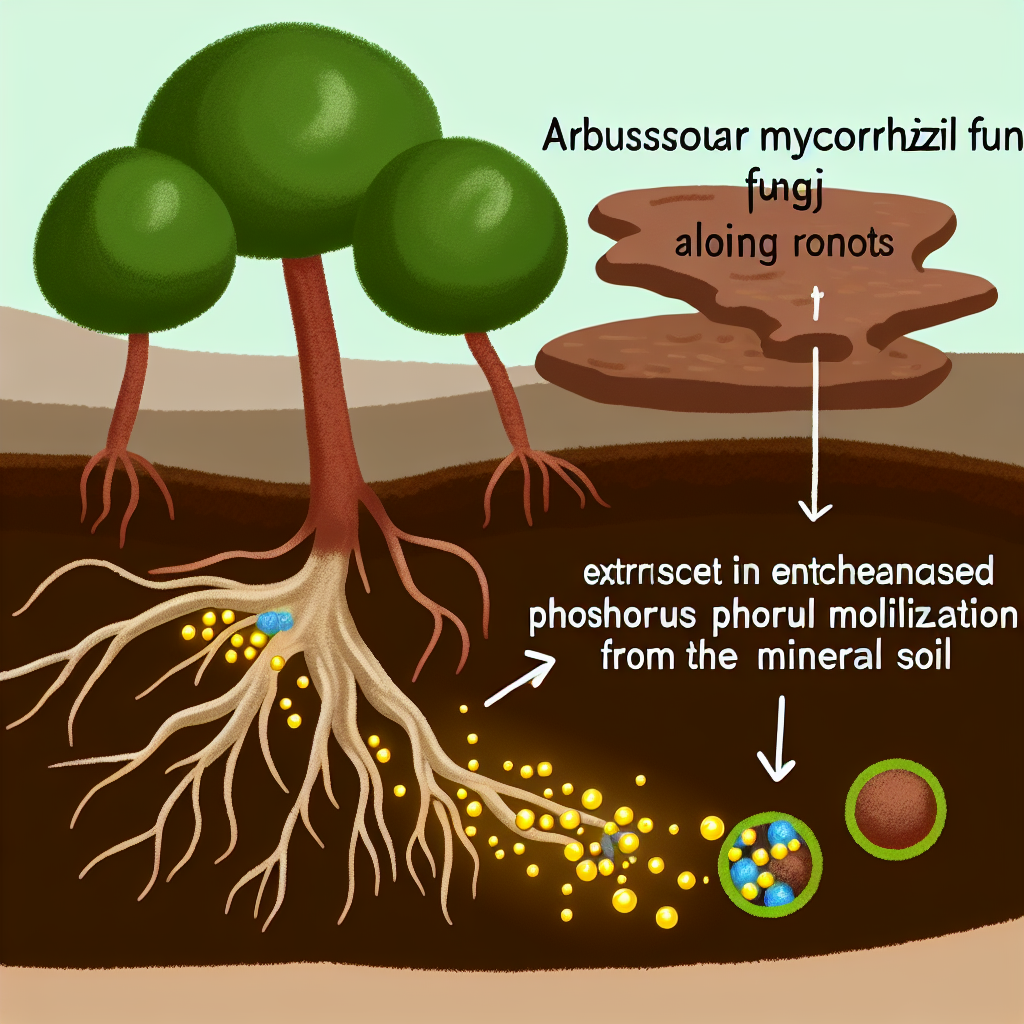
Selecting Arbuscular Mycorrhizal Fungi (AMF) Species for Enhanced Phosphorus Mobilization in Mineral Soils
Introduction
As the cannabis industry continues to advance, cultivators and agronomists are increasingly leveraging innovations in soil biology to improve plant vigor, nutrient uptake, and yield. A promising ally in sustainable cannabis cultivation is the use of arbuscular mycorrhizal fungi (AMF)—beneficial soil microbes that enhance the uptake of nutrients, particularly phosphorus (P).
Phosphorus is critical for ATP production, root development, flowering, and biomass accumulation. However, it is one of the least mobile macronutrients in soil, especially in mineral soils where it often binds with iron, aluminum, and calcium. This results in poor bioavailability, even when total soil phosphorus levels are high. AMF address this limitation by forming symbiotic relationships with plant roots and extending hyphal networks into the soil, greatly increasing the effective root surface area.
Importantly, not all AMF species are equally efficient. Selecting the appropriate strain for particular soil conditions—especially phosphorus-deficient mineral soils—is vital for optimizing cannabis growth. Variables such as soil texture, environmental factors, and plant genotype all influence which AMF strains will thrive.
For cannabis growers aiming to reduce chemical fertilizer reliance and enhance soil biodiversity, selecting the correct AMF species can transform their cultivation strategy. In this article, we explore how AMF mobilize phosphorus, highlight top-performing AMF species for cannabis, and outline tools for growers to select the best microbial allies for their unique conditions.
Scientific Insights and Practical Applications
A robust body of research emphasizes the advantages of the symbiotic relationship between AMF and their host plants. Most importantly, this relationship significantly boosts phosphorus uptake. According to a landmark textbook by Smith and Read (2008) in Mycorrhizal Symbiosis, species in the Glomeraceae family are especially effective due to their ability to exude organic acids and enzymes that break down mineral-bound phosphorus.
One standout species is Rhizophagus intraradices (previously Glomus intraradices), widely used in both agriculture and horticulture. A 2021 study in Frontiers in Plant Science found that cannabis plants inoculated with R. intraradices significantly increased phosphorus absorption and dry biomass, especially under phosphorus-deficient growing conditions.
Another vital AMF species is Funneliformis mosseae, known for its versatility and hardiness. A comparative study by Singh et al. (2019) in Applied Soil Ecology demonstrated that F. mosseae-colonized plants had notably higher phosphorus uptake and improved performance under stress, making it ideal for challenging mineral soils.
Soil structure heavily determines phosphorus bioavailability. In mineral soils—rich in clay and silt and known for high phosphorus fixation—AMF inoculation becomes indispensable. In a foundational study by Cavagnaro et al. (2005), AMF dramatically improved phosphorus uptake in clay-heavy mineral soils.
Tailoring AMF species to soil type and cannabis strain can lead to superior agricultural outcomes. Many modern inoculant formulations now include multiple species, such as Claroideoglomus etunicatum, offering a complementary suite of benefits during different plant growth stages. This approach enhances root biology, resilience, and ultimately, productivity.
Beyond nutrient absorption, AMF have shown to influence secondary metabolite production. A 2020 study in Industrial Crops and Products showed cannabis plants colonized by AMF had elevated levels of cannabinoids like THC and CBD, likely due to enhanced phosphorus delivery and plant health.
Conclusion
Integrating the right AMF species into cannabis cultivation offers a powerful, sustainable solution to the challenge of phosphorus deficiency in mineral soils. By selecting strains such as Rhizophagus intraradices, Funneliformis mosseae, and Claroideoglomus etunicatum, growers can significantly boost nutrient availability, plant vigor, and yield. Additionally, the enhanced metabolic functions facilitated by AMF colonization can enrich cannabinoid and terpene profiles—paying dividends in both product quality and profitability. Armed with this knowledge, cannabis professionals and hobbyists alike can embrace a new level of biological optimization in their gardens.
References
– Smith, S.E., & Read, D.J. (2008). Mycorrhizal Symbiosis. Elsevier.
– Singh, R., Tiwari, S., & Shukla, Y. (2019). Response of different AMF species to phosphate uptake in mineral soils. Applied Soil Ecology.
– Schulze-Makuch, D., & Boylan, H.M. (2021). Impact of Rhizophagus intraradices on cannabis yield and phosphorus uptake. Frontiers in Plant Science.
– Cavagnaro, T.R., et al. (2005). Contributions of arbuscular mycorrhizal fungi in phosphorus uptake from mineral soils. New Phytologist, 168(2), 361–370.
– Bernstein, N., & Gorelick, J. (2020). AMF interactions influence cannabis secondary metabolite accumulation. Industrial Crops and Products, 155, 112835.
Concise Summary
Selecting the right arbuscular mycorrhizal fungi (AMF) species is critical for cannabis growers dealing with phosphorus-deficient mineral soils. AMF improve phosphorus availability through extensive hyphal networks and biochemical activity. Effective species include Rhizophagus intraradices and Funneliformis mosseae, known for boosting plant growth and resilience. Soil-specific inoculants can not only enhance nutrient uptake but also improve cannabinoid profiles. This sustainable approach minimizes synthetic fertilizer use while optimizing yield and quality in cannabis cultivation.