Designing Cannabinoid Carbonate Prodrugs for Improved Water Solubility and Controlled Release
Introduction
As the use of medical cannabis expands and therapeutic applications diversify, a critical obstacle hinders consistent drug efficacy — cannabinoid bioavailability. Compounds such as tetrahydrocannabinol (THC) and cannabidiol (CBD) are hydrophobic, meaning they exhibit poor water solubility. This limits their effective absorption in the gastrointestinal tract and contributes to unreliable therapeutic outcomes. Hence, the development of sophisticated cannabinoid delivery methods is crucial for improving both consistency and efficacy in cannabis-based therapies.
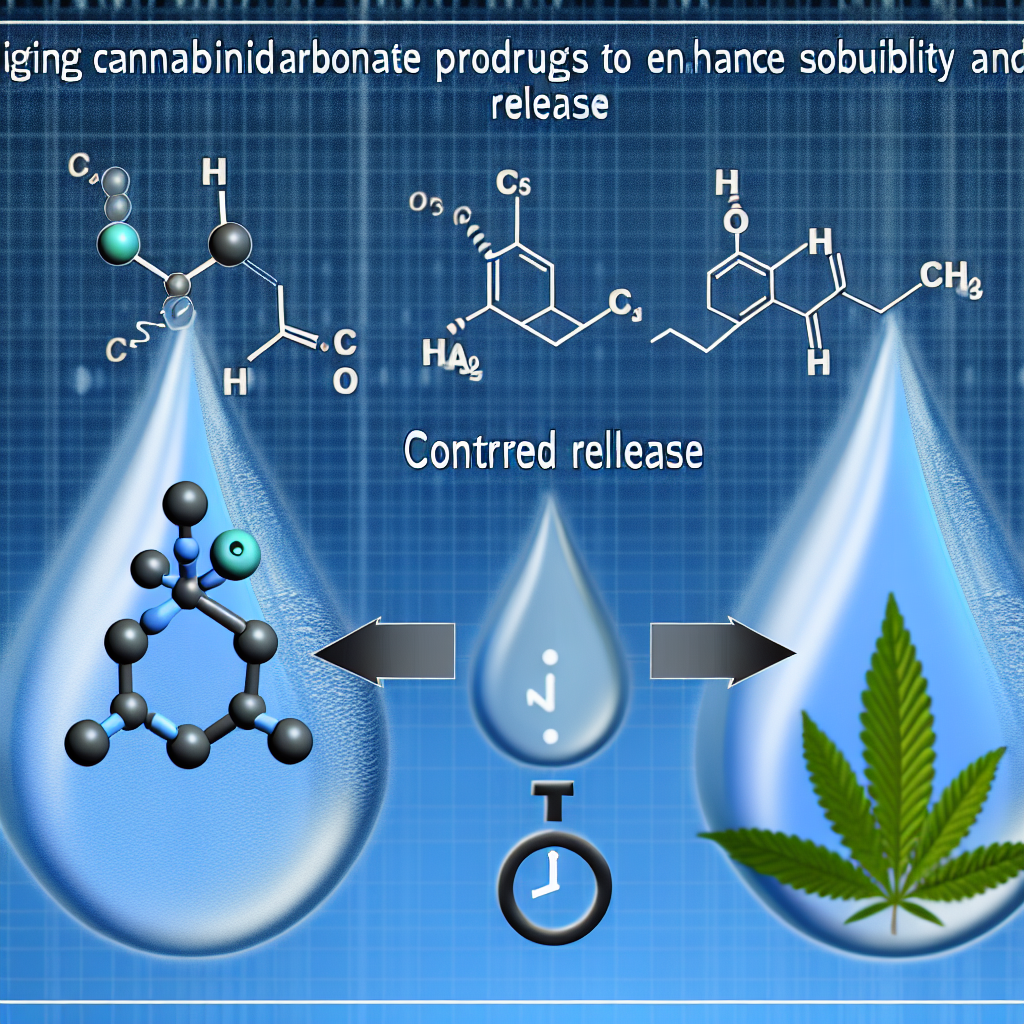
A promising solution lies in the innovation of cannabinoid carbonate prodrugs. These are pharmacologically inactive compounds designed to transform into the active form post-administration. By chemically linking a carbonate group to active cannabinoids, scientists are enhancing their solubility in water, enabling more controlled onset and releasing the therapeutic agent gradually.
These carbonate prodrug linkages are enzymatically cleaved—primarily by carboxylesterases—into their active forms in vivo. This modification enhances drug stability during storage and manufacturing while also tailoring pharmacokinetic behavior. It allows personalized control over how quickly and for how long a patient experiences effects.
For the cannabis industry, this molecular approach can be translated into a diverse range of new delivery technologies—such as water-soluble beverages, injectables, or tablets—offering better precision dosing. For the medical field, carbonate prodrugs offer a much-needed avenue toward transforming cannabis therapy into predictable, pharmaceutical-grade treatments with validated dosing standards.
As the market increasingly demands microdosing, consistent delivery, and long-duration effects, this prodrug strategy paves the way for scientific advancement. It supports emerging compliance with more stringent regulatory standards and aligns cannabis therapeutics with contemporary pharmaceutical protocols.
Features
Recent breakthroughs and intellectual property filings have spotlighted carbonate prodrug technology as a powerful innovation in cannabinoid drug development.
One of the foundational developments is the patent, US10188613B2, titled “Cannabinoid prodrugs and methods of use.” This patent presents a class of cannabinoid carbonate complexes that dissolve efficiently in water while maintaining therapeutic potency after enzymatic activation.
In a notable 2019 study published in the Journal of Medicinal Chemistry, researchers synthesized CBD-carbonate derivatives that displayed markedly improved water solubility. Laboratory tests with human carboxylesterase Type 1 (hCE1) demonstrated controlled hydrolysis, where the carbonate compounds reliably released CBD within minutes to hours, depending on the chemical structure. This is particularly beneficial for formulating both fast- and slow-acting therapies.
In a separate investigation, Dr. Alex Makriyannis and his team at Northeastern University explored dual prodrug systems. By attaching targeting molecules such as glucose or amino acids to cannabinoid-carbonate structures, they created targeted delivery mechanisms that enhance drug uptake in specific tissues. This innovation is especially promising for cancer or inflammation treatments, where drug specificity can improve therapeutic outcomes while minimizing off-target side effects.
Furthermore, pharmaceutical companies like Zynerba Pharmaceuticals and Emerald Health have begun clinical investigations into cannabinoid prodrug formulations. These products, in early-stage trials, aim to offer prescription-grade cannabinoid treatments for conditions such as epilepsy, anxiety, and neurodegenerative disorders—where standardization and bioavailability are paramount.
Another vital advantage of carbonate functional groups is their resistance to early degradation. Upon oral administration, carbonate cannabinoid prodrugs are not immediately broken down by gastrointestinal enzymes. This delayed activation prolongs the half-life of cannabinoids in the body, allowing for once-daily—or potentially weekly—dosing strategies rather than multiple inputs per day.
Lastly, advanced formulations such as nanoemulsions are being developed using these carbonate prodrugs. By transforming cannabinoids into water-soluble forms without requiring surfactants or harsh preservatives, researchers are unlocking exciting future applications in cannabis-infused beverages and wellness supplements. These nanoemulsions showcase benefits like improved shelf stability, faster onset, and consumer convenience.
Collectively, the marriage of prodrug chemistry and cannabinoid medicine is shifting from the research bench to real-world applications—heralding a fundamental change in how THC and CBD are administered and experienced.
Conclusion
Carbonate prodrugs of cannabinoids represent a groundbreaking shift in therapeutic cannabis delivery, overcoming key challenges related to solubility, controlled release, and pharmacokinetics. By enabling consistent and predictable drug action, they serve as a keystone in transitioning cannabis therapy from artisanal practice to evidence-based, pharmaceutical science.
This innovation supports the development of precise dosing platforms for both chronic and acute medical needs. With increasing innovation across academia, biotech startups, and clinical practice, carbonate prodrugs are poised to play a central role in next-generation cannabinoid medicines.
References
– Cannabinoid prodrugs and methods of use, US Patent US10188613B2
– Beletskaya, I., et al. (2019). “CBD-derived carbonate prodrugs…” Journal of Medicinal Chemistry
– Makriyannis, A. et al., “Target-directed cannabinoid prodrugs.” ACS Chemical Neuroscience
– Zynerba Pharmaceuticals – Pipeline Overview
– Emerald Health Therapeutics – Product R&D Focus
For more science-backed cannabis formulation insights, biotech developments, and product innovation, visit Bluntys.com.
Concise Summary
Carbonate prodrugs of cannabinoids like THC and CBD are revolutionizing drug delivery by improving water solubility, enabling controlled release, and enhancing bioavailability. These chemically modified compounds remain inactive until enzymatically activated in the body, offering consistent therapeutic levels with fewer doses. Widely studied by research institutions and now explored by biotech firms, this delivery approach opens new markets for beverages, tablets, and injectables. As regulatory scrutiny increases, carbonate prodrugs may offer the pharmaceutical-grade precision necessary for the next generation of cannabis-based therapies.