Reverse Osmosis and Deionization in Hydroponics: Managing Water Purity to Prevent Nutrient Lockout
Introduction
In the intricate world of hydroponics, the art of growing plants without soil, water quality emerges as a critical factor influencing plant health and yield. As cannabis cultivation increasingly turns to hydroponic systems due to their efficiency and potential for controlled growth, understanding the role of water purity is essential. This is where the methods of reverse osmosis (RO) and deionization (DI) come into play, offering solutions to the challenges posed by water impurities.
Nutrient lockout is one such challenge that haunts many growers. This phenomenon occurs when plants are unable to absorb essential nutrients, regardless of their availability in the growing medium. The culprit often lies in the water, where dissolved solids, minerals, and other contaminants disrupt nutrient uptake. Excess calcium or magnesium, or even chlorine in water, can lead to nutrient lockout, severely affecting plant health and yield.
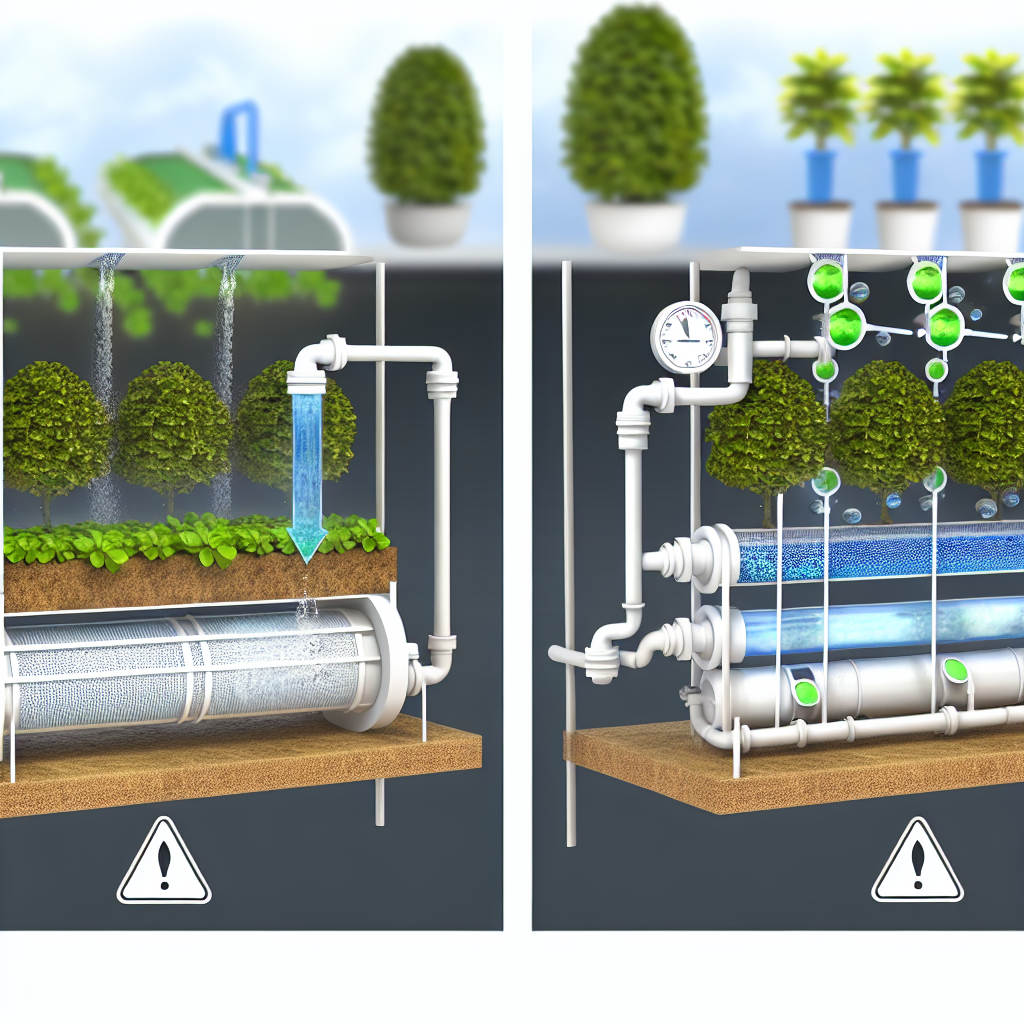
Reverse osmosis and deionization stand out as effective methods to manage water quality and prevent these nutrient uptake issues. Reverse osmosis works by pushing water through a semipermeable membrane, filtering out contaminants like heavy metals, sediments, and salts. This process removes up to 99% of the impurities, providing a clean slate for nutrient mixing. Deionization, on the other hand, involves ion exchange resins that remove charged particles, making the water even more pure.
Adding a reverse osmosis system or a deionization unit can significantly benefit cannabis growers. These systems provide reliable means to eliminate unwanted minerals and impurities, allowing for precise nutrient management. This precision reduces the risk of lockout and promotes healthier, more vigorous plant development. As the demand for quality cannabis continues to climb, understanding and applying these water purification technologies becomes increasingly important for both personal growers and large-scale operations.
Features
Several studies underline the significance of water quality in hydroponics and its impact on nutrient absorption. A study published in the [Journal of Plant Nutrition](https://www.tandfonline.com/doi/abs/10.1080/01904167.2016.1145020) highlights that water with high dissolved salts can significantly interfere with plant nutrient uptake, emphasizing the need for pure water in hydroponic systems.
Reverse osmosis has been extensively studied for its effectiveness in improving water quality. The [Water Science & Technology Journal](https://iwaponline.com/wst/article/80/1/1/70710) published findings showcasing RO systems’ ability to consistently deliver high-quality water by removing up to 95-99% of contaminants. This level of purification ensures that plants receive precisely the nutrients they need, without interference from impurities.
Deionization further refines water by targeting ionic contaminants. According to research in the [Desalination and Water Treatment Journal](https://www.deswater.com/articles-abstract.php?id=6586), water treated through deionization showed marked improvements in plant growth and nutrient uptake efficiency compared to untreated or less treated water sources. The process effectively eliminates salts that can cause nutrient lockout, allowing growers to finely tune nutrient solutions to match plant needs.
In the realm of cannabis cultivation, maintaining optimal nutrient availability is paramount for producing potent flowers. An article in [Cannabis Science and Technology](https://www.cannabissciencetech.com/view/water-quality-management-cannabis-cultivation) underscores the importance of water quality management. The piece emphasizes that the use of RO and DI systems helps prevent nutrient imbalance, a common issue that can degrade the quality and potency of cannabis.
Conclusion
Understanding and managing water purity through reverse osmosis and deionization can significantly enhance nutrient uptake and prevent the pitfalls of nutrient lockout in hydroponic systems. As cannabis cultivation faces increasing scrutiny for quality and consistency, employing these purification technologies enables growers to optimize plant health and maximize yields. By investing in water quality, cultivators can ensure that their crops receive the full nutritional benefits, leading to healthier and more productive plants.
Concise Summary
Managing water purity through reverse osmosis (RO) and deionization (DI) is crucial in hydroponic systems to prevent nutrient lockout, a condition where plants can’t absorb nutrients due to impurities like dissolved solids and minerals in water. These purification methods remove contaminants, ensuring plants receive essential nutrients without interference. Empirical studies confirm the effectiveness of RO and DI in improving plant nutrient absorption and growth, particularly in cannabis cultivation. As demand for quality cannabis rises, enhancing water quality becomes a key aspect for personal and commercial growers to maximize yield and plant health.