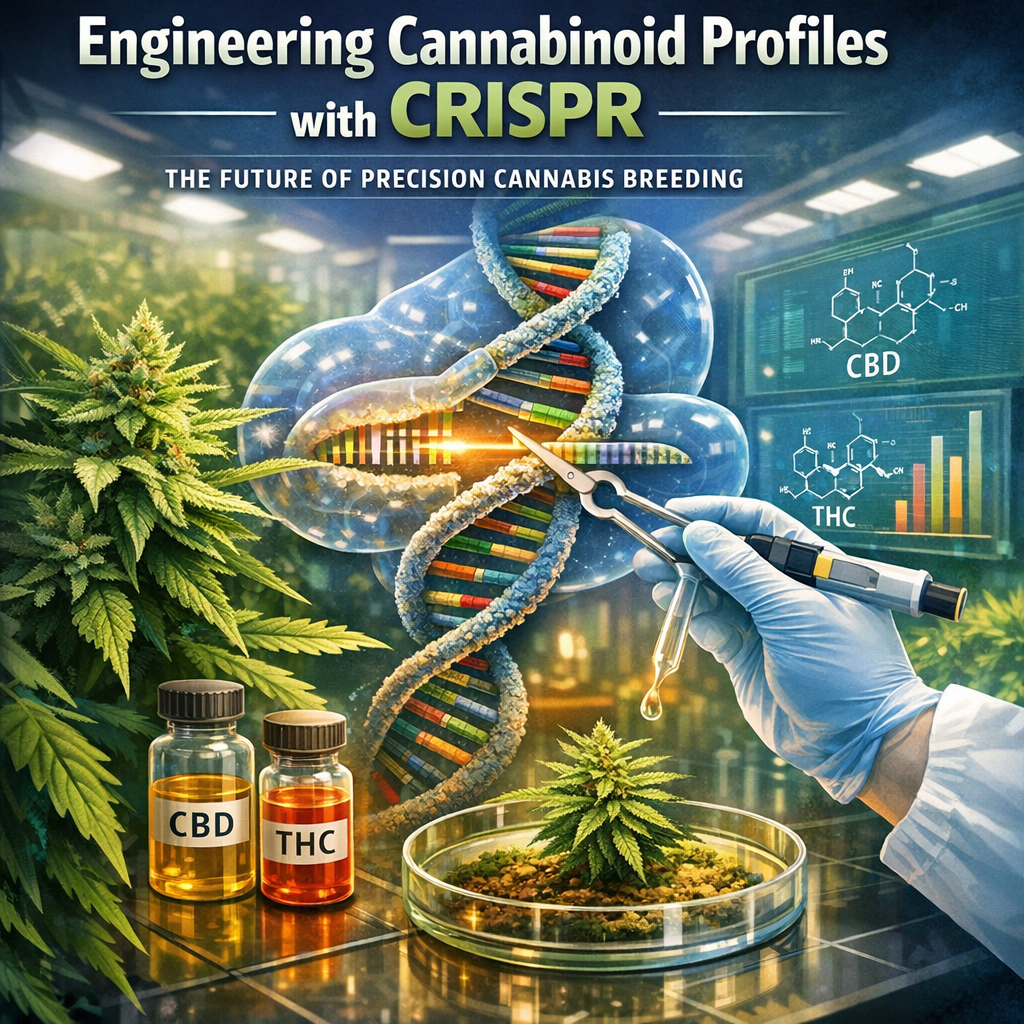
Harnessing CRISPR Technology: Pioneering Genetic Enhancements in Cannabis for Precision Therapeutics
Introduction
The convergence of medical science and technological innovation on an unexpected frontier: cannabis. This plant has been utilized for thousands of years for its medicinal properties, and recent advances are set to redefine its scope and utility. At the forefront of this transformation is CRISPR— Clustered Regularly Interspaced Short Palindromic Repeats—a groundbreaking gene-editing technology heralded for its precision and efficiency. As the world gains a deeper understanding of cannabis’ potential in treating a myriad of health conditions, the application of CRISPR technology promises to enhance its therapeutic efficacy significantly.
Cannabis possesses over 100 cannabinoids—chemical compounds that interact with receptors in the brain and body. The two most studied cannabinoids, THC (tetrahydrocannabinol) and CBD (cannabidiol), have distinct physiological effects. THC is known for its psychoactive properties, while CBD is lauded for its anti-inflammatory and analgesic benefits. However, with CRISPR technology, the marijuana plant’s genetic blueprint can be altered to optimize cannabinoid production, enhance yield, and create strains with targeted therapeutic benefits.
The possibilities with CRISPR extend beyond mere optimization. Imagine a future where cannabis strains are custom-grown to treat specific medical conditions or where unwanted side effects of certain cannabinoids are entirely eliminated. By enabling targeted genetic modifications, CRISPR can facilitate the creation of specialized strains for conditions ranging from chronic pain to epilepsy, mental health disorders, and even cancer treatment.
This technological breakthrough isn’t just important for consumers but also holds significant implications for cannabis cultivators and medical professionals. Cultivators can develop disease-resistant plants with greater yields, thus ensuring consistent supply. For medical professionals, strains with a precise cannabinoid profile could offer more predictable therapeutic outcomes, improving patient care. As cannabis continues to be integrated into modern medical practices, the synergy between CRISPR and cannabis cultivation represents a new epoch in precision therapeutics.
Features
The interface of CRISPR technology and cannabis cultivation is a rapidly evolving field of study. Numerous research efforts are already unlocking potential avenues for innovative cannabis production.
One seminal [study](https://www.uq.edu.au) published by the University of Queensland explored the application of CRISPR in selectively breeding cannabis plants with enhanced medicinal properties. The researchers successfully modified the genome of cannabis to facilitate the increased production of specific cannabinoids, such as THCV (tetrahydrocannabivarin) and CBDV (cannabidivarin), both known for their therapeutic effects without psychoactive properties. By editing the gene responsible for cannabinoid synthesis, this study laid the groundwork for strains that are optimized for medical use, potentially revolutionizing the treatment of conditions like diabetes and epilepsy.
Additionally, a separate study by a team at the [University of California, Davis](https://www.ucdavis.edu) utilized CRISPR to develop cannabis plants with fortified pest resistance. By altering genes responsible for pest attraction, the researchers were able to produce a strain less susceptible to common nuisances, thus reducing the need for chemical pesticides. This development not only aids in sustainable cultivation practices but also assures consumers of a purer product.
On the pharmacological front, breakthroughs have been achieved in optimizing the production of minor cannabinoids through CRISPR, as demonstrated by research at the [University of Toronto](https://www.utoronto.ca). This study focused on biosynthetic pathways, enabling higher yields of rarer cannabinoids with potent therapeutic potential. As these minor cannabinoids often occur in trace amounts, their enhanced production could pave the way for new treatment modalities in chronic pain management and beyond.
While the potential of CRISPR-enhanced cannabis remains largely in the research phase, the advancements seen so far underscore the technology’s transformative potential. Continued research and collaboration between biotechnology and cannabis industries hold promise for even more breakthroughs.
Conclusion
CRISPR technology is not merely an academic pursuit within the field of genetics; it is a catalyst for a new era of medical cannabis innovation. By refining the genetic structures of cannabis, we are on the brink of a future where precision therapeutics is the norm, bringing with it the promise of tailored and efficacious treatment options for patients. As research continues to progress, the collaborative efforts between scientists, cultivators, and healthcare professionals will be vital in realizing the full spectrum of benefits that CRISPR technology offers to medical cannabis.
Concise Summary:
CRISPR technology is revolutionizing medical cannabis by allowing precise genetic modifications that enhance cannabinoid production and optimize strains for therapeutic use. This innovation paves the way for custom-grown cannabis to treat specific conditions while offering greater predictability in outcomes for medical professionals. Studies from the University of Queensland, UC Davis, and the University of Toronto demonstrate advancements like increased medicinal properties, pest resistance, and optimized cannabinoid yields. Continued collaboration across industries promises further breakthroughs in precision therapeutics, marking a new era in tailored treatment options for patients.