Breaking Boundaries: Uncovering the Quantum Biology of Cannabis for Revolutionary Product Development
Introduction
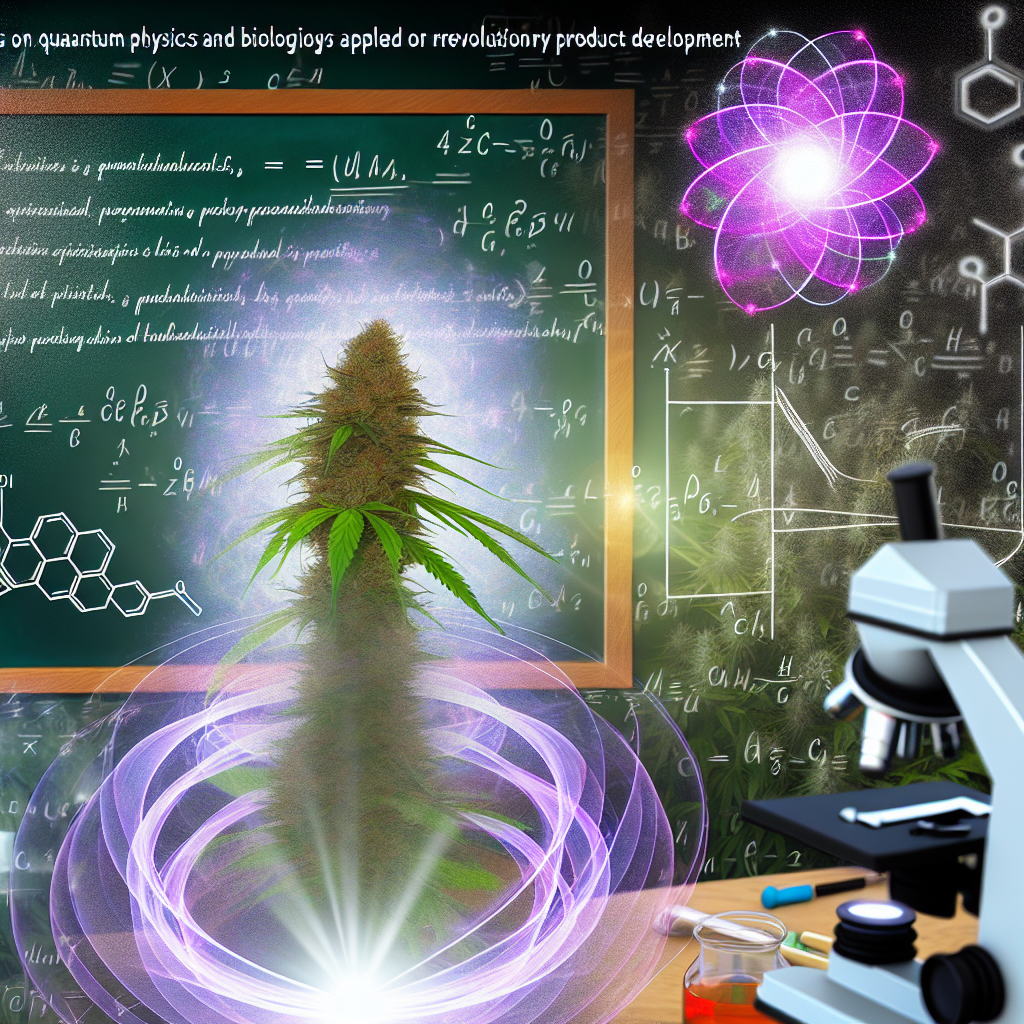
In recent years, the intersection of quantum biology and cannabis research has emerged as a frontier teeming with potential. The term “quantum biology” refers to the study of biological processes that involve quantum mechanics, offering a fresh perspective on how life functions at a molecular level. Meanwhile, cannabis, a plant with a storied history in both medicinal and recreational use, is undergoing a renaissance in scientific scrutiny, fueled by evolving legal landscapes and increasing acceptance. Traditionally, research has focused predominantly on the biochemistry of cannabinoids, terpenes, and flavonoids. However, the confluence of quantum biology and cannabis is beginning to shed light on the underlying mechanisms of cannabis action, suggesting an intricacy that could revolutionize product development.
Quantum Principles in Biological Systems
Quantum biology operates on the principle that quantum phenomena such as superposition and entanglement may play critical roles in biological systems. Researchers have posited that these phenomena might influence photosynthesis, enzyme catalysis, and even olfaction, the latter being particularly relevant to cannabis, given its rich aromatic profile. The potential for quantum effects in cannabis compounds could provide unprecedented accuracy in predicting how specific strains affect consumers, guiding both medical recommendations and product development with precision.
Challenges in Current Product Development
Current cannabis product development predominantly revolves around the assumption of a linear ‘input-output’ model, where specific strains produce predictable effects. However, discrepancies often arise, possibly due to the complex interplay of the plant’s myriad compounds—an interplay quantum biology might help explain. By venturing into this uncharted territory, researchers and cannabis professionals are poised to develop products that are not only more effective but also tailored to individual physiological and psychological needs.
Practical Implications
Exploring the quantum biology of cannabis is not merely an academic exercise; it has profound practical implications. For patients, this research could mean more targeted therapies with fewer side effects. For recreational users, it promises a personalized experience, crafted to individual preferences and sensitivities. At the commercial level, companies willing to embrace this innovative approach could lead the charge in a rapidly evolving market and set new standards for efficacy and consumer satisfaction.
Features
Research into the quantum biology of cannabis, while still in its nascent stages, is beginning to yield intriguing insights. A noteworthy area of investigation has been the interaction between the plant’s photoreceptive compounds and quantum processes. Studies suggest that cannabis, like other plants, may utilize quantum coherence to optimize light energy absorption during photosynthesis ([Nature: Quantum Biology of Photosynthesis](https://www.nature.com/articles/nature93659)). This process allows plants to convert sunlight into chemical energy with remarkable efficiency, a fundamental mechanism that, if better understood, could enhance the cultivation practices by optimizing growth and cannabinoid synthesis.
Cannabinoid receptor studies have also hinted at quantum processes at play. Research indicates that the endocannabinoid system, responsible for mediating the effects of cannabis on the body, might involve quantum mechanics in signal transduction. Quantum tunneling, for example, could play a role in how cannabinoids like THC and CBD penetrate cell membranes ([Frontiers in Physics: Quantum Mechanics in Biological Systems](https://www.frontiersin.org/articles/10.3389/fnphy.2018.00033/full)), impacting receptor interactions and leading to varied psychoactive and therapeutic effects. Understanding these mechanisms might allow scientists to refine cannabinoid formulations for enhanced efficacy and potency, revolutionizing how patients and consumers experience the benefits of cannabis.
Moreover, the study of terpenes, the aromatic compounds responsible for cannabis’s distinct scents and flavors, is unveiling quantum olfaction principles. Research suggests that the human olfactory system might detect these compounds using quantum tunneling ([SAGE Journals: Quantum Olfaction](https://journals.sagepub.com/doi/10.1177/0905233519863510)), offering a quantum explanation for how similar structures can elicit dramatically different sensory experiences. By integrating quantum biology into terpene research, developers could engineer products with scents and flavors more precisely aligned with intended effects or therapeutic purposes, from energizing citrus notes to calming lavender undertones.
As the cannabis industry grows, the application of quantum principles could enable the creation of novel, proprietary products that differentiate from competitors. As we begin to unravel these complex mechanisms, our ability to design cannabis products that cater to specific medical and recreational needs will become more sophisticated, fostering advancements across cultivation, chemistry, and personalized consumer experiences.
Conclusion
The marriage of quantum biology and cannabis research holds the promise of a new era in product development, where the nuanced understanding of quantum phenomena can lead to breakthroughs far beyond current methodologies. As research progresses, the ability to customize cannabis experiences, enhance medical efficacy, and refine cultivation practices will make quantum biology an indispensable tool in unlocking the full potential of this remarkable plant. By embracing the insights gleaned from this pioneering field, the cannabis industry stands on the precipice of potentially transformative innovations.
Concise Summary
The exploration of quantum biology in tandem with cannabis research is uncovering new dimensions in product development. This novel approach delves into how quantum mechanics – including phenomena like superposition and quantum tunneling – influence cannabis compounds and their effects. This knowledge could revolutionize how products are developed, offering more personalized and effective experiences for both medical patients and recreational users. Practical implications stretch from refining cultivation techniques to creating tailored offerings based on individual needs, setting the stage for potentially transformative innovations in the cannabis industry.