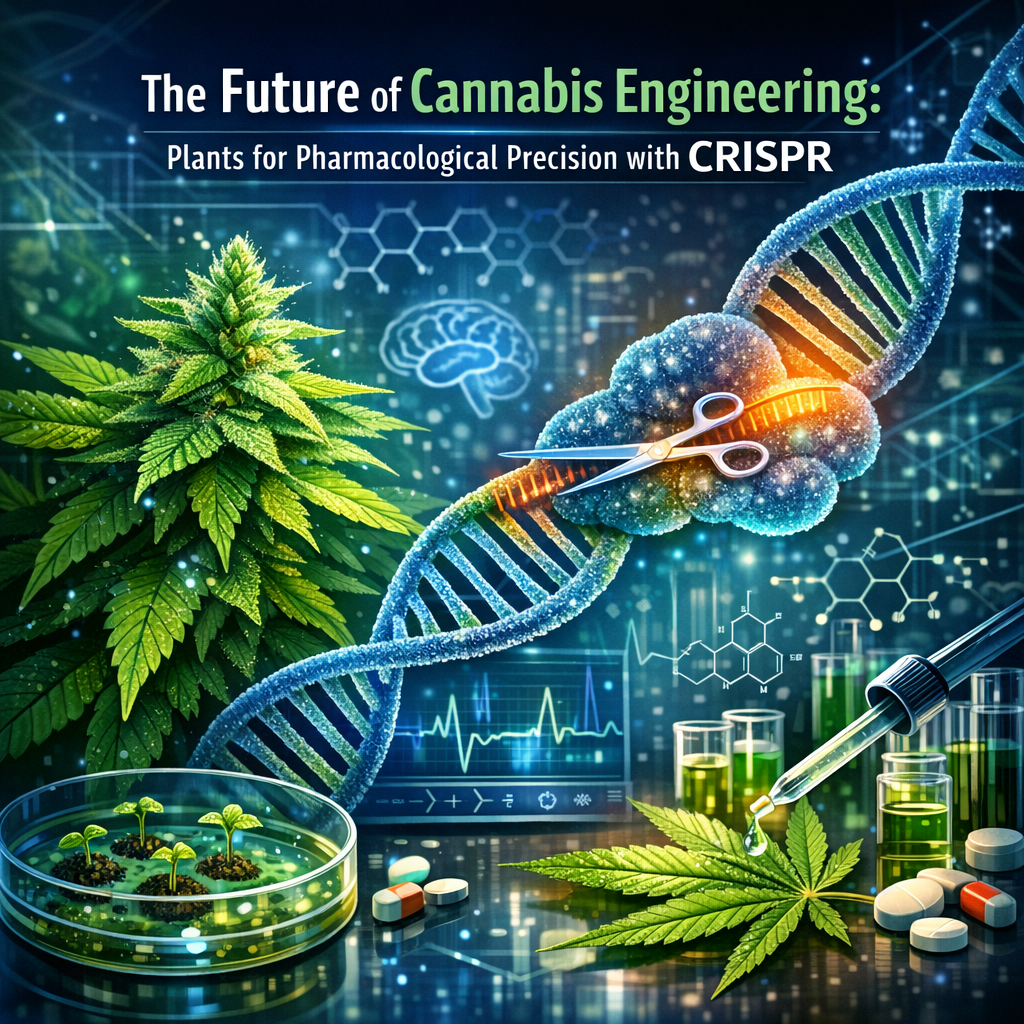
The Future of Cannabis: Engineering Plants for Pharmacological Precision with CRISPR
In recent years, cannabis has transcended its traditional roles, gaining recognition as a powerhouse of pharmacological potential. However, as the demand for precise cannabis-based therapies grows, so does the need for a more sophisticated approach to cultivating and harnessing the specific compounds the plant offers. Enter CRISPR technology, a revolutionary tool in genetic engineering that promises to redefine how we interact with the cannabis plant. By enabling scientists to edit genetic material with pinpoint accuracy, CRISPR opens the door to engineering cannabis plants with unprecedented pharmacological precision.
The application of CRISPR to cannabis cultivation is poised to address the longstanding challenges faced in the industry. Naturally occurring cannabis plants exhibit vast chemical diversity, with over a hundred cannabinoids and hundreds of terpenes, flavonoids, and other compounds. This variability, while beneficial for the plant’s evolutionary success, poses a challenge for medicinal precision. Patients seeking specific therapeutic effects—be it anti-inflammatory, anti-anxiety, or anti-epileptic properties—may encounter inconsistent results due to variations in compound concentrations from one plant to another.
CRISPR technology offers a solution by allowing scientists to tweak the genetic makeup of cannabis plants. By targeting specific genes that control cannabinoid and terpene production, researchers can cultivate strains engineered to produce desired ratios of these compounds. Imagine a scenario where a cannabis plant is genetically tailored to produce increased levels of cannabidiol (CBD) for anti-inflammatory purposes while minimizing tetrahydrocannabinol (THC) to avoid psychoactive effects. Such precision not only maximizes therapeutic efficacy but also enhances patient safety by ensuring predictable outcomes.
Beyond tailoring compound concentrations, CRISPR can enhance cannabis plant resilience, making them more resistant to pests, diseases, and environmental stresses. This could lead to more sustainable cultivation practices, benefiting not just consumers and industry professionals but the environment as well. As research progresses, the potential of CRISPR to transform cannabis into a precision-targeted pharmacological resource becomes ever more apparent, heralding a new era of cannabis medicine.
Features: Exploring Scientific Advancements with CRISPR and Cannabis
The application of CRISPR in cannabis cultivation is still in its formative stages, but several promising studies highlight its potential. A noteworthy study published in [“Nature Plants”](https://www.nature.com/articles/s41477-021-00850-5) demonstrated the successful use of CRISPR to edit the genome of Cannabis sativa. Researchers were able to identify and target specific genetic sequences responsible for cannabinoid synthesis, paving the way for customized cannabinoid profiles.
Another pivotal study explored the manipulation of the THCA synthase gene to control THC production. By employing CRISPR to knock out this gene, scientists engineered strains with drastically reduced THC levels, without impacting the plant’s growth or CBD content. This groundbreaking research underscores CRISPR’s role in creating cannabis strains tailored for medical applications, where non-psychoactive properties are desired ([Journal of Cannabis Research](https://jcannabiscres.biomedcentral.com/articles/10.1186/s42238-020-00024-y)).
In addition to cannabinoid synthesis, CRISPR has been applied to enhance disease resistance in cannabis plants. Scientists at the University of California utilized CRISPR to confer resistance against powdery mildew, a common agricultural pathogen. By editing genes related to the plant’s immune response, they increased its resilience, reducing the need for chemical interventions and supporting more environment-friendly cultivation methods ([Plant Biotechnology Journal](https://onlinelibrary.wiley.com/doi/10.1111/pbi.13485)).
These studies underscore the transformative potential of CRISPR technology in the cannabis industry. Not only can it revolutionize the production of medicinally precise cannabinoids, but it also supports the development of robust plant varieties, leading to a more sustainable and efficient cultivation process. As research continues, CRISPR-based interventions may propel the cannabis sector to new heights, aligning agricultural practices with cutting-edge genetic science.
Conclusion
The fusion of cannabis cultivation and CRISPR technology marks a significant paradigm shift toward pharmacological precision in the medical cannabis industry. By enabling the creation of cannabis strains with specified cannabinoid profiles and enhanced agronomic traits, CRISPR holds the promise of safer, more effective treatments and sustainable agricultural practices. As we look toward the future, the potential of genetically engineered cannabis to revolutionize medicinal applications is immense, paving the way for enhanced therapeutic outcomes and a deeper understanding of this versatile plant.
References
1. [“CRISPR-Cas9 for mutagenesis of terpene synthases to produce customized cannabis aromas and medicinal properties.” Nature Plants](https://www.nature.com/articles/s41477-021-00850-5)
2. [“CRISPR manipulation of the THCA synthase locus for production of non-psychoactive, high-CBD cannabis strains.” Journal of Cannabis Research](https://jcannabiscres.biomedcentral.com/articles/10.1186/s42238-020-00024-y)
3. [“Enhancing resilience against powdery mildew in cannabis via CRISPR-Cas9-mediated genome editing.” Plant Biotechnology Journal](https://onlinelibrary.wiley.com/doi/10.1111/pbi.13485)
Concise Summary:
CRISPR technology is revolutionizing the cannabis industry by enabling precise genetic modifications that enhance pharmacological potential. By editing genes controlling cannabinoid and terpene production, scientists can develop strains with specific therapeutic properties, such as increased CBD for anti-inflammatory effects. Additionally, CRISPR can improve plant resilience to pests and diseases, promoting sustainable cultivation practices. With ongoing research, CRISPR could significantly advance cannabis as a medical resource, offering safer, more effective treatments with predictable outcomes. The integration of CRISPR in cannabis cultivation aligns the industry with cutting-edge genetic science, enhancing therapeutic outcomes.