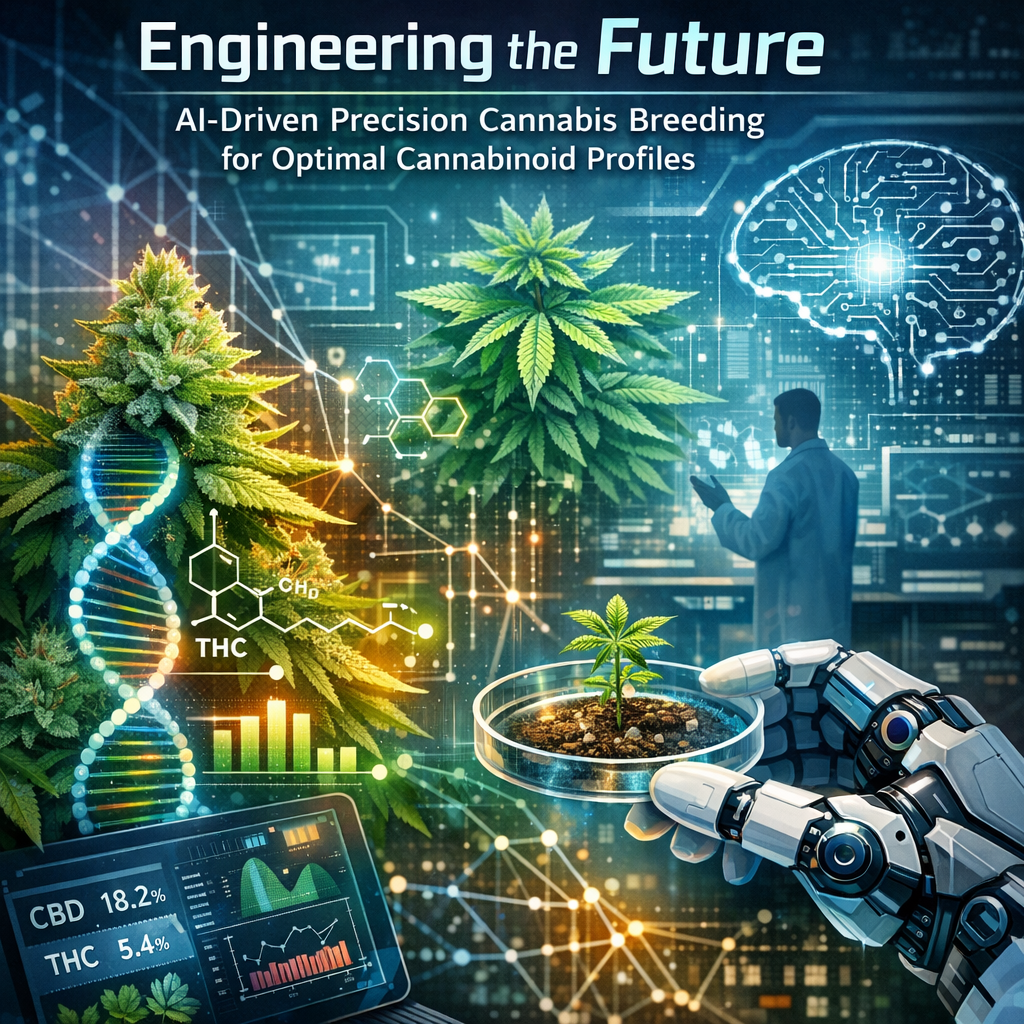
Engineering the Future: AI-Driven Precision Cannabis Breeding for Optimal Cannabinoid Profiles
With the explosive growth of the cannabis industry, the demand for precision in cannabis cultivation has never been higher. The quest for specific and optimal cannabinoid profiles is a key driver behind this trend, as both consumers and healthcare professionals seek tailored cannabis experiences that align with therapeutic and recreational needs. At the intersection of technology and agriculture, artificial intelligence (AI) is revolutionizing how we approach cannabis breeding, providing unprecedented levels of precision and consistency.
Cannabinoids—the chemical compounds in cannabis, such as THC (tetrahydrocannabinol) and CBD (cannabidiol)—are responsible for the plant’s effects. The continuous discovery of lesser-known cannabinoids like CBG (cannabigerol) and CBC (cannabichromene) further complicates the landscape, pushing breeders to delve deeper into the plant’s genetics. Traditional breeding methods can be time-consuming and less accurate, as they often rely on phenotypic selection and environmental trials over several growing seasons.
AI-driven cannabis breeding is a method that promises to streamline this process. AI can analyze vast datasets rapidly, predicting the best genetic crosses to yield desired cannabinoid profiles. Machine learning algorithms sift through genetic information to identify specific markers associated with cannabinoid production. This process not only accelerates the breeding cycle but also enhances the probability of achieving the desired outcome. As a result, cultivators can produce strains with higher concentrations of specific cannabinoids, maximizing both their therapeutic and economic value.
The potential applications of AI in cannabis breeding are vast. For consumers seeking specific relief from conditions such as anxiety, chronic pain, or insomnia, AI-enabled breeding can promise products tailored to these needs. For industry professionals, the ability to consistently produce cannabis strains with optimal cannabinoid content can differentiate products in a crowded market. As regulatory landscapes evolve, strains optimized for specific cannabinoid production may also meet changing compliance requirements more readily, ensuring both safety and quality.
Features: AI Meets Cannabis Science
The fusion of AI and cannabis breeding is not just a futuristic concept but an unfolding reality supported by pioneering studies. A notable research effort published in the journal [Frontiers in Plant Science](https://www.frontiersin.org/articles/10.3389/fpls.2021.663742/full) outlines how AI can enhance plant breeding by predicting phenotypic outcomes based on genotypic data. This study demonstrates the capability of AI to not only streamline breeding processes but also improve their accuracy and efficiency, potentially leading to cannabis strains with bespoke cannabinoid profiles.
In another significant advancement, researchers are employing AI to sequence cannabis genomes, unearthing the genetic blueprints responsible for various cannabinoid expressions. The publication in [Nature Plants](https://www.nature.com/articles/s41477-021-00896-x) details how genomic selection models predict the performance of cannabis plants, accounting for cannabinoid potency, plant yield, and disease resistance. This genomic insight can fortify breeding programs, allowing for the informed selection of parent plants that will likely yield offspring with the desired traits.
The benefits are particularly noteworthy in the medical field. For conditions where particular cannabinoids are more effective, such as the use of CBD for seizure control in epilepsy or THC for nausea management, AI-assisted breeding can ensure consistency and enhance therapeutic efficacy. This precision breeding supports crafting specialized strains that align closely with patient needs, improving outcomes and fostering trust in cannabis as a therapeutic agent.
Furthermore, as legal frameworks shift, the ability to produce cannabinoid-specific strains could ease regulatory hurdles. AI allows for detailed tracking and documentation of genetic traits, helping cultivators demonstrate compliance with legal standards, such as THC content limits. This capability can streamline product development and market approval processes, significantly benefiting the industry.
Conclusion
AI-driven precision cannabis breeding represents a significant leap forward in both the agricultural and medical landscapes. By integrating cutting-edge technology with traditional horticulture, breeders can achieve unheard-of precision for cannabis products that cater to diverse consumer needs. This synergy not only promises high-quality products but also ensures that the future of cannabis cultivation remains at the forefront of scientific and technological innovation. As cannabis continues to cement its place as both a recreational and therapeutic product, AI-driven breeding promises a field ripe with potential for discovery and advancement.
Concise Summary
AI-driven precision cannabis breeding is transforming the cannabis industry by enabling the creation of strains with specific cannabinoid profiles to meet therapeutic and recreational needs. By leveraging AI to analyze genetic data, breeders can achieve faster and more accurate results than traditional methods, developing strains with desired cannabinoid concentrations. This technological advancement holds significant promise for medical applications, ensuring consistency and enhancing therapeutic efficacy. As regulations evolve, AI-driven breeding can streamline compliance and market approval, making it a pivotal tool for the industry’s future growth and innovation.