How AI-Engineered Cannabis Can Transform Natural Medicine: Bridging Biotech and Botany
Introduction:
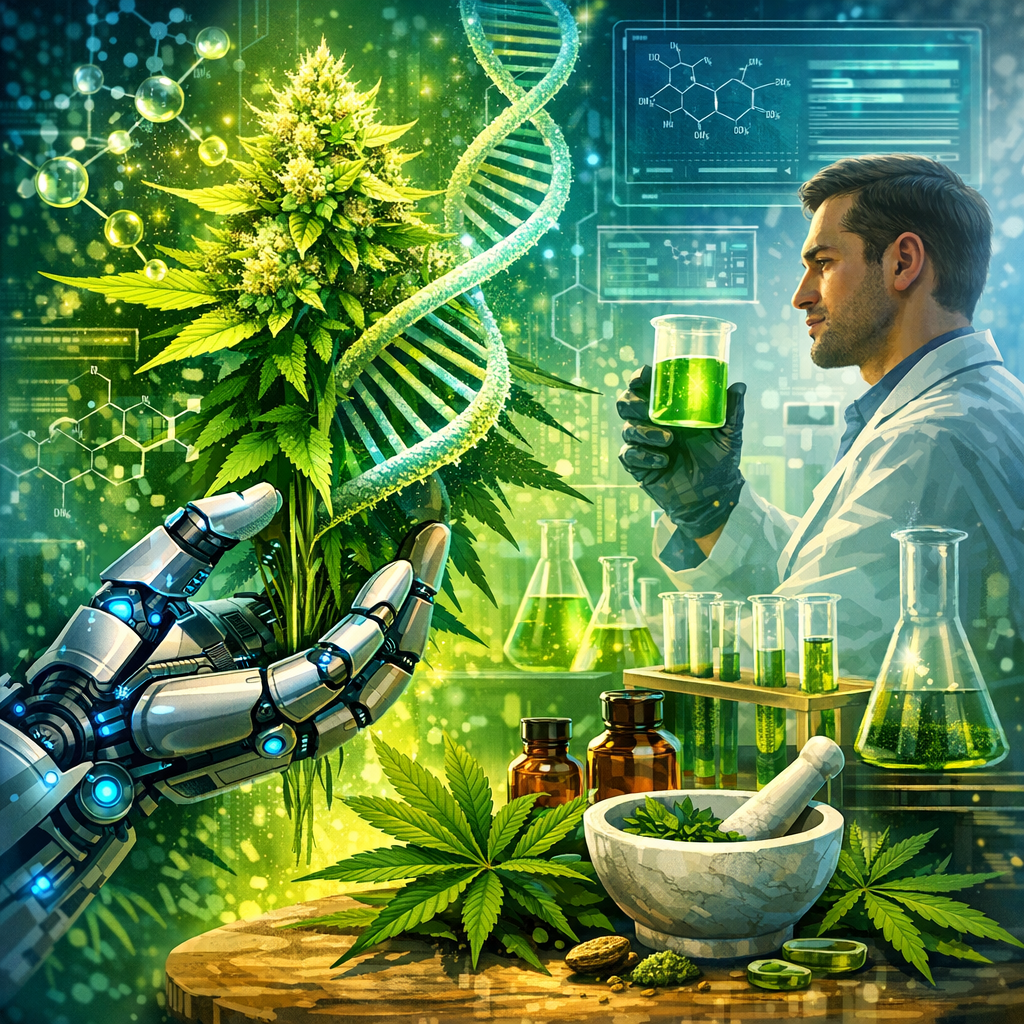
As the world increasingly embraces the advances of technology, artificial intelligence (AI) is playing a significant role in revolutionizing a myriad of industries. In the realm of natural medicine, cannabis has transitioned from being a controversial plant to a scientifically credible therapeutic agent, gaining acceptance in both mainstream medicine and wellness circles. Now, the synthesis of AI technology and cannabis cultivation holds the potential to unleash a new era in natural medicine, seamlessly bridging biotech and botany.
AI has the capacity to transform traditional methods of cannabis cultivation, extraction, and formulation. By leveraging machine learning algorithms and data analytics, researchers and cultivators can optimize growing conditions and genetic outcomes at an unprecedented scale and speed. This data-driven approach not only improves yield and quality but also enhances the therapeutic properties of cannabis plants, tailoring them for specific medical conditions and patient needs.
The integration of AI in cannabis cultivation also ensures consistency and safety in cannabis-derived products. Genetic variations in cannabis plants denote varying levels of cannabinoids and terpenes, which are crucial for the plant’s medicinal efficacy. Through AI, these variations can be precisely controlled and monitored, resulting in high-quality, standardized products that eliminate the guesswork for consumers and medical professionals alike.
Moreover, AI advancements pave the way for the development of novel cannabis strains and compounds. By processing vast datasets of bioinformatics and chemical compositions, AI tools can identify potential new compounds that might have been overlooked through traditional methods. This can lead to the discovery of entirely new options for the treatment of numerous conditions, extending the scope of cannabis-based therapy far beyond what is currently known.
Features:
In recent years, various professional and medical studies have highlighted how AI can enhance cannabis cultivation and its subsequent application in medicine. A study published in [*Frontiers in Plant Science*](https://www.frontiersin.org/articles/10.3389/fpls.2021.689153/full) illustrates how machine learning models can accurately predict cannabis yield and cannabinoid content based on environmental factors such as light, temperature, and humidity, which are critically analyzed to produce optimal growing conditions.
Furthermore, research featured in the [*Scientific Reports*](https://www.nature.com/articles/s41598-021-83229-6) journal explores AI’s role in phenotypic characterization, which is essential for understanding the genetic diversities of cannabis. Through computer vision techniques, AI systems can evaluate the phenotype, leading to the cultivation of strains with specific cannabinoid profiles tailored for precise medical applications.
AI is also impactful in the area of cannabis genomics. The process involves analyzing vast genomic datasets to identify genetic markers for desired traits. As noted by researchers from the [University of Toronto](https://onlinelibrary.wiley.com/doi/10.1002/psb.1901), AI can dramatically speed up the identification of genetic variations that influence the synthesis of cannabinoids and terpenes, potentially aiding in the creation of highly potent strains.
These professional studies underscore the immense potential AI holds in personalizing cannabis-based treatments. By tailoring cannabis strains to meet specified health criteria, AI can enhance the efficacy of cannabis in treating conditions like chronic pain, epilepsy, and anxiety, providing physicians with more reliable, reproducible data on which to base their prescriptions.
Conclusion:
The synergy of AI and cannabis cultivation heralds a transformative turning point in natural medicine, promising unprecedented precision, efficacy, and innovation. By bridging the wisdom of botany with the precision of biotech, AI-engineered cannabis stands to enhance therapeutic outcomes and expand the horizons of natural remedies. As this field continues to evolve, we can expect AI to play a crucial role in unlocking the full potential of cannabis as a cornerstone of tomorrow’s medical paradigms.
Concise Summary:
AI is transforming the cannabis industry, enhancing cultivation methods and increasing therapeutic effectiveness. By optimizing growing conditions and genetic outcomes, AI ensures the consistency and safety of cannabis-derived products. Advances in AI enable the discovery of new cannabis strains and compounds, presenting novel treatment options for various conditions. Studies confirm AI’s potential in personalizing cannabis treatments for ailments like chronic pain and epilepsy. As AI further integrates into this field, it promises to unlock cannabis’s full potential, bridging biotech and botany in innovative ways.