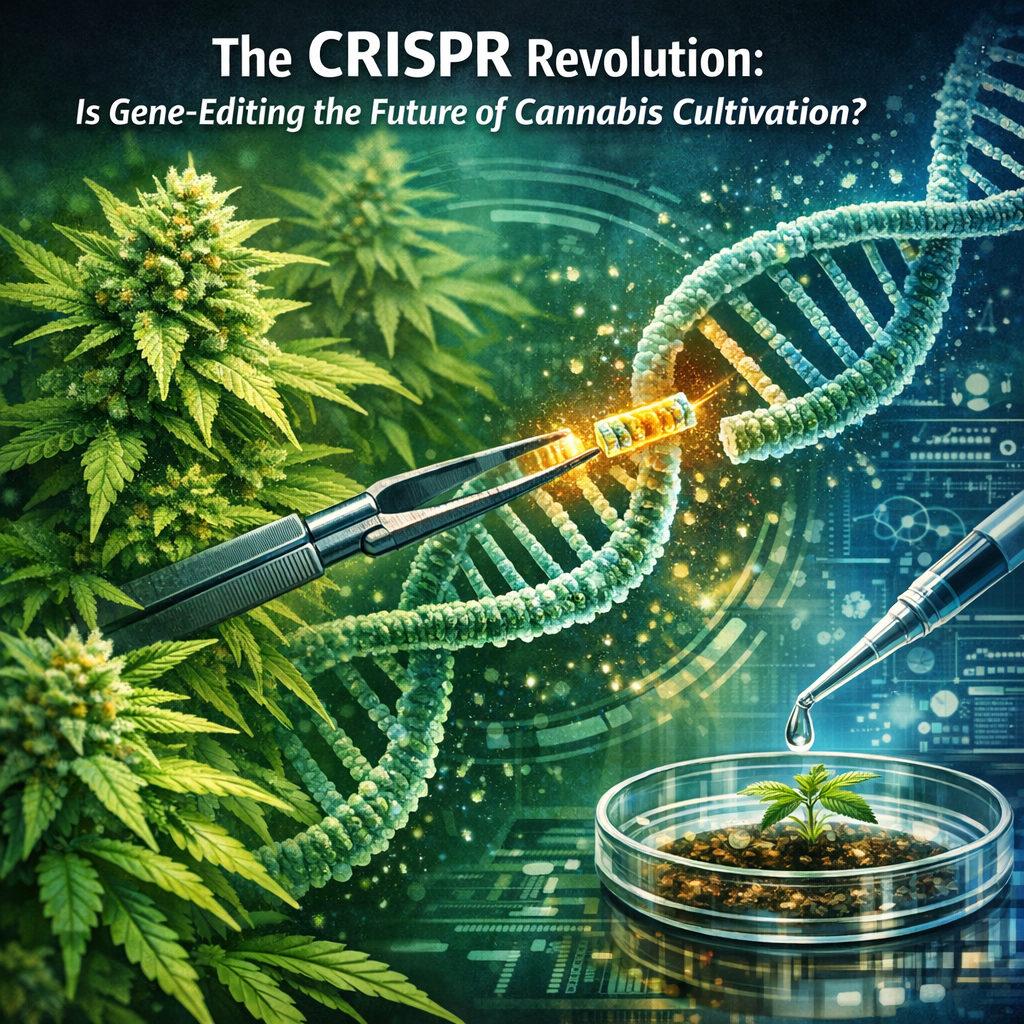
The CRISPR Revolution: Is Gene-Editing the Future of Cannabis Cultivation?
In the ever-evolving world of cannabis cultivation, innovators are constantly pushing the boundaries to maximize the potential of this remarkable plant. One of the most exciting developments in recent years is the advent of CRISPR-Cas9 technology. Discovered in 2012, CRISPR has revolutionized genetic research across various fields, offering unprecedented control over the genetic makeup of organisms. For cannabis, this technology promises not only increased yield and potency but also an opportunity to tailor the plant to meet specific medical or industrial needs.
Cannabis, with its complex genome and diverse array of cannabinoids, terpenes, and flavonoids, presents both challenges and opportunities for gene-editing. Traditional breeding methods have been somewhat effective at enhancing certain traits, but they are time-consuming and imprecise. Enter CRISPR: this powerful tool allows scientists to target specific genes within the cannabis genome, opening up possibilities for precision breeding that traditional methods simply cannot match.
Consider the potential CRISPR holds for enhancing disease resistance, one of the most persistent challenges in cannabis cultivation. Powdery mildew and botrytis, two common fungal pathogens, can decimate crops, leading to significant economic losses. By editing genes related to the plant’s immune response, CRISPR may offer a way to make cannabis plants more resilient, thus reducing the need for chemical fungicides.
Additionally, with the mounting interest in specific cannabinoids for medical purposes, CRISPR could enable researchers to design strains with bespoke cannabinoid profiles to better address particular therapeutic needs. For instance, strains high in cannabidiol (CBD) are already being used to treat conditions such as epilepsy and anxiety. By manipulating the genes that control cannabinoid biosynthesis, CRISPR could facilitate the creation of strains that are even more effective against a broadened spectrum of ailments.
The implications of CRISPR technology extend beyond improving crop resilience and optimizing cannabinoid production. It also holds promise for environmental conservation and sustainability. By potentially increasing the photosynthetic efficiency of cannabis, CRISPR could lead to reduced resource use, particularly water and nutrients, thus making cannabis cultivation more eco-friendly. As demands for sustainable agriculture practices grow, CRISPR-enabled innovations may become crucial in aligning cannabis production with ecologically responsible methods.
Features: Professional and Medical Studies
Research on CRISPR applications in cannabis is still in its infancy, but promising studies have begun to lay the foundation. One such study demonstrated the use of CRISPR in altering the production of cannabinoids. Scientists have been able to knock out specific genes responsible for the conversion of CBGA (cannabigerolic acid), the “mother of all cannabinoids,” into THC and CBD. By doing so, researchers can increase the concentration of minor cannabinoids, which might have untapped therapeutic potential. This genetic fine-tuning opens a new dimension in cannabis therapeutics, allowing precise cultivation to meet specific medical standards.
Moreover, advancements in CRISPR-based toolkits are facilitating more sophisticated genetic manipulations. A study published in the [*Journal of Cannabis Research*](https://jcannabisresearch.biomedcentral.com/articles/10.1186/s42238-021-00066-4) highlighted the application of CRISPR-activation systems to increase the expression of genes involved in terpene biosynthesis. Since terpenes play a significant role not only in flavor and aroma but also in the medicinal properties of cannabis through the entourage effect, this research underlines an avenue for enhancing both consumer experience and medicinal value.
In terms of agricultural performance, research from the [*Plant Biotechnology Journal*](https://onlinelibrary.wiley.com/doi/full/10.1111/pbi.13575) explored the editing of the cannabis genome to increase drought resistance, making cannabis cultivation possible in arid conditions. By modifying genes associated with root architecture, scientists aim to produce plants that can thrive in less-than-ideal climates, thus supporting global cannabis production and accessibility.
While the potential applications of CRISPR in cannabis are vast, the technology is not without ethical and regulatory challenges. The alteration of plant genomes brings forth questions regarding biodiversity, intellectual property rights, and the long-term ecologic impacts of genetically modified organisms. Balancing the benefits of CRISPR with the ethical considerations will require careful deliberation from all stakeholders within the cannabis and scientific communities.
Conclusion
The promise of CRISPR in shaping the future of cannabis cultivation is tremendous, offering solutions that extend beyond mere cultivation into realms of health, sustainability, and innovation. As researchers continue to unearth the vast potential of this technology, collaboration and dialogue between scientists, policymakers, and industry leaders will be essential in harnessing CRISPR’s benefits while navigating the ethical complexities it presents. With thoughtful application, the gene-editing revolution could usher in a new era for cannabis, refining and redefining its role in society.
References
1. [CRISPR Technology Overview](https://www.nature.com/articles/d41586-021-02474-z)
2. [Journal of Cannabis Research: CRISPR Applications in Cannabis](https://jcannabisresearch.biomedcentral.com/articles/10.1186/s42238-021-00066-4)
3. [Plant Biotechnology Journal: Enhancing Drought Resistance in Cannabis](https://onlinelibrary.wiley.com/doi/full/10.1111/pbi.13575)
Concise Summary
CRISPR-Cas9 technology promises to revolutionize cannabis cultivation by enhancing yield, potency, and disease resistance. It enables precision breeding, potentially increasing immunity to pathogens and optimizing cannabinoid profiles for medical use. Researchers explore CRISPR’s role in sustainable agriculture, increasing photosynthetic efficiency and drought resistance. Despite its potential, ethical challenges like biodiversity loss and ownership concerns remain. Continued interdisciplinary collaboration is vital to balance CRISPR’s benefits and ethical complexities, paving the way for a transformative era in cannabis cultivation.