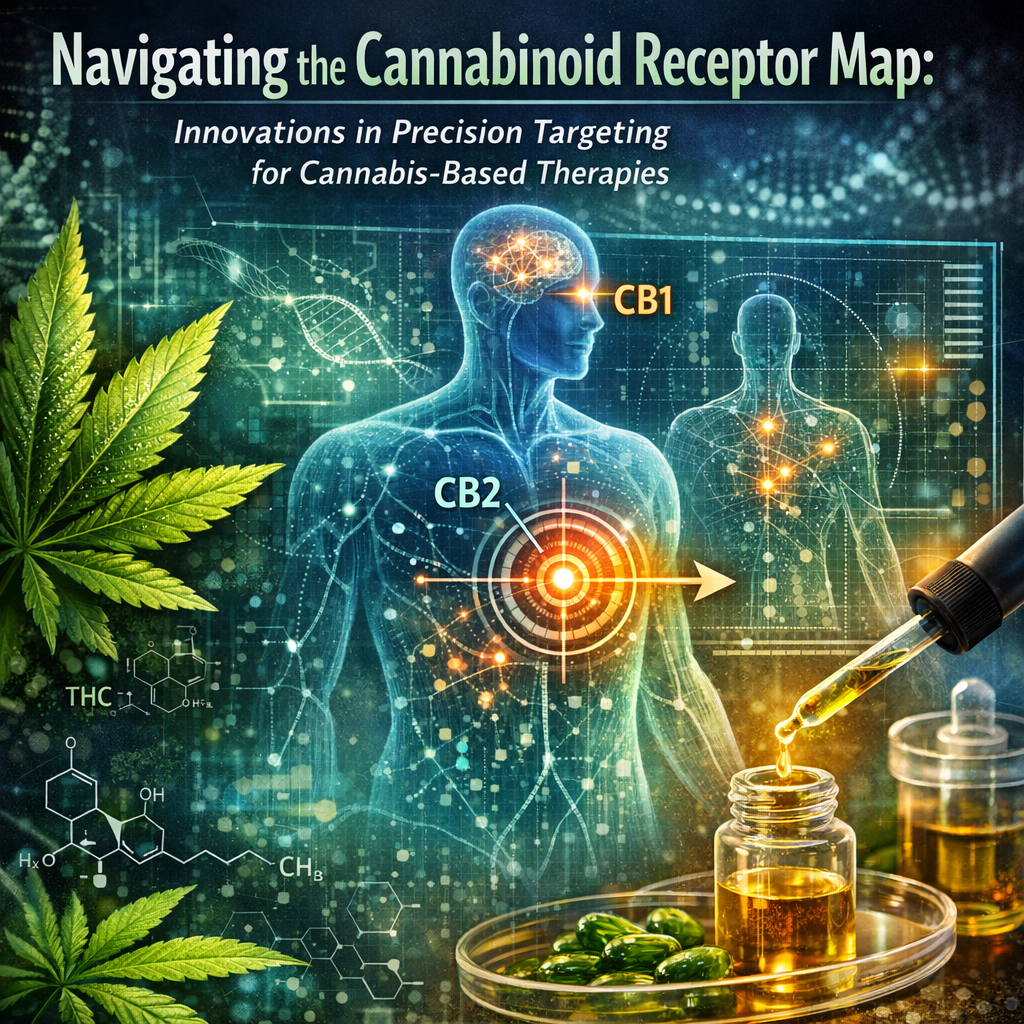
Navigating the Cannabinoid Receptor Map: Innovations in Precision Targeting for Cannabis-Based Therapies
Introduction
In recent years, the global understanding of cannabis and its potential therapeutic benefits has undergone a dynamic transformation. Professionals and consumers alike are increasingly curious about how this plant, with its complex compounds, can interact with our body’s own systems to offer natural, effective medicinal benefits. At the center of this inquiry is the fascinating world of cannabinoid receptors, particularly CB1 and CB2, which are part of the broader endocannabinoid system (ECS). This system plays a crucial role in regulating a myriad of physiological processes, including pain management, mood stabilization, immune response, and even appetite.
The interest in cannabinoid receptors has spurred a wave of research looking to harness cannabis compounds in a precise, targeted manner. Innovations in biotechnology and pharmacology are paving the way for the development of therapeutics that specifically target parts of the ECS, reducing side effects while maximizing therapeutic benefits. This approach to precision targeting is reshaping the medicinal cannabis landscape and paving the way for breakthroughs in treatment methodologies for complex conditions such as chronic pain, epilepsy, and multiple sclerosis.
A critical element in achieving precision targeting lies in mapping the cannabinoid receptors more accurately. Traditionally, the therapeutic use of cannabis has been somewhat indiscriminate, often affecting broader physiological systems. However, with emerging technologies like molecular docking and advanced imaging techniques, researchers can now visualize and predict the interaction between cannabinoids and their receptors more accurately. This innovation has opened avenues for developing cannabinoid-based therapies that are personalized and tailored to individual biochemical profiles, enhancing both efficacy and safety.
This burgeoning area of research is not just a leap forward for cannabis-based therapies but represents a significant stride in personalized medicine. By understanding how specific cannabinoids interact with specific receptors, medical professionals and cannabis experts can offer more nuanced and effective treatment options, meeting the precise needs of patients more accurately than ever before.
Features
One of the most compelling dimensions of recent advancements in cannabinoid receptor targeting is highlighted in various professional and medical studies. A significant area of focus has been the development of synthetic cannabinoids and the role of minor cannabinoids, which, although present in smaller quantities in the cannabis plant, can exert more potent or selective effects on cannabinoid receptors.
A technological triumph in this field is the use of Cryo-electron microscopy (Cryo-EM) in understanding the structure of cannabinoid receptors. A study published in Nature elucidated how Cryo-EM allows for visualization of the CB1 receptor at atomic resolution in complex with clinically relevant molecules like agonists and antagonists [Congreve et al., 2017](https://www.nature.com/articles/nature11664). This detailed mapping is crucial for designing drugs that can precisely target these receptors, ensuring therapies are both effective and have minimal side effects.
Another pivotal study by Scripps Research Institute explored how cannabidiol (CBD), a non-psychoactive compound of cannabis, affects the TRPV1 receptor, which plays a vital role in the perception of pain [Bisogno et al., 2001](https://www.pnas.org/content/98/9/4764). By understanding these alternative pathways, researchers can better exploit the therapeutic potential of cannabinoids beyond traditional CB1 and CB2 interactions, offering robust alternatives for pain management and other conditions.
A landmark clinical trial documented in The New England Journal of Medicine demonstrated how Epidiolex, a CBD-based medicine, significantly reduces seizure frequency in patients with treatment-resistant epilepsy [Devinsky et al., 2017](https://www.nejm.org/doi/full/10.1056/NEJMoa1611618). By specifically modulating the ECS, Epidiolex exemplifies the tangible benefits that precise cannabinoid receptor targeting can bring, fulfilling unmet medical needs in patient care.
Furthermore, advances in genomic technologies have enabled the mapping of individual variations in cannabinoid receptors, facilitating the emergence of cannabinoid-based personalized medicine. The implications are profound—patients may soon have treatments that are tailored to their unique genetic makeup, optimizing therapeutic outcomes.
Conclusion
The journey into the intricate map of cannabinoid receptors and precision targeting heralds a new horizon for cannabis-based therapies. As technology and research continue to evolve, so does the potential for developing treatments that are as unique as the individuals they serve. Through collaboration between research institutions, healthcare professionals, and cannabis experts, we are on the brink of realizing the full potential of cannabinoid precision targeting, shaping a future where cannabis-based medicine is safer, more effective, and highly personalized.
References
– Congreve, M., et al. (2017). The Structure of the G-Protein-Coupled Receptor CB1 in Complex with the THC Mimic AM841. *Nature*. [Link](https://www.nature.com/articles/nature11664)
– Bisogno, T., et al. (2001). Molecular characterization of a membrane transporter for anandamide. *Proceedings of the National Academy of Sciences*. [Link](https://www.pnas.org/content/98/9/4764)
– Devinsky, O., et al. (2017). Trial of Cannabidiol for Drug-Resistant Seizures in the Dravet Syndrome. *The New England Journal of Medicine*. [Link](https://www.nejm.org/doi/full/10.1056/NEJMoa1611618)
Concise Summary:
This article explores the advancements in precision targeting of cannabinoid receptors, primarily CB1 and CB2, within the endocannabinoid system (ECS). Research innovations like Cryo-EM and genomic technologies are enabling the development of personalized cannabis-based therapies, optimizing safety and efficacy. Studies highlight the potential of minor cannabinoids and synthetic variants in treating conditions such as chronic pain, epilepsy, and multiple sclerosis, marking significant progress in personalized medicine. These advancements pave the way for tailored treatments that could meet the specific needs of individuals, ultimately reshaping the landscape of medical cannabis.