AI-Powered Crop Engineering: Revolutionizing Cannabis Yield and Potency in the Next 12 Months
In recent years, the cannabis industry has experienced an unprecedented boom, fueled by increased legalization and consumer demand. As the market expands, so does the pressure on producers to optimize yield and potency. Enter AI-powered crop engineering—a technological revolution poised to transform the cultivation landscape. Artificial intelligence (AI) has already demonstrated its potential across diverse sectors and is now set to usher in a new era for cannabis cultivation. This technology promises unparalleled efficiency, precision, and insight, making it possible to refine plant characteristics and amplify output like never before.
The principle of AI-powered crop engineering revolves around gathering vast amounts of data and using machine learning algorithms to analyze it. This data might include environmental conditions, genetics, growth rates, and plant health indicators. By applying machine learning techniques, AI can identify patterns and relationships within data sets that humans might overlook. This capability enables growers to make data-driven decisions, anticipate challenges, and fine-tune their cultivation practices for optimal results.
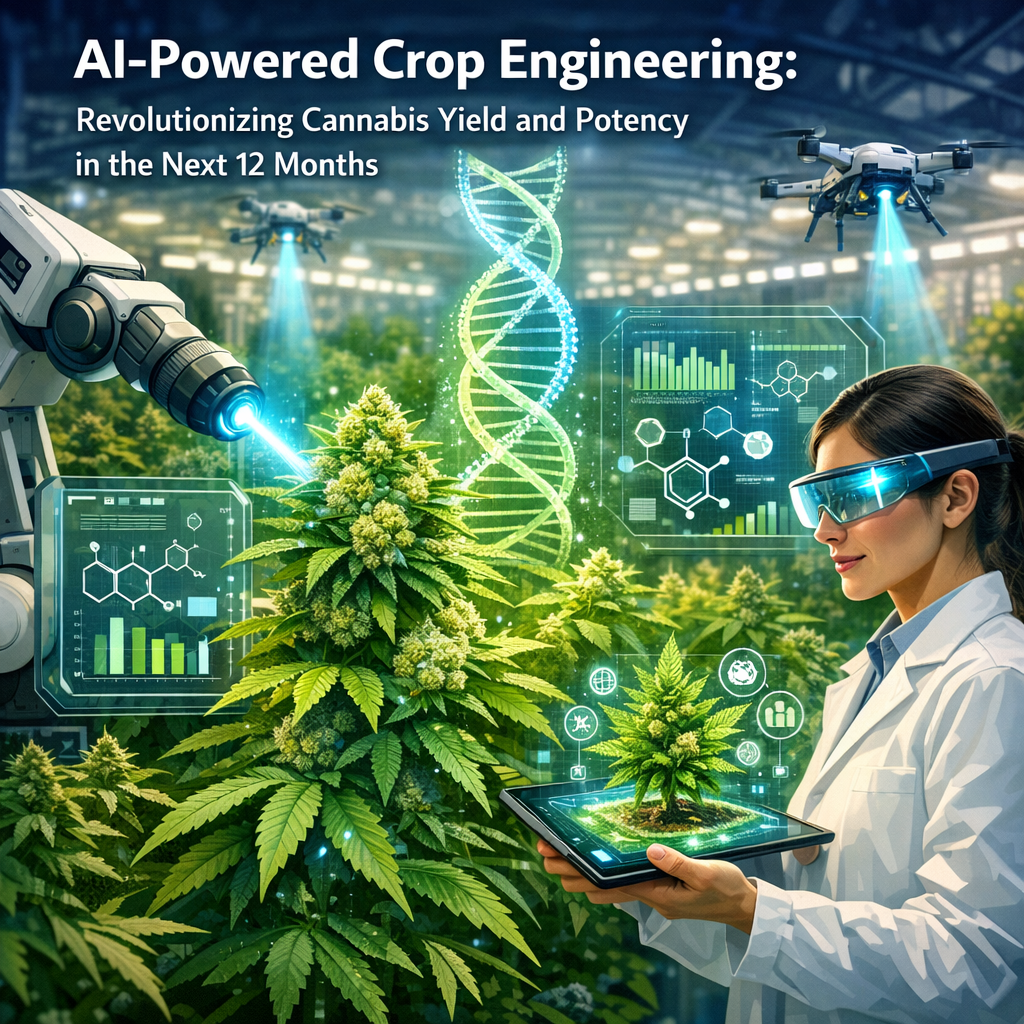
In the cannabis industry, AI’s application means more than just increased yields; it offers the possibility of breeding plants with specific desired traits. Whether the goal is to boost THC content, enhance aroma profiles, or increase resistance to pests, AI can help breeders efficiently achieve these targets. This isn’t just a distant dream—these advancements are set to make significant strides within the next 12 months. Technologies like smart sensors, drones, and IoT-enabled devices are already being integrated into cultivation systems. Combining these with AI allows real-time monitoring and control, pinpoint precision in irrigation and nutrient delivery, and proactive plant health management.
With the ongoing development of AI applications in agriculture, and particularly in cannabis production, research and practical trials are vital. For instance, academic institutions and organizations like the University of Guelph have undertaken studies on AI’s role in crop science, analyzing data to improve cannabis growth conditions and outputs. Similarly, AI in agricultural innovation is a subject of research at Wageningen University & Research, focusing on areas like plant phenotyping and smart farming.
Professionals and medical researchers are increasingly interested in AI’s potential to enhance the medicinal quality of cannabis plants. AI can aid in formulating strains with high concentrations of cannabinoids and terpenes that offer specific therapeutic effects. As the demand for medical cannabis continues to soar, AI could be a key driver in meeting patient needs by facilitating the development of more consistent and effective products.
Apart from boosting yield and potency, AI can also play a crucial role in sustainability and reducing the environmental impact of cannabis cultivation. AI allows for resource-efficient farming practices, minimizing water and nutrient waste and optimizing energy use. By enabling more strategic operations, growers can reduce their carbon footprint while maintaining high-quality output.
In conclusion, the integration of AI-powered crop engineering marks a transformative moment for the cannabis industry. As we advance in precision agriculture technologies, the next 12 months will likely see growers harnessing AI to push the boundaries of what is possible in cannabis cultivation, shaping the future of both industrial and personal production.
References:
1. [University of Guelph: AI and Crop Science Research](https://www.uoguelph.ca/research/disciplines/agriculture)
2. [Wageningen University & Research: AI in Agriculture](https://www.wur.nl/en/Research-Results/Research-Institutes/data-science/Agricultural-Data-Science.htm)
Concise Summary:
AI-powered crop engineering is set to revolutionize the cannabis industry, promising enhanced yield, potency, and sustainability. By utilizing vast amounts of data and machine learning, AI can identify patterns and make data-driven decisions. Over the next 12 months, integrating technologies like smart sensors and IoT devices into cannabis cultivation could drastically refine plant traits and environmental practices. Research efforts are underway at institutions like University of Guelph and Wageningen University & Research to bolster these advancements, offering exciting potential for both medicinal cannabis development and environmentally conscious farming.