Engineering Cannabinoid Biosensors: The Future of Real-Time Plant Analytics in Cannabis Cultivation
Introduction
The rapid advancement of technology in agriculture has revolutionized the way crops are cultivated, monitored, and harvested. Cannabis cultivation, a burgeoning industry, is no exception. One of the most promising developments in this field is the engineering of cannabinoid biosensors, which offer real-time insights into plant health and cannabinoid levels. These sophisticated tools are poised to transform the cannabis industry, providing cultivators with unprecedented precision and control over their crops.
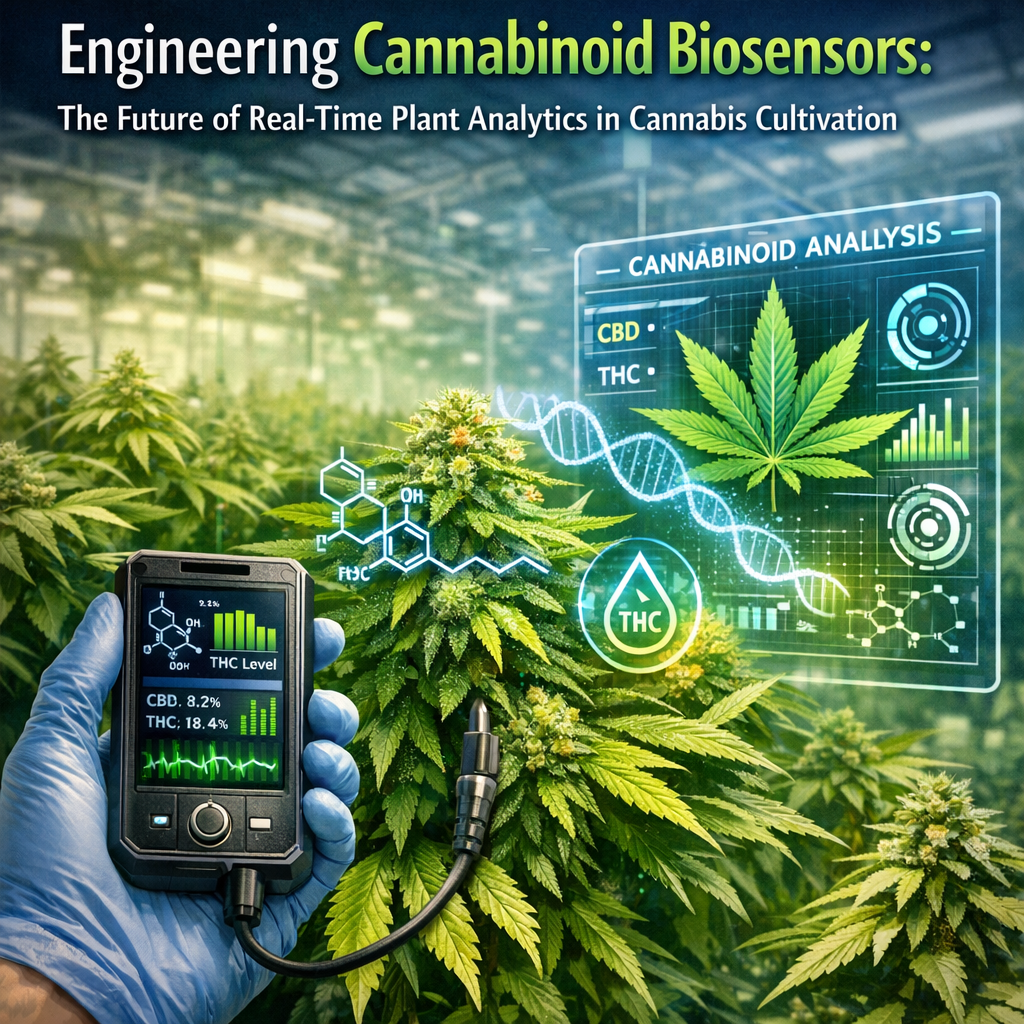
Traditionally, cannabis growers have relied on labor-intensive methods and subjective assessments to monitor plant health and cannabinoid content. This typically involves laboratory testing, which, while accurate, can be time-consuming and expensive. However, with cannabinoid biosensors, these hurdles are being addressed head-on. These biosensors function by detecting specific biochemical interactions within the plant, enabling cultivators to monitor cannabinoid levels in real-time. This real-time data provides a detailed understanding of plant development, allowing for adjustments in cultivation practices to maximize yield and potency.
The implications of these biosensors are profound. For commercial cultivators, real-time analytics can lead to increased efficiency and reduced waste. It can help identify plant stressors quickly, optimizing the use of resources like water, nutrients, and light. For medical cannabis growers, precision in cannabinoid profiles ensures consistency and efficacy in products, which is crucial for patient safety and satisfaction. These factors underscore the importance of integrating cannabinoid biosensors into modern cannabis cultivation practices.
Features
Recent studies underscore the potential of biosensors in agriculture. Notably, a study published in the journal “Trends in Plant Science” outlines the application of biosensors for detecting plant hormones and signaling molecules ([Trends in Plant Science](https://www.cell.com/trends/plant-science/home)). This research highlights the broader applicability of biosensors in enhancing plant growth and stress management.
In the context of cannabis, biosensors are being engineered to detect specific cannabinoids, the active compounds in cannabis. These sensors utilize biochemical reactions to provide real-time feedback on cannabinoid content. One significant study, conducted by the University of California, Berkeley, demonstrates the development of a biosensor that can selectively detect THC, one of the primary psychoactive compounds found in cannabis ([UC Berkeley News](https://news.berkeley.edu)). By deploying such sensors, growers can make informed decisions about harvest times to ensure maximum potency and compliance with legal THC limits.
Moreover, biosensors are being integrated with IoT (Internet of Things) technology, paving the way for automated cultivation systems. These systems leverage data collected by biosensors to adjust environmental conditions like temperature and humidity automatically, optimizing growth conditions throughout the plant’s lifecycle. The benefits extend to data gathering for research purposes as well. As highlighted by a recent article in “Frontiers in Plant Science,” the integration of biosensor data with advanced analytics and machine learning models can drive innovation in breeding programs and cultivation techniques ([Frontiers in Plant Science](https://www.frontiersin.org/journals/plant-science)).
Furthermore, the impact of these technologies isn’t limited to large-scale commercial operations. Small growers and research institutions stand to benefit from the scalable nature of biosensor technology. By providing an affordable and accurate means of monitoring cannabinoid profiles, biosensors facilitate more controlled and sustainable cultivation practices, regardless of operation size.
Conclusion
As the cannabis industry continues to evolve, the integration of cannabinoid biosensors represents a pivotal step forward. These tools not only enhance the precision and efficiency of cultivation practices but also contribute to the development of consistent, high-quality cannabis products. By embracing this cutting-edge technology, the cannabis industry is poised to meet the demands of both the market and regulatory environments while paving the way for future innovations in plant analytics.
Concise Summary
Cannabinoid biosensors are transforming cannabis cultivation by providing real-time insights into plant health and cannabinoid levels, enabling precise cultivation practices. This technology minimizes waste, optimizes resource use, and ensures product consistency. Integrating biosensors with IoT and machine learning enhances automated crop management systems and stimulates innovation in breeding and cultivation techniques. These scalable tools benefit both large-scale operations and small growers by offering affordable cannabinoid monitoring solutions. As a result, the cannabis industry is better equipped to meet market demands and regulatory standards, fostering the development of high-quality cannabis products.