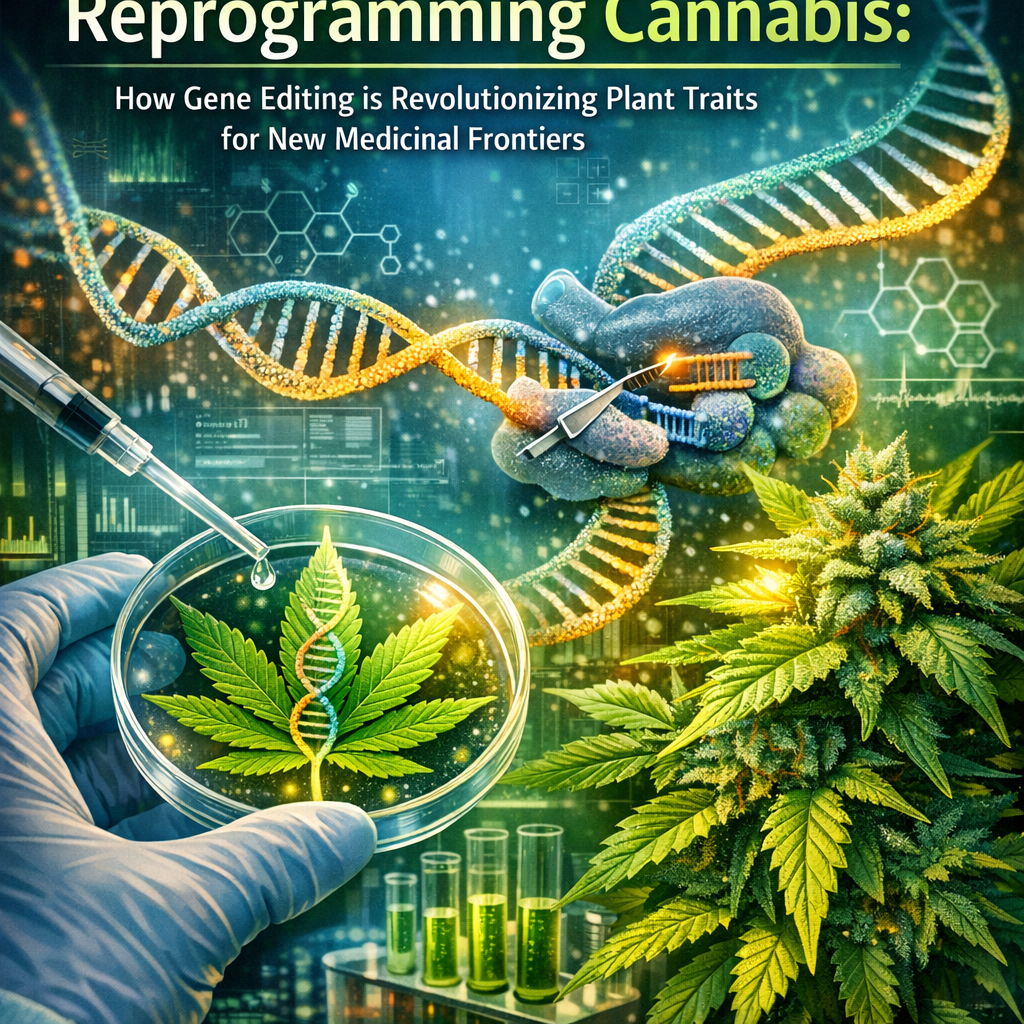
Reprogramming Cannabis: How Gene Editing is Revolutionizing Plant Traits for New Medicinal Frontiers
In the rapidly advancing world of biotechnology, the marriage of gene editing technologies and cannabis cultivation is proving to be a transformational frontier. Cannabis, a plant with a storied history and myriad medicinal properties, is now at the forefront of genetic innovation. For centuries, traditional breeding techniques have dictated the traits of different cannabis strains, whether aimed at enhancing psychoactive properties, therapeutic benefits, or agricultural resilience. However, the advent of cutting-edge genetic editing tools, such as CRISPR-Cas9, is allowing scientists to modify the gene structure of cannabis with unprecedented precision and efficiency. This could revolutionize the way we understand and utilize this multifaceted plant.
The ability to directly alter the genetic makeup of cannabis holds the promise of tailoring plant traits to better suit the needs of both consumers and the medical community. This means potentially creating strains with higher concentrations of specific cannabinoids like CBD (cannabidiol) or THC (tetrahydrocannabinol), which are known for their therapeutic benefits against conditions such as epilepsy, chronic pain, and anxiety. More precise control over these compounds can lead to more effective, targeted treatments with fewer side effects.
Furthermore, gene editing can enhance the plant’s resistance to pests and diseases, improve yield, and modify the plant’s growth characteristics to adapt to different environmental conditions. This innovation can be instrumental in overcoming some of the agricultural challenges faced in cannabis cultivation, such as vulnerability to mold or the need for specific climatic conditions. The result is not only a boost in efficiency for growers but also a more sustainable approach to cannabis cultivation.
As research progresses, experts envision a shift towards cannabis as a tailored medicinal product rather than a one-size-fits-all remedy. This could open doors to personalized medicine, where treatments are customized based on a patient’s genetic makeup and their specific endocannabinoid system. The potential applications of gene-edited cannabis are vast, from producing strains high in lesser-known cannabinoids with specific healthcare applications to even eliminating unwanted psychoactive effects for therapeutic users.
Features:
Scientific interest in cannabis and its medicinal properties has grown significantly over the past decade, leading to a wealth of studies aimed at unlocking its potential. According to a study published in the *[Frontiers in Plant Science](https://www.frontiersin.org/articles/10.3389/fpls.2020.570223/full)*, gene editing tools like CRISPR-Cas9 are being explored for their potential to optimize cannabinoid production in cannabis plants. This research highlights the ability to manipulate the biosynthesis pathways of cannabinoids, which are the compounds responsible for the plant’s psychoactive and medicinal properties.
Another study from the *[Plant Biotechnology Journal](https://onlinelibrary.wiley.com/doi/10.1111/pbi.13354)* discusses the application of CRISPR technology in improving plant traits related to yield and disease resistance, suggesting a promising future for agricultural biotechnology in cannabis cultivation. The study emphasizes how gene editing can be employed to accelerate traditional breeding programs, providing faster results and offering solutions to challenges that plague cannabis growers, such as sensitivity to environmental stressors.
Moreover, the potential for gene editing extends to increasing the production of specific terpenes, which not only contribute to the unique aroma of each cannabis strain but are also being investigated for their therapeutic effects. As researchers at the *[Journal of Natural Products](https://pubs.acs.org/doi/10.1021/acs.jnatprod.0c00773)* have noted, modulating terpene synthase genes in cannabis could lead to strains with customized therapeutic profiles, enhancing the plant’s usefulness in managing a range of health conditions.
The applications of gene editing within cannabis cultivation are extensive and hold the potential to significantly impact both the medical field and the commercial cannabis industry. These advancements indicate a future where cannabis can be a precise tool for health and wellness, meeting specific patient needs and expanding its therapeutic reach.
Conclusion:
As the possibilities of genetic editing come to fruition, the cannabis industry stands at the forefront of a new era of precision medicine. This revolution promises not only enhanced cultivars and improved agricultural practices but also paves the way for more effective medicinal applications. By harnessing the power of gene editing, we are not just reprogramming cannabis plants; we are opening up new medicinal frontiers that could redefine the relationship between humans and this ancient, versatile plant.
Concise Summary:
The fusion of gene editing technologies, such as CRISPR-Cas9, with cannabis cultivation is transforming the plant’s medicinal potential. This breakthrough enables precise alterations to enhance cannabinoid concentration, boost resistance to pests, and optimize growth, opening doors for personalized medicine and sustainable agriculture. Recent studies highlight the potential for tailored strains with specific therapeutic effects, paving the way for cannabis as a precise health tool. As research progresses, this could revolutionize cannabis into a tailored medicinal product, ushering in a new era of precision medicine for a variety of health conditions.