Advanced Trichome Head Anatomy: Differentiating Capitate-Stalked, Sessile, and Bulbous Glandular Types
Introduction
In the evolving field of cannabis science, trichomes play a pivotal role. These microscopic resin-producing structures are responsible for the synthesis and storage of the plant’s bioactive compounds — including **THC**, **CBD**, and **terpenes** — that define the plant’s therapeutic and psychoactive properties. Trichomes also act as a first line of defense, protecting the plant against environmental threats such as UV radiation, pathogens, and herbivores.
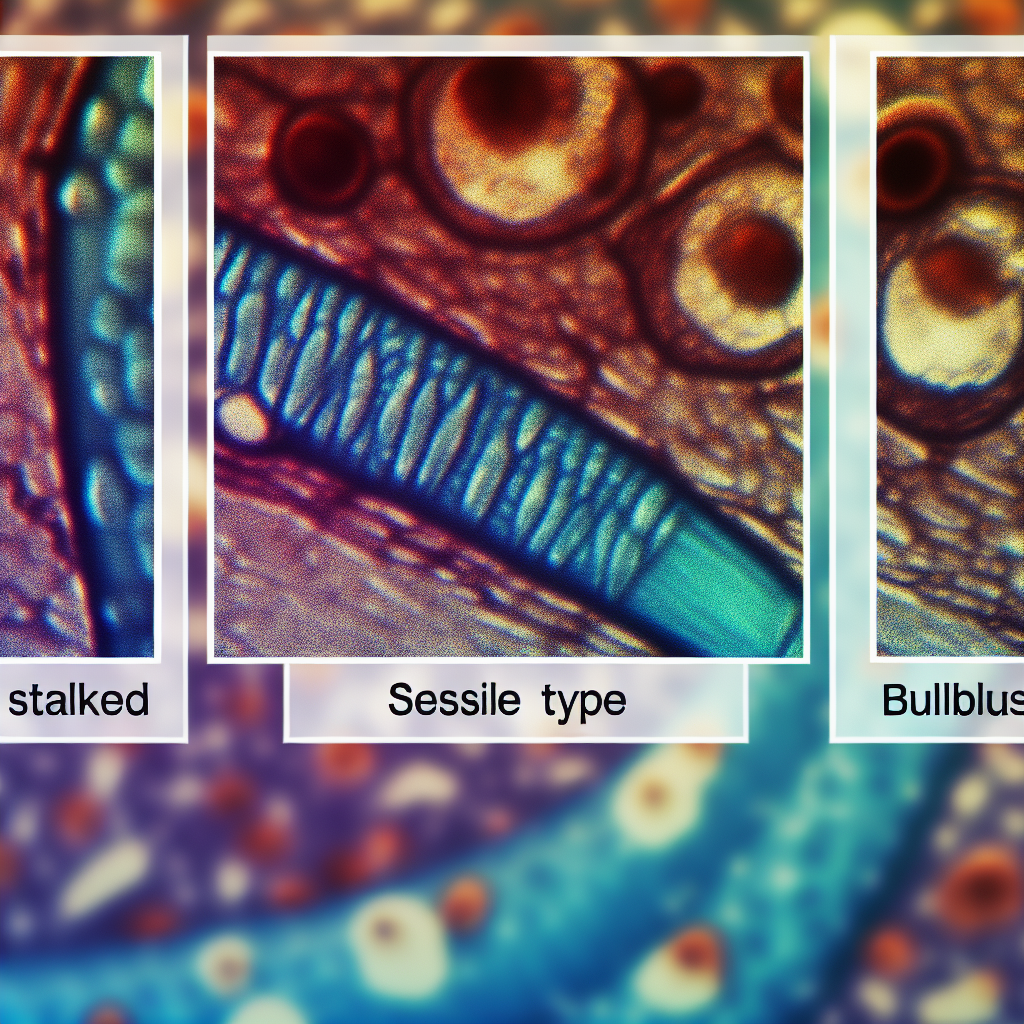
There are three main types of **glandular trichomes** in Cannabis sativa: capitate-stalked, sessile, and bulbous. Each has unique anatomical characteristics and metabolic roles, influencing cannabinoid production and the plant’s external defenses.
Mastery of trichome anatomy is essential for cultivators, extractors, and scientists aiming to maximize potency and craft target-specific cannabis experiences. From timing harvests precisely to optimizing solventless extraction methods, understanding trichome structure offers a scientific and commercial advantage in the growing cannabis industry.
Trichome Types and Their Characteristics
Capitate-Stalked Trichomes
The most visible and biochemically productive, capitate-stalked trichomes feature a large glandular head supported by a multicellular stalk and a basal cell that attaches to the epidermal surface. Found predominantly on female flowers and adjacent sugar leaves, these trichomes are powerhouses in producing **THC**, **CBD**, and key **terpenes** during peak flowering phases. As they mature, their heads fill with resin, transitioning from clear to cloudy and eventually amber — a visual indicator critical for harvest timing.
SEM studies, such as the one by Livingston et al. (2020), confirmed these trichomes contribute most to the plant’s psychoactive and aromatic profile. Their large surface area and heightened secretory activity make them prime targets for solventless extract techniques such as bubble hash and rosin.
Sessile Trichomes
Structurally similar in glandular head to capitate-stalked types, sessile trichomes lack a multicellular stalk and are nearly level with the leaf surface. Although their secretory abilities are more muted, they still contribute minor amounts to the plant’s overall cannabinoid content—particularly in earlier stages of development, suggesting a potential precursor role to fully developed capitate structures.
These trichomes are not the primary focus for extractors, but researchers exploring trichome evolution and developmental biology may find their transitional role important. Enhanced understanding could support genetic manipulation for improved resin output.
Bulbous Trichomes
Smallest among the three, bulbous trichomes measure only about 10-15 μm and often require high-magnification tools to observe. Though relatively limited in active compound production, they function as part of the plant’s defensive arsenal — secreting minor compounds like non-volatile terpenoids that may deter insects or reduce moisture loss.
While underexplored, the role of these trichomes should not be dismissed. Their presence across various plant tissues may provide evolutionary insight into the early formation of glandular cells and could become more relevant as climate-adaptive cannabis breeds are developed.
Scientific Studies and Applications
Research by Livingston et al. (2020) spotlighted the morphological transitions during the flowering phase, confirming that capitate-stalked trichomes swell and change color as resin accumulates. Meanwhile, Happyana et al. (2013) used cryogenic NMR and GC-MS to show that THC and related cannabinoids exist almost exclusively in these large, stalked structures.
Advanced analytical techniques enable producers to measure trichome maturity more accurately, guiding ideal harvest times for maximum cannabinoid yield. These studies support the development of fine-mesh filters that align with trichome size, generally ranging from 90 to 160 μm, to isolate only the most resin-dense glands during solventless extraction.
Additionally, future breakthroughs in genetics — using tools like **CRISPR** — may allow targeted increases in capitate-stalked trichome density and productivity. Studies covered in Sirikantaramas and Taura (2017) discuss the connection between genetic expression and trichome biosynthesis, hinting at the possibility of engineering cannabis for specific cannabinoid ratios or faster flowering cycles.
Practical Implications for Cultivators and Extractors
For commercial growers, real-time trichome monitoring has become a central tool in determining when to harvest marijuana plants. As the trichome heads begin transitioning from clear to milky-white and then amber, every color stage indicates a different cannabinoid balance—from energizing highs to sedative effects.
Meanwhile, extraction specialists benefit from understanding which types provide the most potent and flavorful outputs. Capitate-stalked trichomes are preferred for mechanical separation processes like dry sifting, while chemical extraction methods often extract a broader cannabinoid profile including metabolites from other trichome types.
Furthermore, with the growing popularity of strain-specific, effect-oriented products, knowledge of each trichome’s metabolic potential can assist in selecting source material that best fits formulation needs — such as **high-THC**, **balanced THC-CBD**, or **high-terpene** profiles.
Conclusion
The anatomy of cannabis trichomes — particularly the distinctions between capitate-stalked, sessile, and bulbous trichomes — offers vital insights for those seeking to master cannabis cultivation, extraction, and formulation. Scientific breakthroughs in imaging and chemical analysis are propelling cannabinoid research from macro to micro, making trichomes not just glittering symbols of potency but measurable assets in the quest for optimized cannabis products.
References
1. Livingston, S. J. et al. (2020). Cannabis glandular trichomes alter morphology and metabolite content during flower maturation. Plant Journal.
2. Happyana, N. et al. (2013). Analysis of cannabinoids in laser-microdissected trichomes of Cannabis sativa using LCMS and cryogenic NMR. Analytical and Bioanalytical Chemistry.
3. Tissier, A. (2018). Glandular trichomes: What comes after expressed sequence tags? The Plant Journal.
4. Andre, C. M. et al. (2016). Cannabis sativa: The Plant of the Thousand and One Molecules. Frontiers in Plant Science.
5. Sirikantaramas, S., & Taura, F. (2017). Cannabinoids: Biosynthesis and Biotechnological Applications. Cannabis sativa L. – Botany and Biotechnology.
Concise Summary
This guide explores the complex anatomy of cannabis glandular trichomes — capitate-stalked, sessile, and bulbous — with a focus on their structure, development, and role in cannabinoid production. Capitate-stalked trichomes are shown to be the most productive, dominating THC and terpene synthesis. Sessile and bulbous types serve secondary metabolic and protective functions. Scientific studies support their morphological distinctions and biochemical roles, guiding improved harvest timing and advanced extraction practices. By leveraging trichome biology, cultivators and researchers can optimize cannabis potency, purity, and therapeutic precision at both commercial and molecular levels.