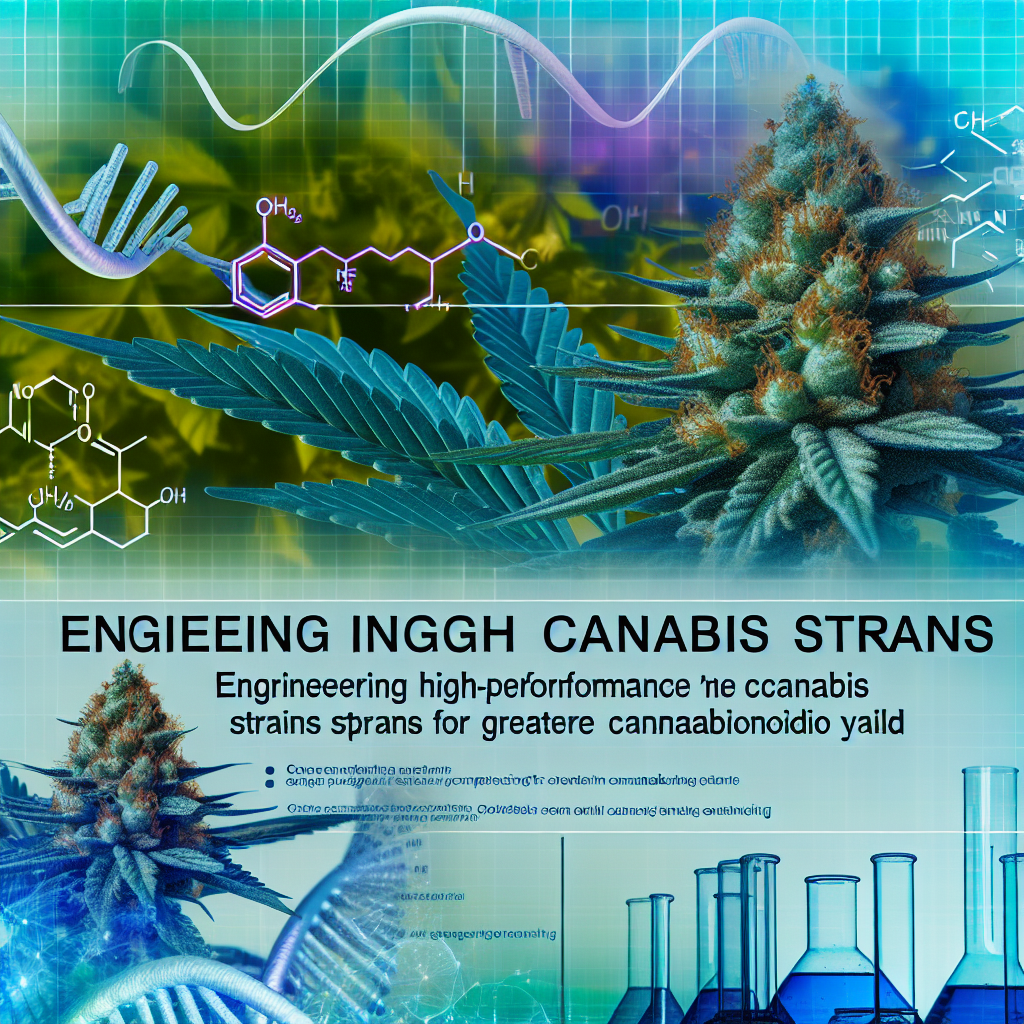
The Genetics of Potency: Engineering High-Performance Cannabis Strains for Maximum Cannabinoid Yield
Introduction
The world of **cannabis cultivation** is undergoing a revolutionary transformation, powered by the sophisticated art and science of **genetic engineering**. As consumer demand escalates for cannabis strains with higher **potency** and specific therapeutic benefits, cultivators and researchers are diving into the genetic underpinnings of the plant to craft strains with maximum **cannabinoid yield**. The essence of potency lies in the complex interplay of **cannabinoids**, **terpenes**, and other phytochemicals that cannabis produces, with particular attention given to **tetrahydrocannabinol (THC)** and **cannabidiol (CBD)** levels.
Genetics play a pivotal role in determining the potency profile of a cannabis strain. From selecting parent plants with desirable traits to employing cutting-edge biotechnological techniques, the journey of engineering high-performance strains is as much about heritage as it is about innovation. Through meticulous breeding programs, cultivators cross-pollinate select strains to enhance specific characteristics, such as increased THC content for recreational users or enhanced CBD levels for therapeutic applications. Additionally, these programs aim to produce strains with improved disease resistance and environmental adaptability.
Recent advances in **genetic mapping** and sequencing have accelerated the ability to identify and manipulate the genetic loci responsible for cannabinoid synthesis. These breakthroughs enable the creation of strains that not only yield higher quantities of cannabinoids but also exhibit improved disease resistance and environmental adaptability. This development is crucial in a market where consumers are increasingly aware of and concerned with the quality, potency, and safety of their cannabis products.
Furthermore, understanding the genetic basis of cannabinoid production has significant implications for medical research. Scientists are now better equipped to explore how different strains interact with the **human endocannabinoid system**, potentially opening the door to new treatments for a variety of conditions, including chronic pain, epilepsy, and anxiety disorders. As genetic research continues to unfold, the future of cannabis promises a landscape of unprecedented potency, purity, and therapeutic potential.
Features
The scientific community is rapidly uncovering the genetic architecture of cannabis, with several professional and medical studies shedding light on how to engineer strains for optimal potency. One groundbreaking study published in the journal *Frontiers in Plant Science* employed **genomic** and **transcriptomic analysis** to identify key genes involved in cannabinoid biosynthesis. Researchers pinpointed certain alleles correlated with high THC and CBD production, providing invaluable insights for future strain development [source](https://www.frontiersin.org/articles/10.3389/fpls.2020.00221/full).
Further studies have utilized **CRISPR-Cas9 gene-editing technology** to modify the cannabis genome, aiming to enhance desirable traits while eliminating unwanted ones. A paper published in *Nature Plants* demonstrated the successful knockout of genes responsible for the production of unwanted phytochemicals, allowing for a cleaner and more potent cannabinoid profile [source](https://www.nature.com/articles/s41477-020-0673-7).
Moreover, **phenotyping** — the study of observable characteristics of an organism resulting from the interaction of its genotype with the environment — has been a critical tool. By examining phenotypic variability among different strains, researchers can better understand the environmental factors that influence cannabinoid production. A study conducted by researchers at the University of British Columbia highlighted how environmental stresses such as light exposure and nutrient availability can significantly impact cannabinoid yield, suggesting new strategies for cultivation that complement genetic improvements [source](https://onlinelibrary.wiley.com/doi/full/10.1111/tpj.13852).
The implications of these studies reach far beyond recreational use. Medical professionals are increasingly leveraging genetically engineered cannabis to provide targeted treatments. In particular, strains with high CBD and low THC are being optimized to treat conditions like epilepsy, with studies revealing significant reductions in seizure frequency among patients [source](https://www.nejm.org/doi/full/10.1056/NEJMoa1611618). This progress underscores the vital role of genetics in not only amplifying potency but also in broadening the therapeutic horizon of cannabis.
Conclusion
The genetic engineering of cannabis for heightened **potency** represents a dynamic confluence of creativity and science. As we deepen our understanding of the **cannabis genome**, the possibilities for crafting strains tailored to specific uses become virtually limitless. By embracing genetic innovation, both consumers and professionals can look forward to a future where cannabis offers maximum therapeutic and recreational benefits, delivered with consistent quality and efficiency.
Concise Summary
Genetic engineering is transforming cannabis cultivation, enhancing **THC** and **CBD** potency while fostering strains with improved disease resistance and environmental adaptability. Leveraging techniques like **genomic mapping** and **CRISPR-Cas9**, researchers are creating cannabis variants offering higher cannabinoid yields and therapeutic potentials. With advances in genetic and phenotypic studies, the potential for developing targeted cannabis-related treatments for chronic conditions is vast. As genetic understanding deepens, the future promises unprecedented potency and purity, aligning cannabis cultivation with rising consumer quality and safety expectations. Solutions such as high-CBD, low-THC strains are proving beneficial, especially in treating epilepsy.