Why Most Cannabis Bioassays Are Lying to You – And What Real Pharmacology Looks Like
Introduction
**Cannabis** continues to rise in popularity both for **recreational** use and as a **therapeutic** agent. However, as consumers and professionals navigate this landscape, they encounter data supposedly supporting product claims—often in the form of **bioassays**. While these might seem scientifically sound, a closer examination reveals that many **cannabis bioassays** can be misleading. This deception stems from a combination of factors, including lack of **standardization**, discrepancies between **in vitro** and **in vivo** studies, and a general misunderstanding of **pharmacological** principles.
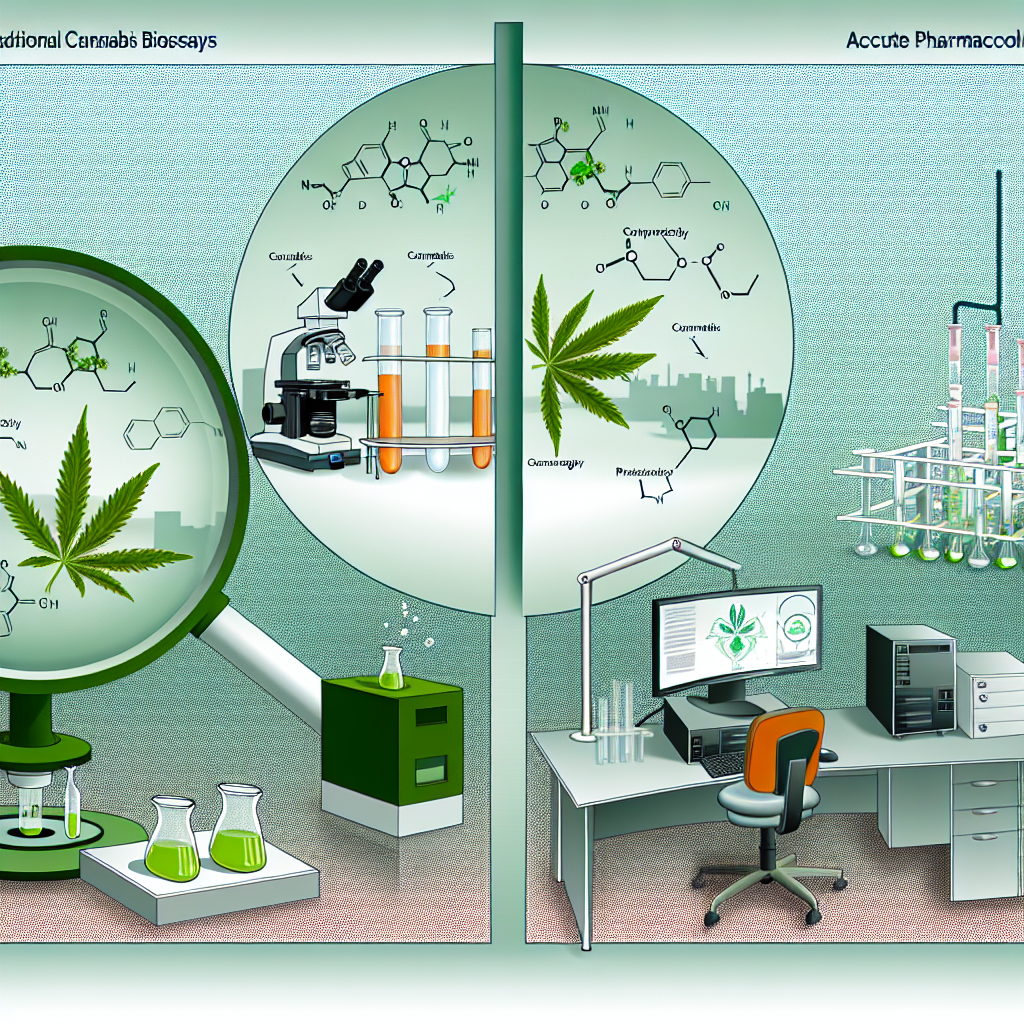
**Bioassays**, in the context of cannabis, are experiments that quantify the potency or activity of its compounds. These are often used to drive marketing strategies and influence purchasing decisions. Generally based on measuring the interactions of **cannabinoids** with various **receptors** in a controlled environment, such assays reportedly showcase results about **potency**, **efficacy**, and overall benefits. However, a problem arises when these studies are inaccurately portrayed or their results are misinterpreted, both by the industry to maximize sales and by users hoping for specific outcomes without understanding the underlying science.
This misleading nature is due in part to how these assays measure the effects of cannabinoids, like **THC** or **CBD**, in isolation, neglecting the **entourage effect**—the synergistic relationship between various **cannabis compounds** that can alter the pharmacological impact. Moreover, **in vitro bioassays** that endeavor to probe cannabis activity in controlled environments often fail to simulate the complex dynamics of **human biology**. They cannot consistently account for metabolic variations, tolerance development, or individual physiological differences which can greatly alter **bioavailability** and efficacy in practical use.
Understanding real pharmacology requires delving deeply into how cannabis is metabolized, how it interacts with the **human endocannabinoid system**, and what science tells us about its comprehensive effects. It also highlights the need for diverse **clinical trials** to bridge the knowledge gap between controlled laboratory results and real-world outcomes.
Features
The misconceptions often arise from a lack of standardized methodologies in cannabis research. For example, **in vitro bioassays** typically investigate the interaction of cannabinoids with **CB1** or **CB2 receptors** in cell cultures or animal models. While such studies can provide valuable insights into potential therapeutic effects or toxicity, they do not always translate directly to human application. For instance, a study conducted by **Berman et al. (2020)** in *Frontiers in Pharmacology* showed that while isolated **CBD** was effective in reducing certain types of inflammation in vitro, its effectiveness diminished significantly when tested in human subjects with varying metabolism and tolerance levels ([Berman et al., 2020](https://doi.org/10.3389/fphar.2020.00441)).
Moreover, the pharmacodynamics and pharmacokinetics of cannabis are complex and not fully understood. The browser of bioassays often overlooks crucial aspects such as the role of **metabolic enzymes** like **CYP450**, which significantly impact how active cannabis compounds are processed in the body. A report by **Stott et al. (2013)** in *The Journal of Pain and Symptom Management* outlined the variability in patient outcomes due to the interaction of cannabis with these enzymes, highlighting the need for personalized dosing regimens to achieve optimal therapeutic effects ([Stott et al., 2013](https://doi.org/10.1016/j.jpainsymman.2012.09.001)).
Additionally, the notion of the **“entourage effect”** suggests that whole-plant extracts, including **terpenes** and lesser-known cannabinoids, can produce different effects than isolated compounds like THC or CBD. Research by **Russo (2011)**, published in the *British Journal of Pharmacology*, emphasizes the importance of this interaction and calls into question the reliability of bioassays that ignore these synergistic effects ([Russo, 2011](https://doi.org/10.1111/j.1476-5381.2011.01238.x)).
Conclusion
Ultimately, while cannabis bioassays offer a glimpse into the pharmacological potential of this plant, they often fall short by failing to represent its real-world implications accurately. As consumers, it’s vital to critically evaluate these claims and advocate for comprehensive, standardized research that acknowledges the complexities of cannabis pharmacology. For professionals, this means championing robust, ethically conducted clinical trials to ensure cannabis use is both safe and effective. By doing so, we pave the way toward a more informed, scientifically grounded landscape in the realm of cannabis therapeutics.
**Concise Summary**
Cannabis bioassays often mislead by oversimplifying complex interactions due to non-standardized methodologies and ignoring the entourage effect. These assays typically measure isolated cannabinoids like THC or CBD, failing to account for the dynamic nature of human biology and individual variability. There is a critical need for robust, standardized research and diverse clinical trials to fill the gap between lab results and real-world applications. The industry must move toward a more informed scientific approach to cannabis pharmacology to ensure safe, effective therapeutic use.