Why Most Cannabinoid Products Fail Bioavailability — And the Emerging Role of Gastroretentive Formulation Tech
Introduction
The cannabis industry has seen explosive growth over recent years, with cannabinoids like CBD and THC gaining recognition for their potential therapeutic benefits. However, one of the primary challenges that continue to plague this burgeoning sector is the poor bioavailability of cannabinoid products. Bioavailability refers to the proportion of a drug or substance that enters the circulation and is thereby able to have an active effect. In the context of cannabinoids, many products on the market today fail to deliver the promised benefits due to their inability to be efficiently absorbed by the body.
The challenge largely stems from the nature of cannabinoids themselves. These compounds are inherently lipophilic (fat-loving) and have a high molecular weight, making them poorly soluble in water. As a result, once ingested, cannabinoids struggle to pass through the hydrophilic (water-loving) environments of the gastrointestinal (GI) tract. This leads to many cannabinoids being metabolized by the liver before they can enter the bloodstream, further reducing bioavailability—a phenomenon known as the ’first-pass effect’.
Studies suggest that the oral bioavailability of cannabinoids like THC can be as low as 6%, meaning the majority of what’s consumed never impacts the user as intended. This has significant implications not just for consumers seeking relief or recreational effects but also for medical professionals and formulators striving to create effective, reliable cannabinoid therapies.
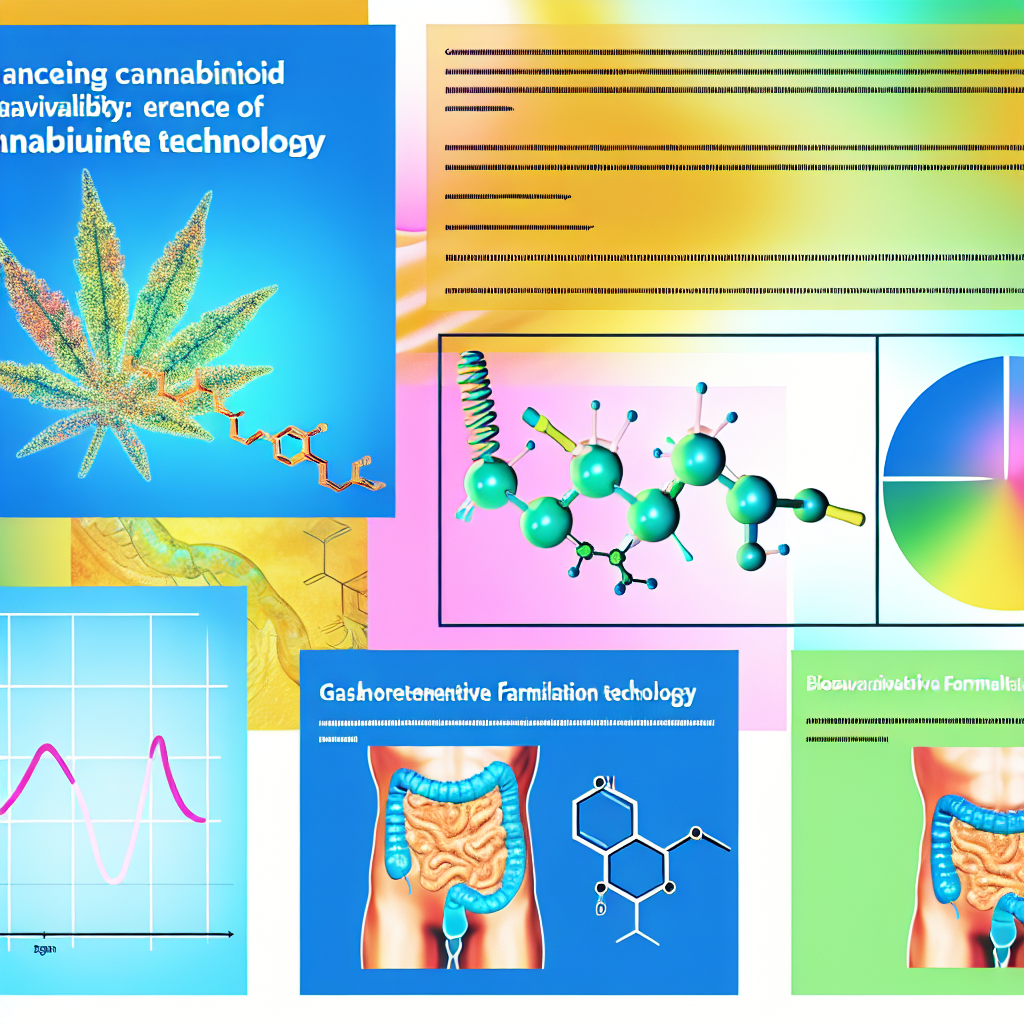
Addressing this limitation is crucial for realizing the full potential of cannabinoids. Recent advances in drug delivery have shown the potential in gastroretentive formulation technology as a promising method to enhance the bioavailability of cannabinoids. Gastroretentive systems are designed to prolong the retention of a drug in the stomach, which improves solubility and absorption. These systems take advantage of the stomach’s natural retention capabilities to ensure more efficient absorption into the bloodstream before the compound can be metabolized by the liver.
Features
Recent medical and professional studies illustrate the significant role gastroretentive technologies can play in improving the bioavailability of cannabinoids. Gastroretentive drug delivery systems aim to address absorption issues by using formulations that maintain the drug in the stomach rather than allowing it to pass rapidly into the intestines.
One study conducted by drug formulation scientists explored various gastroretentive approaches such as floating tablets, bioadhesive systems, and swelling or expanding systems. Floating systems work by remaining buoyant on the stomach contents for an extended period, thus allowing more time for the cannabinoid to dissolve and be absorbed. A particular example is CBD oil formulated in an effervescent floating tablet designed to improve retention time and absorption [Floating tablets in enhancing cannabinoid absorption](https://www.ncbi.nlm.nih.gov/pmc/articles/PMC4357546/).
Bioadhesive systems utilize materials that adhere to the gastric lining, thereby resisting gastric transit and extending retention time. These materials have shown promise in increasing the bioavailability of various lipophilic drugs, including cannabinoids [Bioadhesive systems in drug delivery](https://www.sciencedirect.com/science/article/pii/S0168365907007915).
Moreover, swellable systems expand upon ingestion to a size that prevents their exit from the stomach until the drug is released over a controlled period. This kind of system has successfully delivered other drugs, suggesting a similar potential for cannabinoids [Swellable drug delivery technologies](https://pubmed.ncbi.nlm.nih.gov/17869804/).
Beyond individual approaches, the integration of multiple systems has been shown to further enhance bioavailability. For instance, combining swellable polymers with bioadhesive components has demonstrated increased drug retention and absorption. By extending the residence time in the stomach, more of the cannabinoid is subject to dissolution and absorption gradients.
In what could be a game-changer for cannabinoid formulations, these gastroretentive techniques not only promise improved efficacy but also better consistency and predictability in therapeutic outcomes [Review on gastroretentive drug delivery systems](https://pubmed.ncbi.nlm.nih.gov/22486922/). These developments highlight the burgeoning role of pharmaceutical innovation in the cannabis space, positioning gastroretentive technology as a crucial tool in overcoming bioavailability barriers that limit cannabinoid efficacy.
Conclusion
The application of gastroretentive formulation technologies represents a promising evolution in cannabinoid delivery, addressing the critical issue of bioavailability. By extending the retention time in the stomach, these innovative systems have the potential to substantially increase the absorption rates of cannabinoids, thereby enhancing their therapeutic effectiveness. As research continues to delve into these advanced methodologies, consumers and marijuana professionals alike can look forward to more reliable, effective cannabinoid products.
Concise Summary
Cannabinoid products often suffer from poor bioavailability due to their lipophilic nature and high molecular weight, which limits absorption in the GI tract. This results in most cannabinoids being metabolized by the liver before affecting users. Gastroretentive formulation technologies offer a solution by prolonging drug retention in the stomach, enhancing solubility and absorption. Approaches like floating, bioadhesive, and swellable systems have shown promise in improving the bioavailability of cannabinoids, making therapies more effective and consistent. These innovations herald a new era in cannabinoid drug delivery, promising better outcomes for consumers and medical professionals.