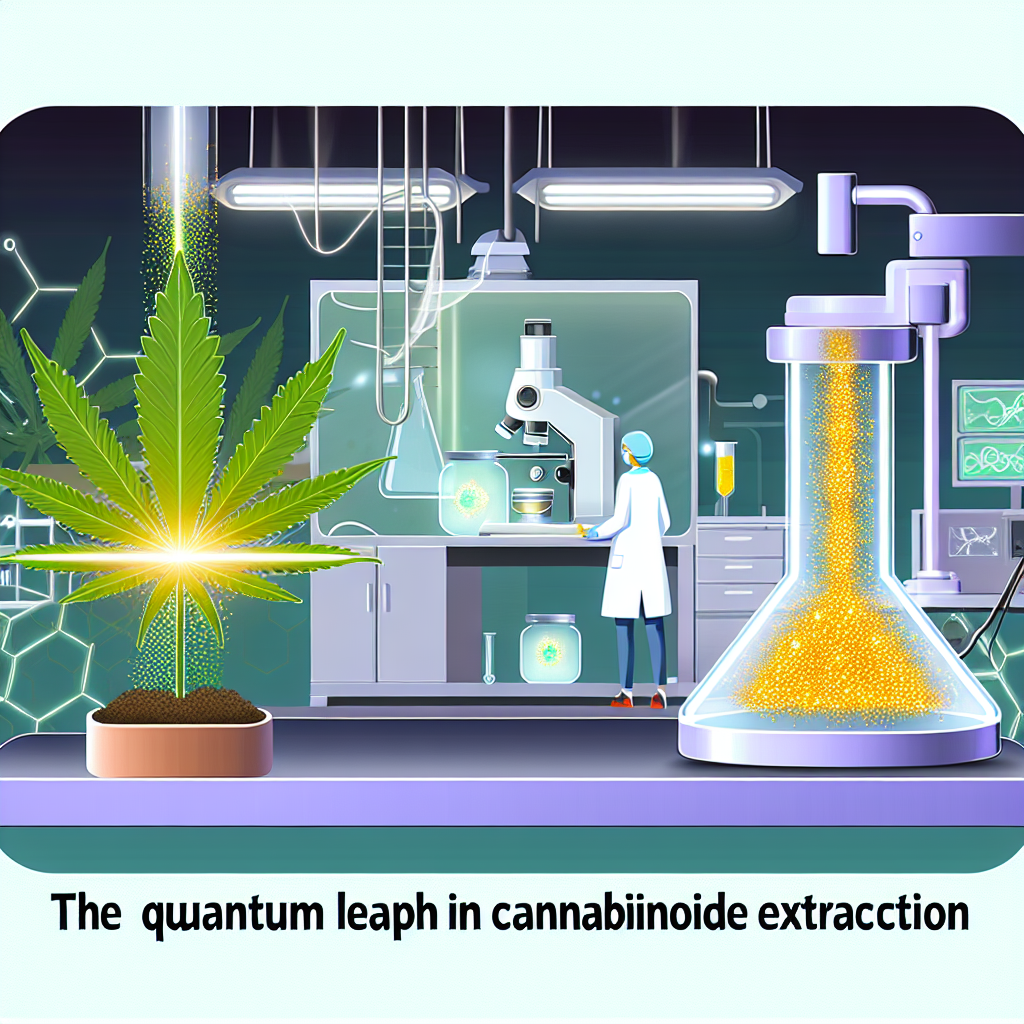
The Quantum Leap in Cannabinoid Extraction: Exploring Quantum Dot Technology in Cannabis Science
Introduction
The cannabis industry has experienced significant growth over the past few years, driven by increasing legalization and burgeoning interest in its medical potential. One area where cannabis science is rapidly evolving is cannabinoid extraction. Traditional extraction methods like CO2 and solvent-based processes have advanced considerably. However, they still face limitations, such as inefficiencies in isolating specific cannabinoids and potential contamination. Enter quantum dot technology: a revolutionary approach promising to redefine the boundaries of cannabinoid extraction.
Quantum dots are nanoscale semiconductor particles renowned for their unique optical and electronic properties. Traditionally used in displays, solar cells, and imaging technologies, these nanoparticles are now making waves in the cannabis industry. Their ability to interact with light at various frequencies allows for unprecedented precision in separating and isolating specific compounds, including cannabinoids and terpenes.
The potential of quantum dots to enhance the efficiency and purity of cannabinoid extraction is a game-changer. Unlike conventional methods, which may degrade sensitive compounds, quantum dot-based techniques can potentially increase the yield and quality of extracted cannabinoids. This precision is invaluable, as minor cannabinoids and terpenes, which exhibit therapeutic properties, are often sacrificed during typical extraction processes.
Beyond the extraction advantages, the application of quantum dot technology in cannabis science aligns with a growing emphasis on sustainability. These nanoparticles can be engineered to minimize the environmental footprint often associated with chemical solvents and intensive energy use in traditional extraction. As the cannabis industry continues to expand, there is a pressing need to adopt more sustainable practices, further highlighting the appeal of quantum dot technology.
This article will delve into the quantum leap that quantum dot technology represents for cannabinoid extraction, exploring existing studies and emerging research that showcases how this cutting-edge approach is poised to revolutionize the cannabis industry.
Features
Quantum dot technology’s application to cannabinoid extraction is supported by an array of studies from both the fields of nanotechnology and cannabis science. Although the use of quantum dots in cannabinoid extraction is still emerging, several foundational studies offer insight into their potential advantages.
A study published in [Nature Reviews Materials](https://www.nature.com/natrevmats/) highlights the efficacy of quantum dots in selective molecular binding and separation processes. The research underscores the precision of quantum dots in targeting and isolating specific molecular structures, a key advantage when extracting individual cannabinoids such as THC or CBD.
Furthermore, research indicates that quantum dot technology can achieve extraction with reduced solvent use. A study in [Scientific Reports](https://www.nature.com/srep/) illustrated how quantum dots could be crafted to function in aqueous environments, effectively reducing the dependence on potentially harmful organic solvents that are traditionally employed in cannabinoid extraction.
The potential of quantum dots extends beyond just cannabinoid extraction. Their application in enhancing cannabis analytics promises improvements in product testing, ensuring product purity and adherence to safety standards. An investigation featured in the [Journal of Chemical Technology & Biotechnology](https://onlinelibrary.wiley.com/journal/10974660) highlighted how quantum dot sensors can be utilized to detect pesticide residues and heavy metals in cannabis products, ensuring consumer safety and product quality.
The marriage of quantum dot technology and cannabis science is also paving the way for the development of new product formulations. The enhanced ability to isolate and preserve minor cannabinoids offers new avenues for producing specific therapeutic profiles and optimizing the medicinal impact of cannabis-based products. As studies continue to emerge, the anticipated breakthroughs promise to usher in a new era where cannabis science and nanotechnology work hand-in-hand to achieve unprecedented results.
Conclusion
Quantum dot technology represents a significant leap forward in the realm of cannabinoid extraction and cannabis science. With its potential to enhance precision, sustainability, and safety, quantum dots offer a glimpse into a future where cannabis products are purer and more targeted in their therapeutic effects. As research progresses, the integration of this nanotechnology into cannabis processing could redefine industry standards, highlighting a sustainable and innovative path ahead for both consumers and professionals.
Concise Summary
Quantum dot technology is poised to revolutionize cannabinoid extraction by increasing precision, efficiency, and sustainability. This nanotechnology allows for precise separation and isolation of cannabinoids and terpenes, enhancing yield and product purity while reducing the use of harmful solvents. With significant implications for product testing and the development of therapeutic profiles, quantum dots offer innovative solutions for the cannabis industry. As this technology advances, it promises to set new industry standards through sustainable practices and heightened product quality, benefiting both consumers and professionals.