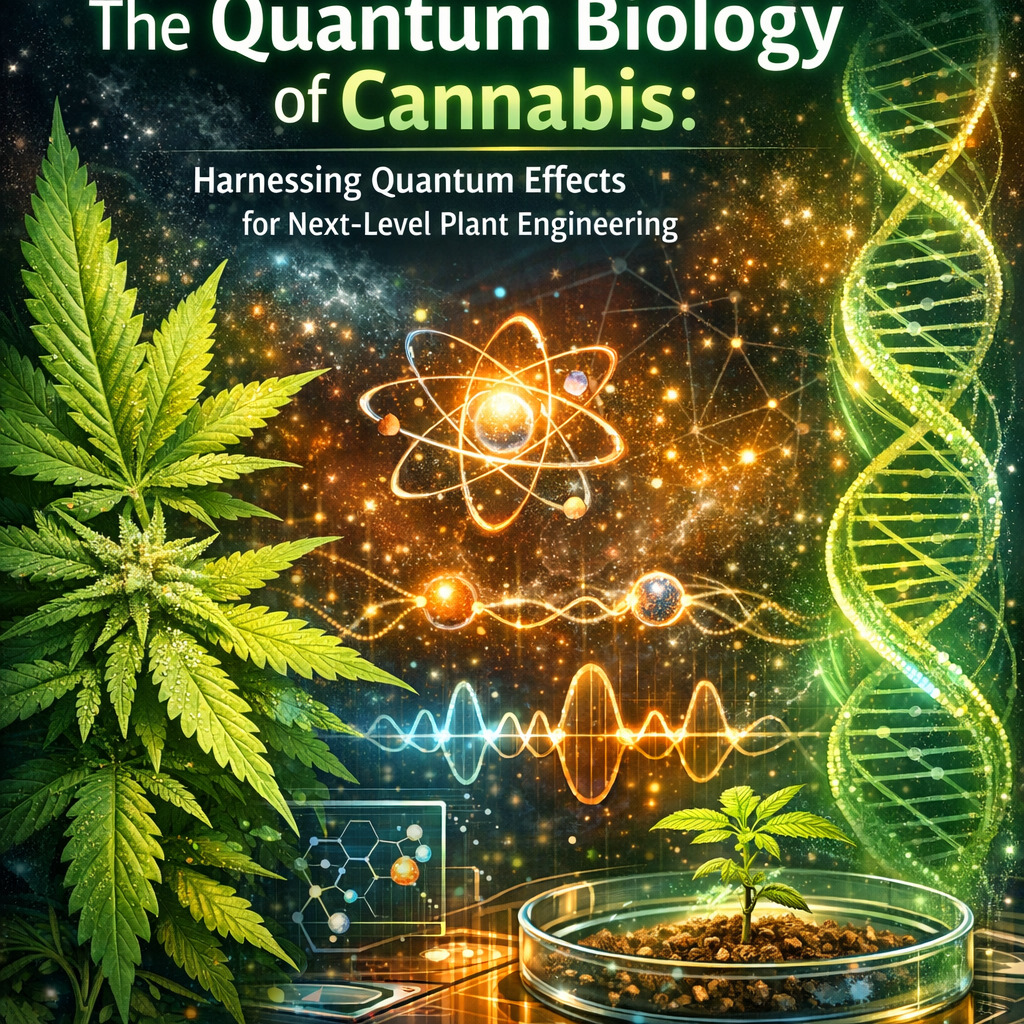
The Quantum Biology of Cannabis: Harnessing Quantum Effects for Next-Level Plant Engineering
In the rapidly evolving field of cannabis research and cultivation, innovation is constant, and boundaries are continuously pushed. A new frontier has begun to emerge that promises to revolutionize our understanding of cannabis — quantum biology. This interdisciplinary field examines the role quantum mechanics play in biological processes, which could offer groundbreaking insights into how we cultivate and optimize cannabis for medical, recreational, and industrial use. By exploring how quantum effects could be harnessed, scientists aim to elevate cannabis plant engineering and manipulation to new heights, potentially enhancing everything from growth rates to cannabinoid production.
At its core, quantum biology investigates how quantum phenomena such as superposition, entanglement, and tunneling influence biological processes. Within the world of plants, quantum effects have already been observed in processes like photosynthesis. Scientists have found that certain subatomic particles can exist in multiple states at once, allowing plants to efficiently transfer energy with minimal waste. This revelation opens a new window into understanding the efficiency of energy storage and conversion in plants — a crucial aspect when optimizing for potency and yield in cannabis cultivation.
Extended Content: The significance of quantum coherence in photosynthesis studies is profound, illuminating potential strategies for improved energy transfer applications in agriculture. The ability to optimize photosynthesis could lead to cannabis plants that grow faster and require less light, decreasing energy costs and increasing yield. Furthermore, understanding energy efficiency at a quantum level could enable cross-industry applications, benefiting not just cannabis but broader agricultural practices.
The implications of quantum biology extend beyond just energy transfer. Cannabinoids, the active compounds in cannabis, are synthesized through complex biochemical pathways that might also be influenced by quantum effects. By leveraging this understanding, researchers are exploring how quantum biology could be used to engineer cannabis plants with tailored profiles of cannabinoids and terpenes, enhancing specific medical or recreational properties. This cutting-edge approach holds promise for creating strains with optimized therapeutic effects, more consistent potency, and even novel profiles not achievable through traditional genetic modification.
As researchers delve deeper into the quantum underpinnings of biology, the prospect of applying these principles to cannabis becomes increasingly tangible. Imagine a world where cannabis plants are engineered to maximize their natural defenses against pests, or tailored to thrive in specific climates thanks to insights provided by quantum biology. Such advancements could not only transform cannabis agriculture but also propel the industry to the forefront of sustainable and innovative practices, tapping into resources at the quantum level to fulfill both modern demands and ecological responsibilities.
Features: Groundbreaking Studies in Quantum Biology and Cannabis
While the exploration of quantum biology in the context of cannabis is still in its nascent stages, several foundational studies highlight the potential for this exciting intersection of fields. Research into quantum effects in photosynthesis, which has served as a cornerstone, demonstrates significant advancements. A study published in [Nature in 2007](https://www.nature.com/articles/nature05678) identified quantum coherence in photosynthetic organisms, explaining how subatomic particles can travel multiple paths simultaneously, thereby optimizing energy transfer efficiency. This discovery has profound implications for understanding plant photosynthesis at a quantum level and underscores the hypothesis that similar quantum processes could be leveraged in cannabis cultivation.
Additionally, the potential applications extend into medical research, where precise manipulation of cannabis’ biochemical pathways could lead to breakthroughs in personalized medicine. Quantum tunneling, a phenomenon where particles overcome energy barriers, is thought to influence enzymatic reactions. Observing this in cannabinoid biosynthesis could provide novel strategies for manipulating the profiles of THC, CBD, and other cannabinoids ([Source](https://www.frontiersin.org/articles/10.3389/fpls.2014.00705/full)). This could open avenues for producing strains with enhanced medical properties or new therapeutic applications, directly benefiting the medical marijuana industry.
Extended Content: The impact on personalized medicine cannot be overstated. By applying quantum biology, it might become possible to tailor cannabinoid synthesis to individual patient needs, revolutionizing treatment protocols for conditions like chronic pain, epilepsy, and anxiety. Drugs derived from such precision-engineered plants could potentially offer efficacy tailored specifically to a patient’s genetic makeup, representing a significant leap in therapeutic approaches.
In parallel, the burgeoning field of quantum computing, with its unparalleled processing power, may pave the way for computational models that unravel the complex quantum entanglements in biological systems. By simulating these intricate processes, quantum computers could help predict and manipulate cannabis plant behaviors at a molecular level. Such technological integration could spearhead precise engineering of cannabis plants, cultivating strains with unparalleled efficiency in production, conservation, and application of energy.
Ultimately, these studies represent just the beginning of applying quantum principles to plant biology. As research progresses, their application to cannabis has the potential to not just enhance existing cultivation practices, but to radically reimagine them, fostering an industry that is both innovative and rooted in cutting-edge science.
Conclusion
The pioneering intersection of quantum biology and cannabis cultivation represents a thrilling step forward in the scientific and medical community. As we delve deeper into the quantum mechanics of biological systems, we edge closer to unlocking the full potential of this remarkable plant. By harnessing quantum effects for next-level plant engineering, we open doors to superior cannabis strains, empowering both consumers and industry professionals with unprecedented tools for cultivation, medicine, and sustainability. Ever-evolving, the future of cannabis looks increasingly promising, awaiting the next quantum leap.
Concise Summary
Quantum biology intersects with cannabis research, offering revolutionary insights into optimizing cultivation through quantum mechanics principles such as superposition and tunneling. This could result in strains with enhanced cannabinoid and terpene profiles for medical and recreational use, greater defense against pests, and adaptation to specific climates. Foundational research highlights quantum phenomena in photosynthesis, promising improved energy utilization in plants. The integration of quantum computing could further enhance precision engineering of cannabis plants, marking a new era in sustainable agriculture and medicine. The future holds the potential for significant advancements in plant genetics and industry practices.