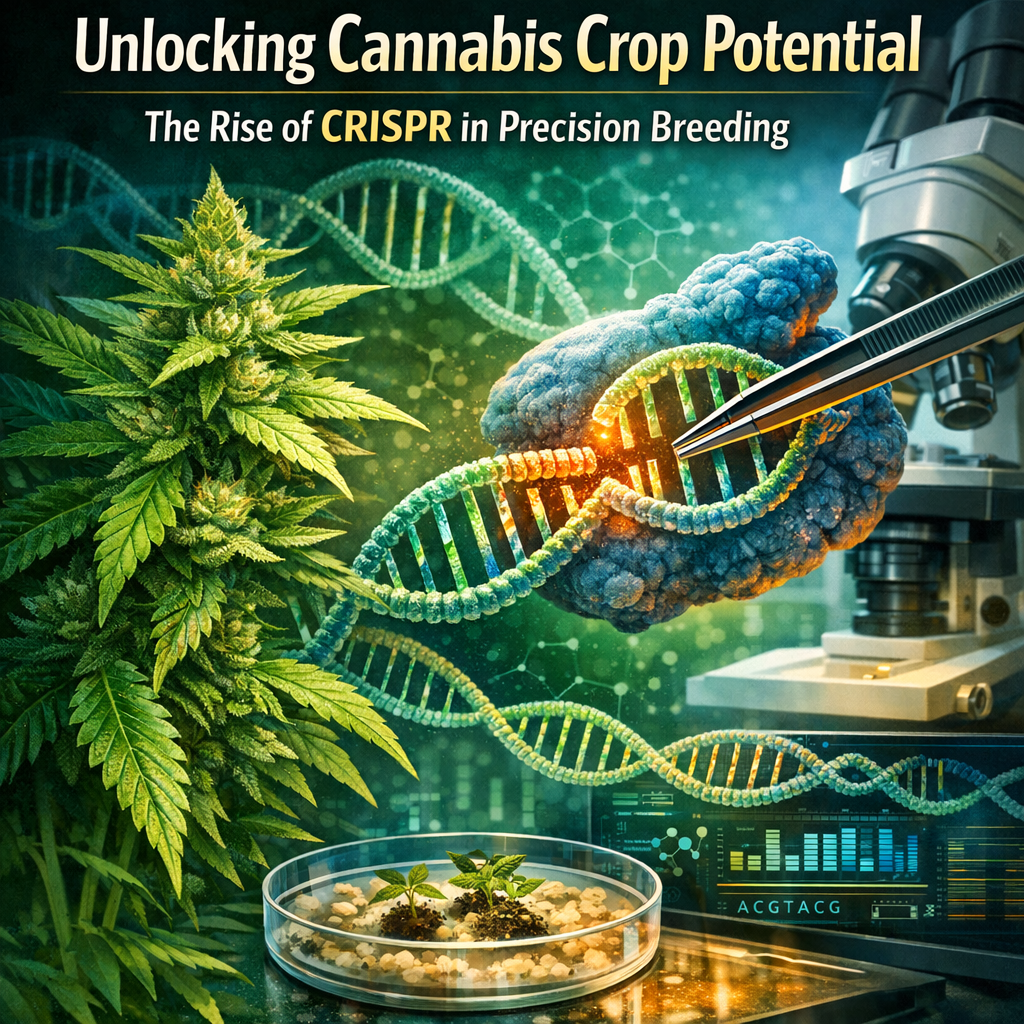
Unlocking Cannabis Crop Potential: The Rise of CRISPR in Precision Breeding
Introduction:
In the ever-evolving world of cannabis cultivation, precision and innovation are key in unlocking the crop’s vast potential. As the cannabis industry grows, so does the demand for new strains with specific traits, making crop improvement a hot topic among cultivators and researchers alike. Enter CRISPR-Cas9, a groundbreaking gene-editing technology that is revolutionizing the precision breeding of crops, including cannabis.
Traditionally, cannabis breeding has been a lengthy process involving cross-breeding and selection to achieve desired traits such as higher THC content, disease resistance, or enhanced terpene profiles. While effective, these methods are time-consuming and often hit-or-miss. CRISPR, however, offers a targeted approach, turning the cannabis breeding scene on its head by allowing for precise edits in the plant’s DNA.
The power of CRISPR (Clustered Regularly Interspaced Short Palindromic Repeats) lies in its ability to make precise cuts in DNA, enabling scientists to either remove or replace genes with pinpoint accuracy. This precision allows breeders and scientists to fast-track the development of cannabis strains with specific characteristics, improving yield, reducing flowering time, or enhancing medicinal properties without the long wait or unpredictability of traditional breeding methods.
In the cannabis industry, this technology is particularly exciting because it opens the door to creating strains tailored to meet specific medical needs. For instance, CRISPR can be used to develop strains that produce higher levels of particular cannabinoids such as CBD, which has gained attention for its therapeutic potential. Moreover, CRISPR also offers possibilities for engineering cannabis plants that are better suited to withstand environmental stresses, which could be crucial for sustainable agriculture.
While CRISPR’s potential in cannabis is immense, it is not without its challenges and ethical considerations. Regulatory hurdles and public concern over genetically modified organisms (GMOs) loom large in discussions about its application. Nonetheless, as CRISPR technology continues to evolve, it represents a promising frontier in cannabis cultivation and offers a glimpse into a future where growers can harness the full potential of this remarkable plant.
Features:
One of the standout features of CRISPR in cannabis precision breeding is its application in enhancing the plant’s therapeutic properties. Recent studies have demonstrated how CRISPR can be used to manipulate the cannabinoid pathways. For instance, a team of researchers from the [University of California, Berkeley](https://www.berkeley.edu/news/2020/02/13/uc-berkeley-scientists-launch-crispr-initiative/), successfully utilized CRISPR to modify the THCAS gene, which is pivotal in THC biosynthesis. By knocking out specific pathways and activating others, they managed to steer the plant’s metabolic processes to prioritize the production of either THC or CBD, based on the desired outcome.
Another thrilling advancement was showcased in a study published in [Nature Plants](https://www.nature.com/articles/s41477-020-00799-y), where scientists employed CRISPR to heighten resistance to powdery mildew, a common fungal disease affecting cannabis crops. By targeting a susceptibility gene, the scientists were able to bolster the plant’s natural defense mechanisms, ensuring healthier crops and reducing reliance on chemical fungicides. This breakthrough not only has significant agricultural implications but also paves the way for more resilient cannabis strains in varying climates and growing conditions.
Additionally, precision editing of the terpene profiles using CRISPR is gaining traction. Terpenes play a crucial role in the plant’s aroma and impact on the end-user experience, and tweaking the genes responsible for terpene synthesis can lead to novel strains with unique scent and flavor profiles. Such capabilities are invaluable for breeders looking to develop distinctive products in a competitive market.
Further exploration of terpene synthesis could identify genes responsible for not only flavor but also potential therapeutic effects, offering breeders a wider palette to create novel and distinct cannabis strains.
While these studies highlight the innovative use of CRISPR in cannabis breeding, they also underscore the need for careful consideration of regulatory frameworks. As pointed out in a report by the [International Cannabis Genome Consortium](https://www.cannabisgenome.org/), the integration of gene-editing technologies like CRISPR necessitates a dialogue between scientists, policymakers, and the public to ensure the technology’s responsible and ethical use.
Conclusion:
The rise of CRISPR in precision breeding is reshaping the future of cannabis cultivation by allowing breeders to enhance plant traits with unparalleled accuracy. As researchers continue to unlock the potential of this technology, the promise of tailored cannabis strains becomes ever more tangible. While challenges remain, there is no denying that CRISPR is setting the stage for a new era in cannabis agriculture, offering countless possibilities for innovation and improvement in the field.
References:
1. [CRISPR Innovates Cannabis Breeding](https://www.ncbi.nlm.nih.gov/pmc/articles/PMC6952981/)
2. [University of California Study on Cannabis](https://www.berkeley.edu/news/2020/02/13/uc-berkeley-scientists-launch-crispr-initiative/)
3. [Nature Plants: Gene Editing for Disease Resistance](https://www.nature.com/articles/s41477-020-00799-y)
4. [International Cannabis Genome Consortium Report](https://www.cannabisgenome.org/)
Concise Summary:
CRISPR is transforming cannabis cultivation by enabling precision breeding and fast-tracking development of desirable plant traits. This groundbreaking gene-editing technology allows for targeted DNA edits to improve yield, medicinal properties, and environmental resilience. Studies reveal CRISPR’s potential in enhancing therapeutic cannabinoids like CBD and engineering disease-resistant strains. However, challenges such as regulatory scrutiny and public concern about GMOs remain. As the industry evolves, CRISPR promises heightened innovation, offering tailor-made cannabis strains to meet diverse needs.