Biodegradable Cannabis Packaging: Is It the Future of Eco-Friendly Product Marketing?
Introduction
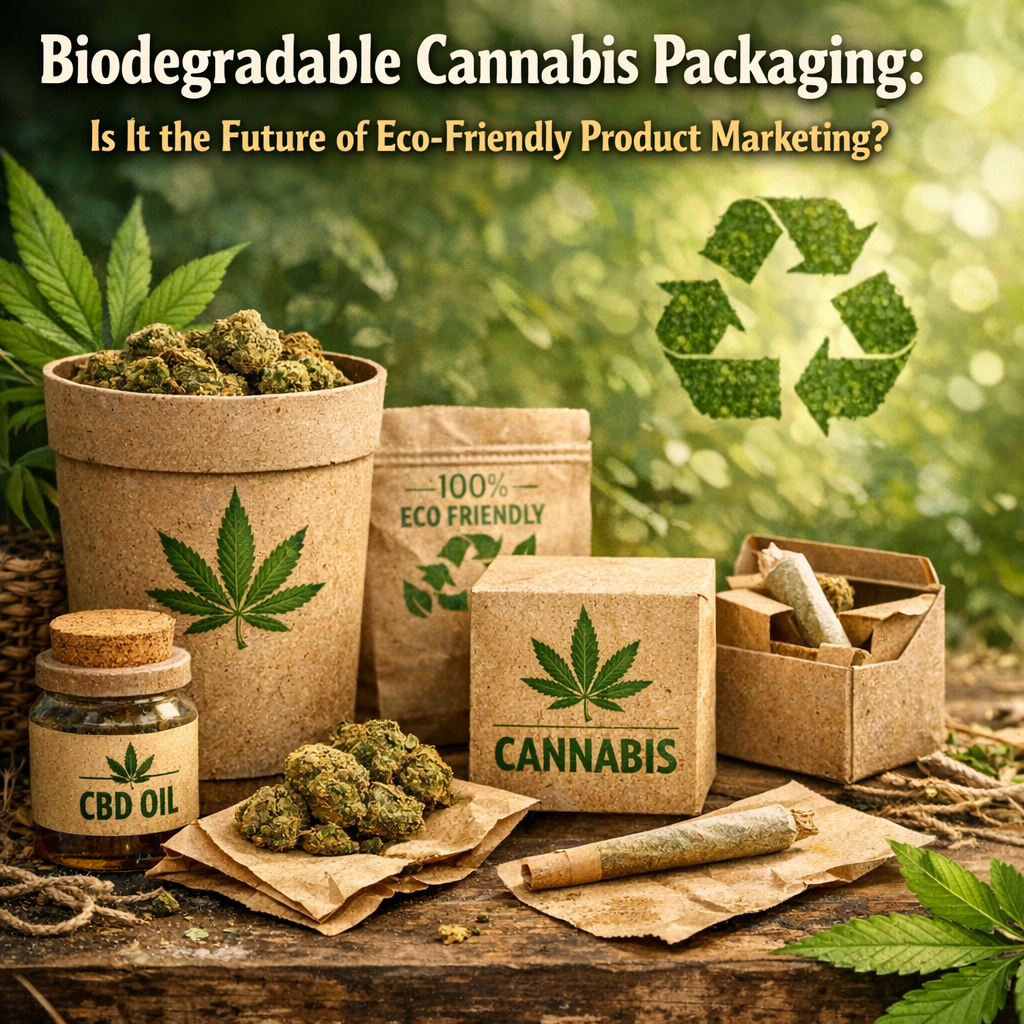
The cannabis industry is experiencing rapid growth, with global sales projected to reach $73.6 billion by 2027. However, this growth raises environmental concerns, particularly with the industry’s reliance on traditional packaging methods that use non-biodegradable materials like plastic and aluminum. As consumer awareness about ecological sustainability increases, the cannabis industry must seriously address its environmental footprint. Biodegradable cannabis packaging emerges as an innovative and essential solution, offering an alternative to conventional packaging by significantly reducing landfill waste. Made from organic materials such as bioplastics, cornstarch, or bamboo, these packages decompose naturally, minimizing environmental impact. Aligning with the values of many cannabis consumers, this packaging option also serves as a distinguishing marketing tool amidst a crowded market, catering to eco-conscious consumer values.
With environmental considerations becoming imperative, the shift towards biodegradable options is not just a marketing strategy but a necessity for sustainability. The production of approximately 300 million tons of plastic waste annually highlights an urgent need for change, and the cannabis sector plays a role in this issue. Increasing demands from governments, regulatory bodies, and consumers for more sustainable practices are driving businesses to explore innovative solutions, such as hemp-based plastics and plant-based inks. These options offer renewable and often more cost-effective packaging methods.
This trend reflects a broader movement toward sustainability across multiple industries, with sectors like food, fashion, and technology already adopting greener alternatives. As the cannabis industry matures, adopting sustainable practices is crucial not only for its socially responsible image but also to ensure long-term viability in an increasingly eco-conscious market.
Features
Research highlights the importance and feasibility of shifting towards biodegradable packaging in the cannabis industry. Studies indicate that biodegradable materials can considerably reduce the carbon footprint compared to traditional packaging. For example, a report from the journal [*Environmental Science & Technology*](https://pubs.acs.org/doi/abs/10.1021/acs.est.9b01519) reveals that bioplastics could decrease CO2 emissions by up to 68% compared to conventional plastics, a critical finding for an industry often scrutinized for its environmental impact.
Further, a study by the [American Sustainable Business Council and Cornell University](https://www.asbcouncil.org/sites/…/asbc-sustainable-packaging-2018.pdf) shows that consumer preferences increasingly lean toward brands adopting sustainable practices. Over 70% of surveyed participants expressed willingness to pay more for sustainably packaged products. This insight is essential for cannabis businesses aiming to appeal to eco-conscious consumers.
Several pioneering cannabis firms have embraced biodegradable packaging. Companies like Sana Packaging, using 100% plant-based plastic, have noted reduced production costs and increased consumer loyalty. These companies demonstrate the potential benefits of transitioning to eco-friendly packaging solutions, paving the way for others in the industry to follow, creating a ripple effect amplifying sustainable practices.
From a regulatory standpoint, governments worldwide are imposing stricter waste management controls, pushing companies to innovate packaging technologies. Countries like [Canada](https://www.canada.ca/en/health-canada/services/cannabis-regulations.html), with comprehensive cannabis legislation, emphasize sustainability mandates, highlighting the urgency for adopting biodegradable solutions.
Conclusion
Biodegradable cannabis packaging is not merely a trend; it’s an essential step toward sustainable industry practices. With increasing consumer demand for eco-friendly options and stricter governmental regulations, adopting biodegradable packaging is a strategic choice for compliance and capturing a market driven by environmental concerns. Beyond reducing waste, it ensures the industry’s future viability.
References
1. [Global Cannabis Market](https://www.businesswire.com/news/home/20200724005054/en/Global-Cannabis-Market-to-Reach-73.6-Billion-by-2027-Impacted-by-the-COVID-19-Pandemic-COVID-19-Pandemic-Analysis—ResearchAndMarkets.com)
2. [Environmental Science & Technology Journal](https://pubs.acs.org/doi/abs/10.1021/acs.est.9b01519)
3. [American Sustainable Business Council and Cornell University Study](https://www.asbcouncil.org/sites/…/asbc-sustainable-packaging-2018.pdf)
4. [Sana Packaging Case Study](https://www.sanapackaging.com/about)
5. [Canada’s Cannabis Legislation and Sustainability](https://www.canada.ca/en/health-canada/services/cannabis-regulations.html)
Concise Summary:
The cannabis industry’s growth, with projected global sales of $73.6 billion by 2027, underscores the need for sustainable practices, notably through biodegradable packaging. This innovative solution reduces landfill waste by using organic materials such as bioplastics and bamboo. Aligning with eco-conscious consumer values, biodegradable packaging is not just a marketing strategy but a necessity, especially as governments enforce stricter regulations. Pioneering firms, like Sana Packaging, illustrate the benefits of going green, including cost reduction and enhanced consumer loyalty, ensuring the industry’s future in a sustainability-focused market.