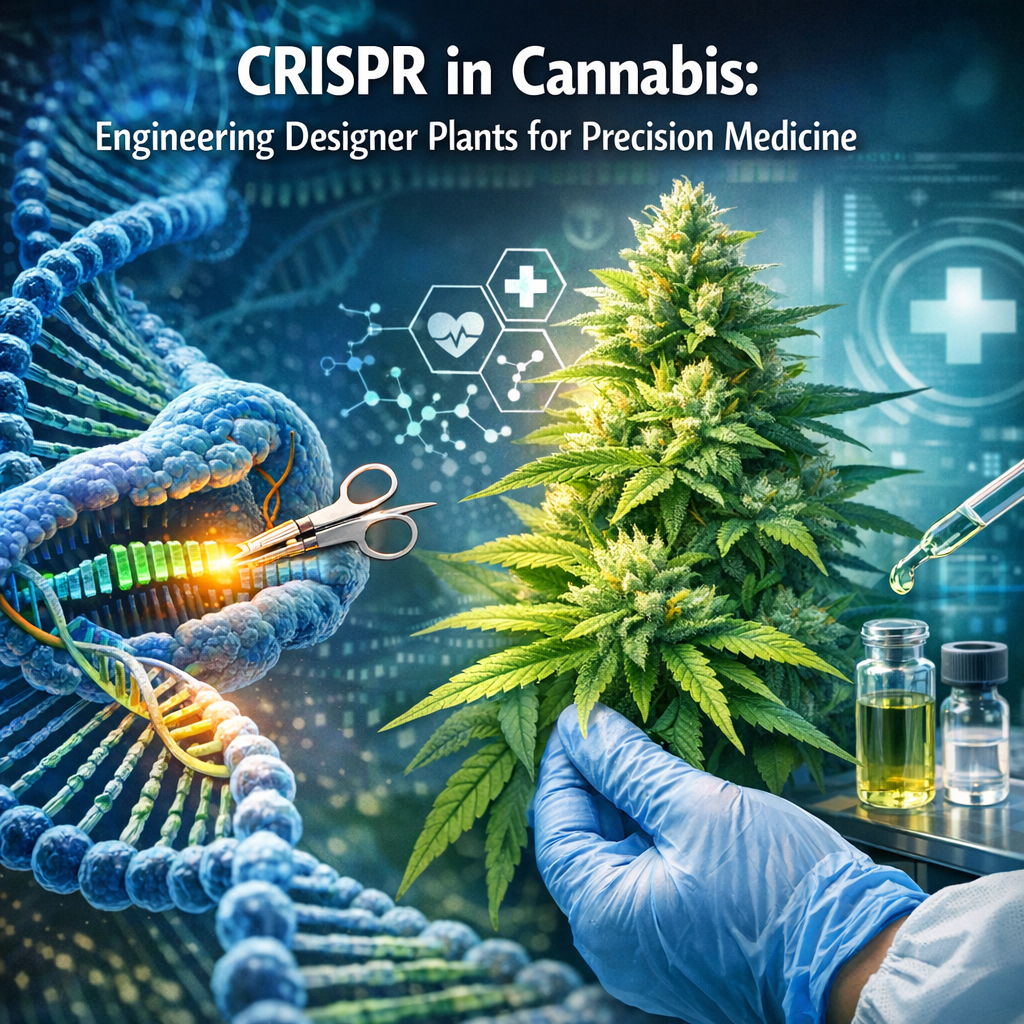
CRISPR in Cannabis: Engineering Designer Plants for Precision Medicine
Introduction
Cannabis, a plant with a diverse and impactful history, is continuously being reimagined due to its vast potential. Traditionally known for its recreational and medicinal benefits, groundbreaking advances in genetic engineering technologies like CRISPR (Clustered Regularly Interspaced Short Palindromic Repeats) have ushered in a new era for the cannabis industry. At the intersection of biotechnology and plant science, CRISPR presents a revolutionary method for cannabis cultivation, enabling the creation of designer plants specifically tailored for precision medicine.
CRISPR technology operates by allowing scientists to make precise, directed changes to the DNA of living organisms. This has significant implications for plant breeding, as it permits the removal of undesired traits or the enhancement of beneficial ones with unparalleled specificity. In the realm of cannabis, CRISPR can be utilized to increase yield, boost the plant’s natural resilience, and perhaps most notably, fine-tune cannabinoid profiles to achieve specific therapeutic objectives.
The use of CRISPR in cannabis research could revolutionize the development of strains custom-made for medical use. Various cannabinoids, such as THC (tetrahydrocannabinol) and CBD (cannabidiol), interact with the human endocannabinoid system in complex ways, providing potential treatments for numerous health conditions ranging from chronic pain to epilepsy. By engineering cannabis plants that produce cannabinoids in specific ratios, researchers can potentially create customized therapeutic options for patients.
Moreover, CRISPR enables the production of rare cannabinoids that are difficult to find in significant quantities naturally. These minor cannabinoids might have untapped therapeutic potential and could pave the way for novel treatment options. The ability to precisely edit and modify cannabis DNA not only promises more effective medicines but also ensures the consistency and safety of cannabis products, which is crucial for gaining the trust of consumers and healthcare professionals.
Features
Numerous studies and experiments have begun to demonstrate the transformative potential of CRISPR technology in cannabis research. A significant study by scientists at the University of California, Berkeley successfully showcased the use of CRISPR to change cannabinoid pathways in the cannabis plant. By precisely targeting genes responsible for cannabinoid synthesis, researchers adjusted the levels of THC and CBD, tailoring their production to specific medical needs. [Read the study](https://www.nature.com/articles/nature24646).
Additionally, CRISPR has played a crucial role in developing strains with greater resistance to pests and environmental stressors. A study published in the Plant Biotechnology Journal highlighted the gene editing for disease resistance, showing promising results in crops subjected to fungal diseases that commonly afflict cannabis plants. This innovation supports higher-quality yields and reduces the need for chemical interventions, aligning with sustainable agriculture practices. [Read more](https://onlinelibrary.wiley.com/doi/10.1111/pbi.13603).
Another promising application of CRISPR is the production of rare cannabinoids such as CBG (Cannabigerol) and THCV (Tetrahydrocannabivarin), compounds known for their unique medical properties. While traditional breeding methods are time-consuming and often imprecise, CRISPR significantly expedites and refines the process by directly targeting pathways involved in the biosynthesis of these rare compounds. According to research by the International Cannabis and Cannabinoids Institute, this approach could reduce production times and result in high-potency therapeutic products tailored for specific medical indications. [Learn more](https://www.frontiersin.org/articles/10.3389/fpls.2021.645761/full).
Conclusion
The synergy of CRISPR technology and cannabis cultivation holds tremendous promise for the future of medical cannabis. By enabling precise manipulation of the cannabis genome, CRISPR provides the tools needed to develop designer plants for specific therapeutic needs, enhance crop resilience, and potentially uncover new cannabinoid profiles with significant medicinal value. As we continue to explore the boundaries of this groundbreaking technology, the potential for cannabis in precision medicine becomes increasingly attainable, heralding a new chapter in plant-based therapeutics.
Concise Summary
CRISPR technology is revolutionizing the cannabis industry by enabling the creation of designer plants with specific cannabinoid profiles for medical applications. This technology allows precise editing of cannabis DNA, which can improve yield, resilience, and create therapeutically beneficial strains. By engineering plants to produce specific ratios of cannabinoids like THC and CBD, CRISPR can customize cannabis for precise medical needs. Furthermore, it facilitates the production of rare cannabinoids with untapped therapeutic potential. CRISPR advancements offer promising benefits, including improved agriculture practices, more effective medications, and enhanced trust among consumers and healthcare providers.