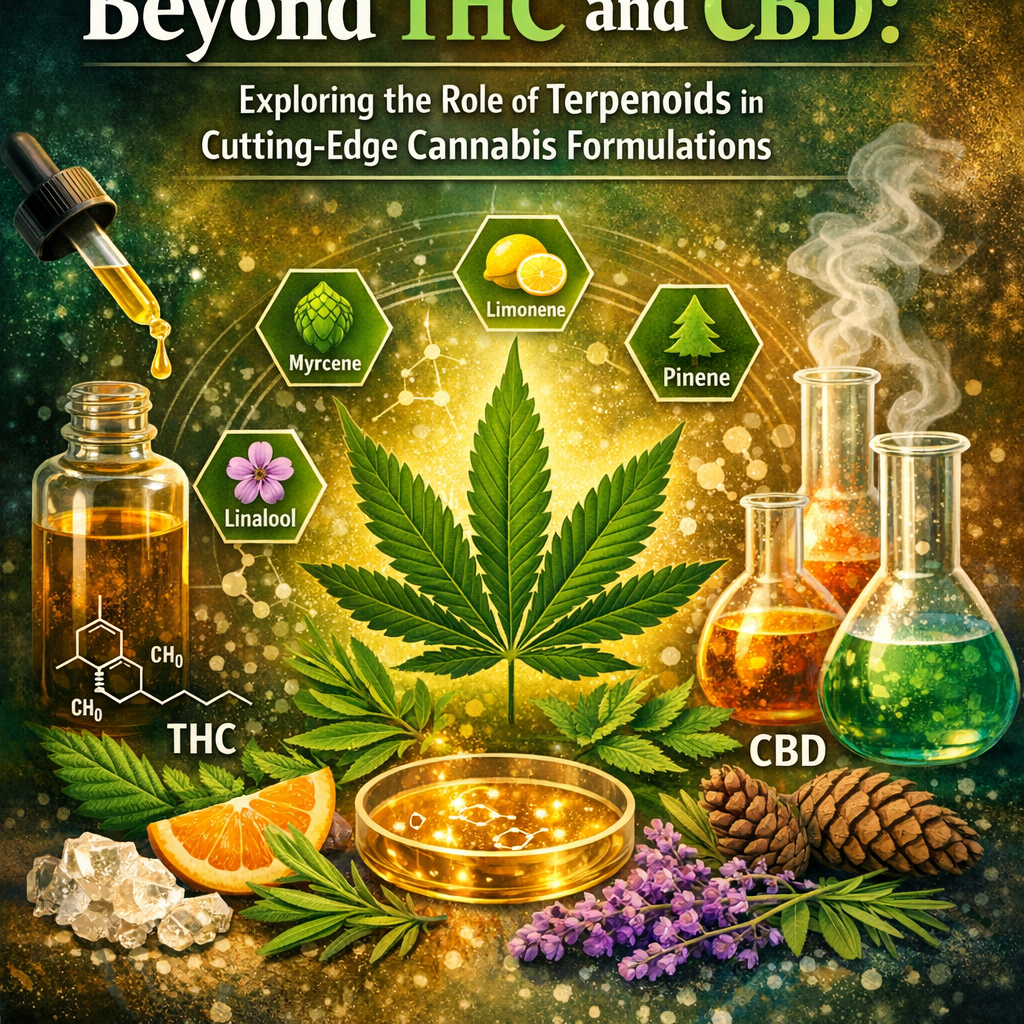
Beyond THC and CBD: Exploring the Role of Terpenoids in Cutting-Edge Cannabis Formulations
Introduction
Cannabis is a plant known for its multifaceted applications and complex chemical makeup. Traditionally, much of the focus on cannabis has centered around its most well-known cannabinoids: tetrahydrocannabinol (THC) and cannabidiol (CBD). THC is primarily recognized for its psychoactive properties, offering the “high” that many users seek. Meanwhile, CBD is famous for its potential therapeutic uses, without the intoxicating effects.
However, cannabis is far more than just THC and CBD. The plant contains a myriad of other compounds, among which terpenoids (or terpenes) play a significant role. These compounds are responsible for the diverse aroma and flavor profile of cannabis, from the zesty scent of lemon to the earthy notes of pine. But their function extends beyond mere sensory delight; terpenoids are gaining recognition for their potential therapeutic benefits and their synergy with cannabinoids, a concept known as the entourage effect.
Terpenoids are organic compounds found not only in cannabis but in many plants, including fruits and herbs. Over 200 different terpenes have been identified in cannabis, each contributing to the plant’s unique characteristics and effects. Some common terpenes include myrcene, limonene, linalool, pinene, and humulene. Research suggests that these terpenes can influence cannabis’s effects, potentially enhancing or modulating the impact of cannabinoids like THC and CBD.
As the cannabis industry evolves and more consumers seek specific therapeutic benefits, the focus is increasingly shifting towards understanding the comprehensive profiles of cannabis strains, including their terpenoid compositions. This exploration opens the door to cutting-edge formulations that better cater to the nuanced needs of consumers and medical patients.
In this article, we’ll delve into the role of terpenoids in cannabis, highlighting how they contribute to the plant’s effects and their potential in crafting advanced cannabis products. We’ll also examine some of the latest professional and medical studies that shed light on this exciting aspect of cannabis science.
Features
Recent scientific studies have begun to unravel the complex interactions between terpenoids and cannabinoids, helping us to understand how these chemical constituents work together. One notable study published in the journal [Frontiers in Neurology](https://www.frontiersin.org/articles/10.3389/fneur.2018.00759/full) in 2018 highlighted the therapeutic potential of terpenes in treating epilepsy, particularly when combined with CBD. The study indicated that terpenes might enhance the anticonvulsant effects of CBD, suggesting notable implications for formulating more effective cannabis-based treatments for epilepsy.
The entourage effect, a term popularized by researchers like Dr. Ethan Russo, refers to the synergistic relationship between cannabinoids and terpenoids. Dr. Russo’s work, published in the [British Journal of Pharmacology](https://bpspubs.onlinelibrary.wiley.com/doi/full/10.1111/j.1476-5381.2011.01238.x), outlines how terpenes can complement and enhance the effects of cannabinoids. For example, myrcene, commonly found in cannabis, has been noted for its sedative qualities and may work in tandem with THC to amplify its relaxation effects. Similarly, limonene might elevate mood and counteract anxiety, potentially offering a calming balance to THC’s cerebral stimulation.
Furthermore, a study from the University of Arizona published in [Current Medicinal Chemistry](https://www.eurekaselect.com/161290/article) explored the potential anti-inflammatory and analgesic properties of beta-caryophyllene, a terpene present in many cannabis strains. This research suggests that beta-caryophyllene might act on the CB2 receptor, engaging the body’s endocannabinoid system differently than THC. This terpene’s unique interaction highlights the possibility of formulations targeting specific health concerns without psychoactive effects.
Emerging research is also exploring the role of terpenes in the pharmacokinetics of cannabinoids, affecting how these compounds absorb, distribute, and metabolize in the body. By tailoring cannabis formulations with specific terpenoid profiles, manufacturers could optimize product efficacy and offer more personalized therapeutic solutions.
Conclusion
As our understanding of cannabis chemistry expands, terpenoids are emerging as vital components in crafting sophisticated cannabis formulations beyond just THC and CBD. Their potential therapeutic benefits, interactions with cannabinoids, and ability to enhance the consumer experience underscore their importance. By focusing on these aromatic compounds, the cannabis industry is poised to develop a new wave of products that cater to the specific needs of consumers and medical patients alike.
References
1. [Frontiers in Neurology](https://www.frontiersin.org/articles/10.3389/fneur.2018.00759/full)
2. [British Journal of Pharmacology](https://bpspubs.onlinelibrary.wiley.com/doi/full/10.1111/j.1476-5381.2011.01238.x)
3. [Current Medicinal Chemistry](https://www.eurekaselect.com/161290/article)
Concise Summary
Cannabis not only contains THC and CBD but also over 200 terpenoids that define its aroma, flavor, and therapeutic potential. Terpenoids may work synergistically with cannabinoids, offering benefits like enhanced anticonvulsant effects in epilepsy or mood stabilization. Studies highlight terpenes like myrcene and beta-caryophyllene for their roles in sedation, anti-inflammatory effects, and endocannabinoid system interactions. As research advances, the cannabis industry is seeing potential in crafting formulations based on terpenoid profiles, allowing for more personalized consumer experiences and targeted therapeutic solutions.