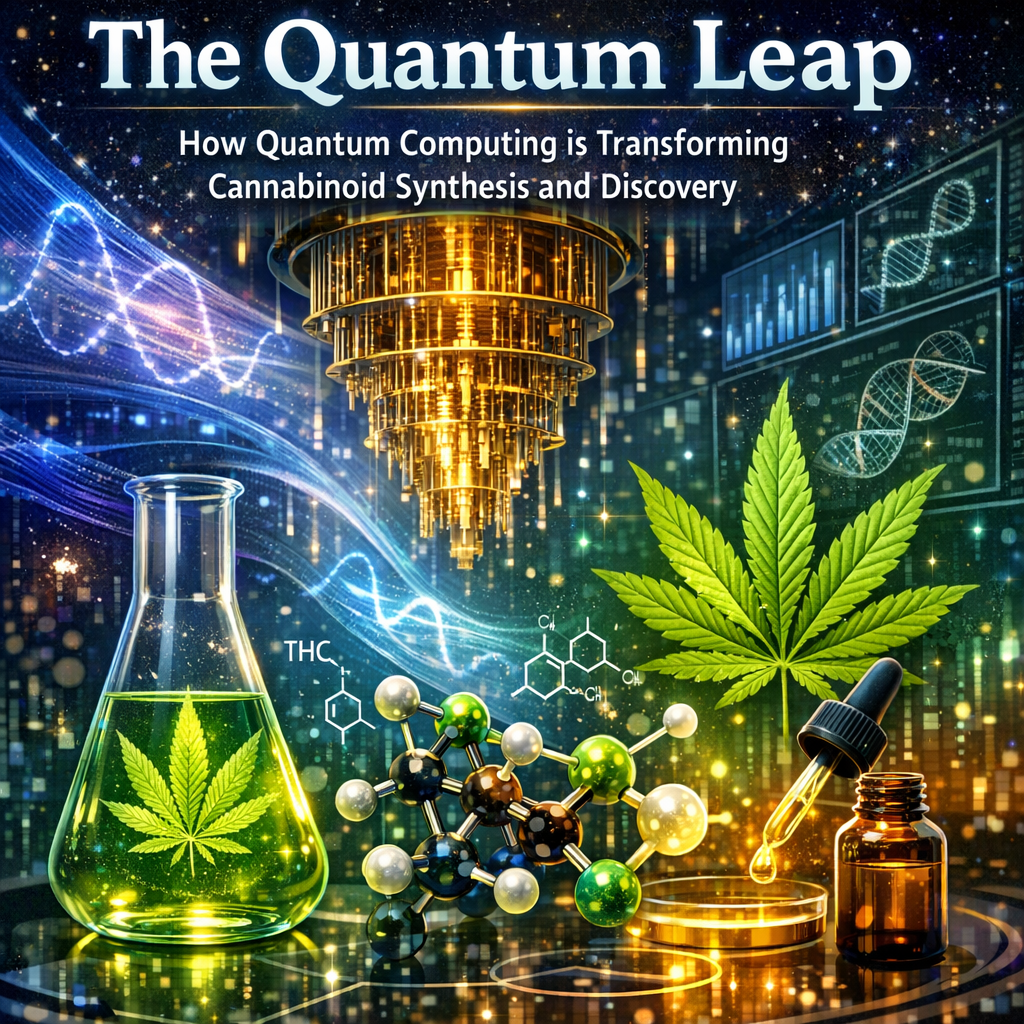
The Quantum Leap: How Quantum Computing is Transforming Cannabinoid Synthesis and Discovery
Introduction
As the digital and natural worlds increasingly intersect, we stand on the cusp of revolutionary advancements in both technology and biology. Quantum computing, once a theoretical concept confined to physics lectures, is emerging as a powerful tool capable of transforming numerous industries. One of its most exciting applications lies in the field of cannabinoid synthesis and discovery. With both consumers and cannabis professionals eagerly anticipating new developments, understanding the impact of quantum computing on cannabinoid research is more relevant than ever.
Cannabinoids, the active compounds found in the cannabis plant, interact with the human endocannabinoid system to produce a variety of therapeutic effects. While over 100 different cannabinoids have been identified, THC (tetrahydrocannabinol) and CBD (cannabidiol) remain the most renowned. Today, the challenge lies not only in discovering new cannabinoids but also in synthesizing them efficiently and studying their effects with greater precision. Enter quantum computing.
Quantum computers operate on the principles of quantum mechanics, enabling them to process information in ways traditional computers cannot. This allows them to solve complex problems faster and more accurately. In the realm of cannabinoid research, quantum computing can simulate molecular interactions within the human body at an unprecedented scale. It can predict how new cannabinoid compounds might interact with cellular receptors, paving the way for groundbreaking therapeutic discoveries without the need for expensive and time-consuming laboratory testing. Quantum simulations, for example, can make it easier to explore theoretical drug interactions with various receptor sites, reducing both cost and time in drug development.
This leap in computational capacity also facilitates advances in synthetic biology. Researchers can experiment with creating more efficient pathways for synthesizing cannabinoids, potentially leading to mass production of both existing and novel compounds. This not only holds the promise of lowering costs but also ensures consistency and purity, addressing two longstanding challenges in the cannabis industry.
As quantum computing accelerates the pace of cannabinoid research, both consumers and professionals stand to benefit. Patients may gain access to more effective treatments tailored to their specific needs, while the industry can develop innovative products that meet the demands of an ever-expanding market. The integration of quantum technology in cannabinoid synthesis is not just a venture into the unknown—it’s a quantum leap toward a brighter future for cannabis science and medicine.
Features
Recent years have seen a burgeoning interest in the intersection of quantum computing and pharmaceutical sciences, catalyzing numerous studies and projects aimed at unlocking the potential of cannabinoids through this groundbreaking technology. One such example is the collaboration between leading technology firms and cannabinoid research institutes, focusing on the development of quantum algorithms to model molecular interactions. These algorithms allow researchers to gain insights into the properties and potential effects of cannabinoids that are beyond the reach of classical computation.
In a recent study published in *Nature Chemistry*, researchers demonstrated the feasibility of using quantum computers to simulate small molecules and predict their chemical properties with remarkable accuracy. By scaling such methods to the complexity of cannabinoid compounds, researchers can explore the vast chemical space for novel cannabinoids with potential therapeutic benefits without the trial-and-error approach traditionally employed in laboratories.
Moreover, quantum computing is assisting in optimizing the pathways for cannabinoid synthesis. A study conducted by a team at the University of Toronto in collaboration with D-Wave Systems utilized quantum computing to optimize metabolic pathways for cannabinoid synthesis in yeast [University of Toronto]. By tweaking the biosynthetic pathways, researchers were able to enhance the yield and purity of cannabinoids, which may soon revolutionize the production methods currently used in the industry.
Medical professionals are also noting the potential of these advancements. Quantum simulations can provide predictive models for human biological responses to cannabinoids, offering a safer and more efficient route for developing cannabinoid-based therapeutics. Such technology promises to accelerate drug development processes, enabling personalized medicine approaches that cater to individual patient profiles and conditions.
These studies underscore the potential of quantum computing to transform the cannabinoid industry by facilitating discoveries that were previously considered impossible. As the research community continues to expand the capabilities of quantum technology, its application in cannabinoid research is poised to usher in a new era of innovation and opportunity.
Conclusion
The integration of quantum computing into cannabinoid synthesis and discovery marks a transformative moment not only for the cannabis industry but for the broader field of scientific research. As this cutting-edge technology continues to evolve, it holds the promise of unlocking new cannabinoid compounds and efficient synthesis methods, with far-reaching implications for medicine, industry, and consumer wellness. The quantum leap is more than a scientific advancement—it’s a visionary step into the future, redefining what is possible in the exploration of nature’s most intriguing compounds.
Concise Summary
The advent of quantum computing presents a transformative opportunity in cannabinoid synthesis and discovery. By leveraging the principles of quantum mechanics, researchers can simulate molecular interactions with unprecedented accuracy, predicting the effects of new cannabinoids efficiently. This technology improves synthesis processes, ensuring cost-effective production of high-purity compounds. The implications are vast, promising enhanced therapeutic options, personalized medicine, and innovation in the cannabis industry. As studies from institutions like the University of Toronto demonstrate, quantum computing offers breakthroughs that could redefine our approach to cannabinoid research, propelling the industry into a bright, innovative future.