Unlocking the Quantum Realm of Cannabinoid Synthesis: Is Quantum Biology the Future of Cannabis Innovation?
Introduction
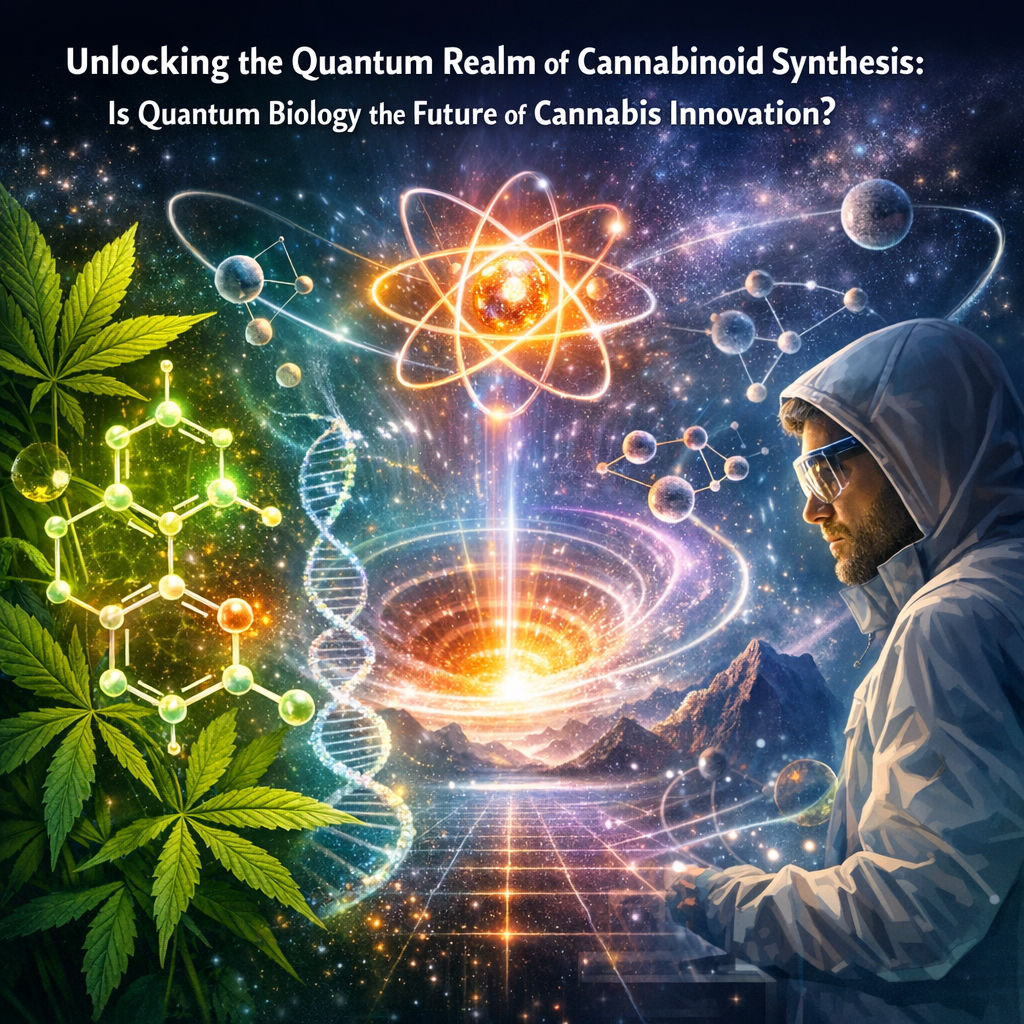
In recent decades, cannabis has transformed from a controversial plant into a multi-billion-dollar industry, driving innovations in medicine, recreation, and wellness. At its core is a unique class of compounds known as cannabinoids, which interact intricately with the human endocannabinoid system to yield various therapeutic effects. As the industry expands, researchers are exploring more advanced methods of cannabinoid production, with quantum biology emerging as a fascinating frontier.
Quantum biology leverages principles of quantum mechanics to unravel the complex processes underlying biological systems. Recent breakthroughs in this nascent field suggest that quantum phenomena—such as quantum entanglement and superposition—may play significant roles in biological functions like photosynthesis, enzyme activity, and olfaction. The cutting-edge realm of quantum biology proposes a future where these minutest particles are manipulated to optimize and enhance natural processes, potentially revolutionizing how we approach cannabinoid synthesis.
Traditional cannabis cultivation and processing can see environmental factors affecting cannabinoid yield and composition. However, if quantum biology can be harnessed to improve the synthesis and expression of cannabinoids, it could lead to more efficient, sustainable production techniques. This innovation promises more consistent potency, increased therapeutic potential, and reduced production costs, fostering a new age of cannabis development.
Understanding the quantum mechanics underpinning cannabinoid synthesis also opens the door to designing novel compounds and formulations, pushing the boundaries of what is possible in personalized medicine. As scientific inquiry delves deeper into the quantum realm, quantum biology may indeed be at the forefront of cannabis innovation, transforming the manner in which we study and utilize this remarkable plant.
Features
As experimental research into quantum biology progresses, several studies have begun to probe the intersection of quantum mechanics and biological systems. One intriguing area of study involves the role of quantum coherence in photosynthesis. Plants and some bacteria may utilize quantum effects to efficiently convert light into chemical energy, laying the groundwork to explore similar quantum behaviors within cannabis plants. This may lead to breakthroughs in efficiency and productivity in cannabinoid synthesis.
For instance, a 2007 paper published in *Nature* revealed that chlorophyll molecules in plants exploit quantum coherence to transfer energy with near-perfect efficiency [Nature Reference](https://www.nature.com/articles/nature05678). This insight has sparked interest in applying similar principles to enhance pathways for cannabinoid biosynthesis. Researchers speculate that harnessing quantum effects like entanglement and coherence could fine-tune enzymatic reactions for higher concentrations of cannabinoids like CBD or THC under controlled conditions.
Moreover, quantum biology might enhance bioengineering in microorganisms such as yeast or bacteria to produce cannabinoids more effectively. Traditional fermentation processes face challenges in optimizing cannabinoid synthesis while minimizing unwanted byproducts. Insights from quantum biology in enzyme-substrate interactions might offer strategies for designing enzymes with enhanced specificity, streamlining production processes, and minimizing waste [ACS Central Science Reference](https://pubs.acs.org/doi/10.1021/acscentsci.8b00853).
While still largely theoretical, the practical applications of quantum biology in cannabinoid synthesis provide a novel perspective on sustainable cannabis production. As research advances, it promises opportunities for developing new cannabinoids with unique properties, representing a step forward in personalized medicine through quantum biological insights.
Conclusion
As the cannabis industry seeks innovation, quantum biology holds the promise of transformative change. By exploring the quantum realm, we can unveil new methods of cannabinoid synthesis that are more efficient, sustainable, and precise. As research progresses, integrating quantum biology into cannabis innovation might redefine the future landscape of this vibrant industry, offering groundbreaking possibilities that extend beyond our current imagination.
Concise Summary
Quantum biology is being explored as a novel frontier in the cannabis industry to revolutionize cannabinoid synthesis. By leveraging principles of quantum mechanics, such as entanglement and coherence, researchers hypothesize it could lead to more efficient, precise, and sustainable cannabinoid production, promising breakthroughs in personalized medicine. Current studies on quantum effects in photosynthesis lay the groundwork for similar applications in cannabis plants and bioengineered microorganisms. This integration could enhance the potency and therapeutic potential of cannabinoids, reduce costs, and minimize waste, marking a transformative step in cannabis innovation and the future of medical therapies.