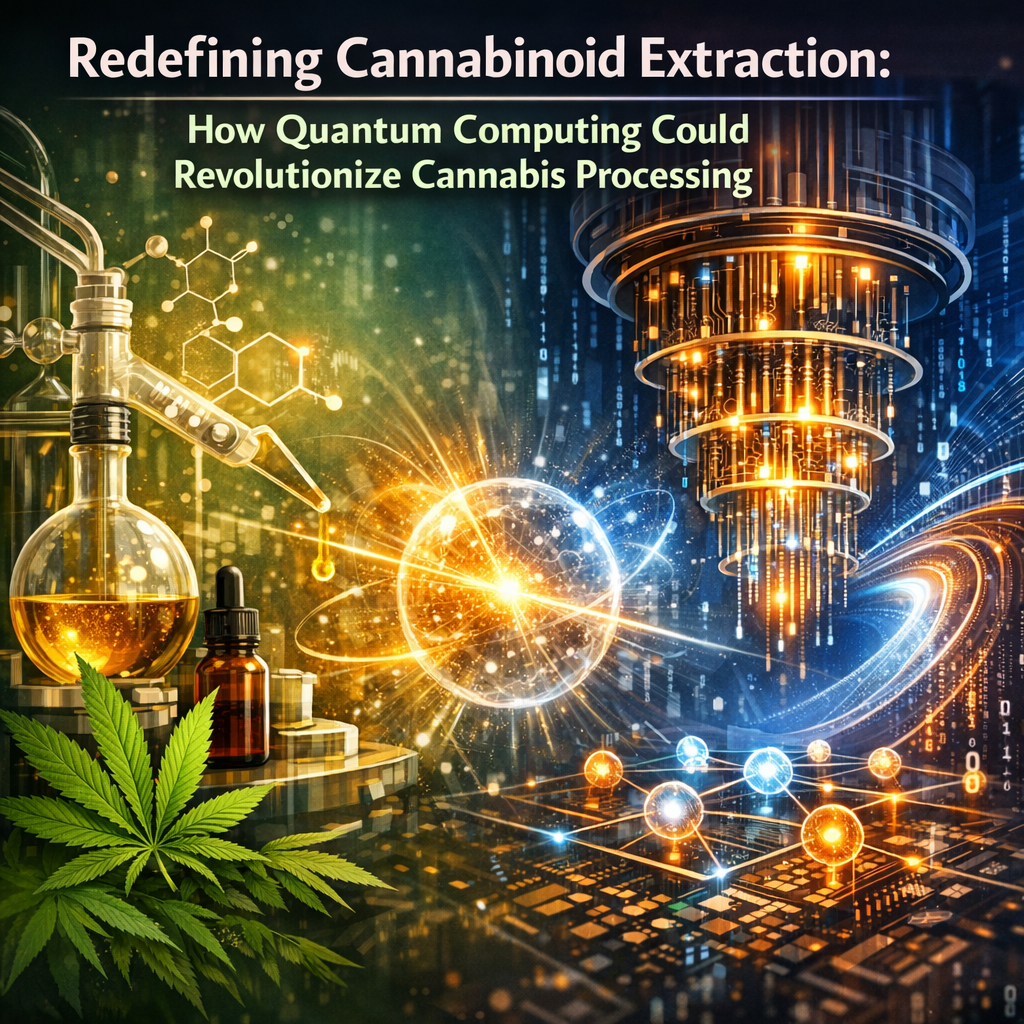
Redefining Cannabinoid Extraction: How Quantum Computing Could Revolutionize Cannabis Processing
The cannabis industry is undergoing a renaissance, driven by advancements in cultivation techniques, breeding, and extraction technologies. As the demand for both recreational and medicinal cannabis increases, so too does the need for more efficient and precise methods of processing the plant’s coveted cannabinoids. Traditional extraction methods, while effective, have limitations in terms of efficiency, speed, and the purity of the end product. But what if there were a way to surpass these limitations and take cannabis processing into a new era of innovation with quantum computing—a technology that promises to redefine how we approach cannabinoid extraction?
Quantum computing operates on principles of quantum mechanics, which involve qubits that can perform multiple calculations simultaneously, unlike classical computers that use binary bits. This makes quantum computers incredibly powerful, with the potential to solve complex problems at speeds unimaginable with current technology. When applied to cannabis processing, quantum computing stands to optimize every stage of the extraction process, from identifying the ideal conditions for cannabinoid isolation to predicting the outcomes of varying extraction methods.
Traditional extraction techniques like CO2, ethanol, and hydrocarbon extraction each have unique advantages and drawbacks, such as cost, safety, and efficiency. However, these methods often require meticulous calibration and can be prone to inconsistency. Quantum computing could address these challenges by utilizing algorithms capable of analyzing extensive data sets to predict optimal extraction parameters, ensuring consistency and maximizing cannabinoid yield and purity. Moreover, the optimization capabilities of quantum computing may reduce resource consumption and processing time, resulting in more sustainable and cost-effective operations.
Features: Advancements and Studies
Recent studies spotlighting the integration of quantum computing into chemical and pharmaceutical industries provide a roadmap for cannabis processing. For instance, researchers at [IBM](https://www.ibm.com/quantum-computing) and [Google](https://quantumai.google) have demonstrated quantum algorithms that can simulate molecular interactions with extraordinary accuracy. Such capabilities are critical for tailoring extraction processes, allowing for the precise isolation and optimization of specific cannabinoids such as THC, CBD, and emerging lesser-known cannabinoids. This level of specificity is not easily achievable with current extraction methods, offering significant advantages for personalized medicine applications and targeted product development.
Furthermore, a study published in the journal [*Nature*](https://www.nature.com/articles/s41586-019-1231-2) explored the use of quantum computing in optimizing chemical reactions for manufacturing processes. The application of such technology in cannabinoid extraction could revolutionize how we approach compound isolation, leading to purer, more effective cannabinoids for both recreational and medical use. Advanced quantum simulations could reveal new pathways for extracting minor cannabinoids that are often too costly or complex to isolate efficiently using traditional methods. By amplifying these capabilities, cannabis processors could develop a broader range of products with tailored effects, enhancing user experience and therapeutic potential.
As research into quantum computing progresses, potential challenges remain, primarily concerning accessibility and cost. However, as with any groundbreaking technology, initial investments and development costs are expected to decrease over time as the technology becomes more widely adopted and refined. Notably, companies like [Rigetti Computing](https://www.rigetti.com) and [D-Wave Systems](https://www.dwavesys.com) are actively investing in making quantum computing more accessible to various industries, including cannabis, thus heralding a future where these advanced forms of computation become integral to cannabinoid processing.
Conclusion
In summary, the integration of quantum computing into cannabis processing represents a frontier of innovation with the power to revolutionize the extraction of cannabinoids. By optimizing processes for purity, efficiency, and yield, quantum computing holds the promise of enhancing both the quality and variety of cannabis products available to consumers and professionals alike. As research and development continue to progress, the cannabis industry stands on the precipice of a quantum leap in processing technology, poised to harness unprecedented capabilities for the benefit of all stakeholders.
Concise Summary
The cannabis industry’s quest for more efficient and precise processing methods may be revolutionized by quantum computing, which uses qubits to perform multiple calculations. Traditional methods like CO2, ethanol, and hydrocarbon extraction have limitations in efficiency and purity. Quantum computing can optimize extraction processes by predicting optimal parameters, maximizing yield, and improving product purity. Companies like IBM and Google are already exploring its use in molecular interactions, enhancing cannabinoid isolation for medicinal and recreational use. Despite challenges in cost and accessibility, firms like Rigetti and D-Wave are making it increasingly viable for the cannabis industry.