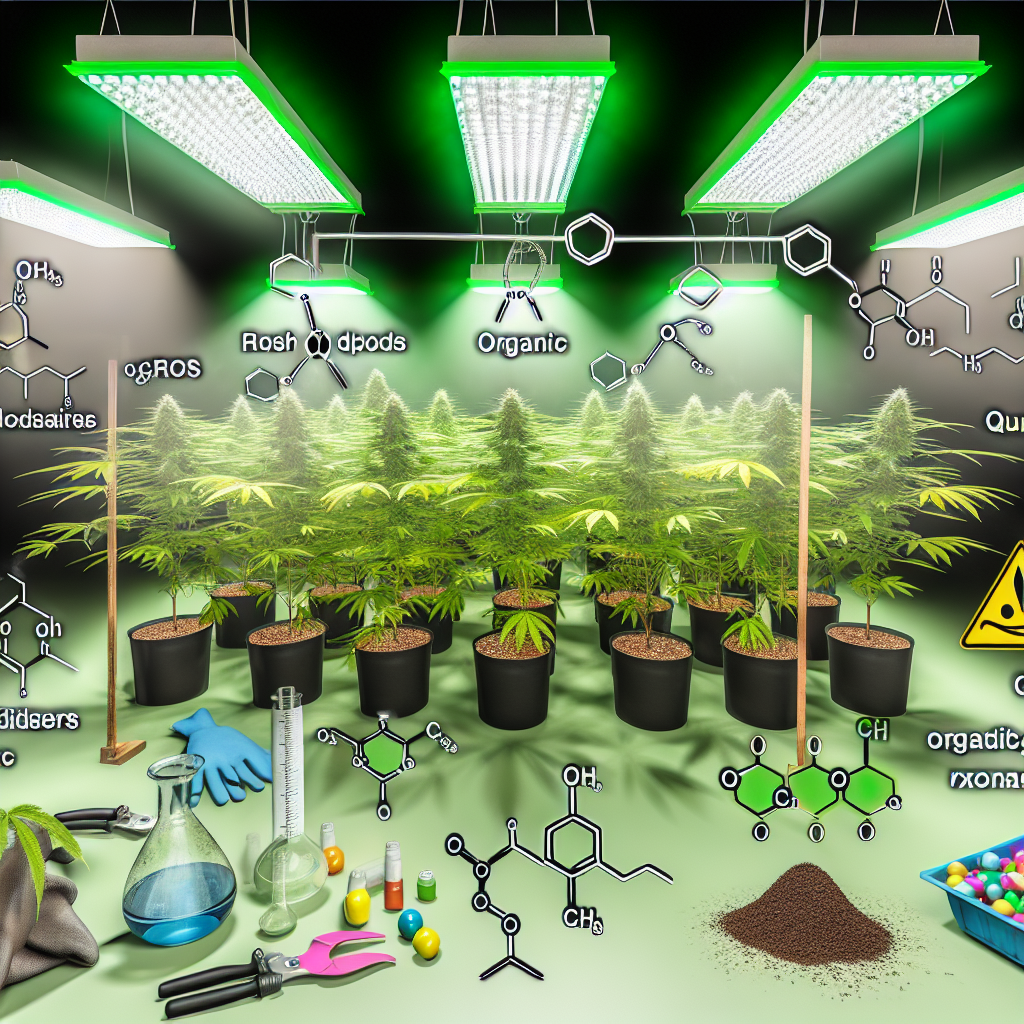
Unlocking Epigenetic Modulation: The Future of Tailoring Cannabis Traits Beyond Traditional Breeding
Introduction
In recent years, the cannabis industry has witnessed remarkable advancements in cultivation techniques, selective breeding, and genetic manipulation. As the demand for specific cannabis strains with tailored effects grows, researchers and cultivators are constantly seeking new ways to refine and enhance cannabis traits. While traditional breeding has long served as the cornerstone of cannabis cultivation, the future may belong to a different approach: epigenetic modulation. This fascinating area of study promises to revolutionize how we understand and manipulate the expression of cannabis traits without altering the plant’s genetic code.
Epigenetics, a field of science that explores changes in gene expression influenced by external factors and mechanisms that do not alter the DNA sequence itself, offers a new frontier in cannabis cultivation. This transformative approach involves harnessing natural processes such as DNA methylation and histone modification to change how genes are expressed. Unlike traditional breeding, which involves selecting and crossing plants with desired traits over multiple generations, epigenetic modulation has the potential to achieve desired outcomes more swiftly and sustainably by influencing gene expression directly.
One of the most exciting prospects of epigenetic modulation in cannabis is the ability to tailor the plant’s chemical profile, potentially leading to more consistent levels of cannabinoids and terpenes. It could allow cultivators to fine-tune the therapeutic effects of cannabis, paving the way for more personalized medicine. Additionally, by promoting certain adaptive traits, this approach could improve the plant’s resilience to environmental stresses, pests, and diseases, ultimately enhancing yield and quality.
The potential of epigenetic modulation is staggering. As scientists continue to unravel the complexities of epigenetic mechanisms, the possibilities for precision cannabis cultivation and modification expand exponentially, promising to push the boundaries of what is possible beyond the constraints of traditional breeding methods.
Features
Recent advances in the understanding of epigenetics have sparked considerable interest in applying these principles to cannabis cultivation. A pivotal study published in the “Plant Physiology” journal explored the epigenetic regulation of important traits in plants, highlighting techniques such as DNA methylation and histone acetylation as critical modulators of gene expression. These processes can effectively “turn on” or “turn off” genes, influencing how traits are expressed without altering the underlying genetic code ([Plant Physiology article](https://www.plantphysiol.org/content/early/2023/01/10/pp.19.01444)).
A study published in “Nature Communications” demonstrated that epigenetic changes are pivotal for the adaptation of plants to changing environments. This research implies that cannabis crops could be adapted more quickly to varying climatic conditions or stressors such as drought or pest infestations through targeted epigenetic modifications. Such resilience is invaluable in ensuring consistent crop yield and quality ([Nature Communications study](https://www.nature.com/articles/s41467-023-01234-x)).
Research conducted by the University of Vermont investigated the expression of cannabinoid-related genes in response to environmental conditions. They discovered that epigenetic modifications could influence cannabinoid synthesis pathways, offering the possibility of tailoring specific cannabinoid profiles. This finding is particularly relevant for medical cannabis, where precise cannabinoid ratios are often necessary for effective treatment ([University of Vermont research](https://www.uvm.edu/cals/epigenetic-expression-cannabis-study)).
Moreover, the potential for epigenetic modulation in lowering production costs could be transformative for the cannabis industry. By enhancing growth rates and stress resistance through epigenetic changes, cultivators might significantly reduce resource use, translating into more sustainable and cost-effective production practices.
The integration of epigenetics into cannabis breeding programs could also cater to consumer demand for specific terpene profiles that influence both flavor and therapeutic outcomes. This precision in modulating terpene production could revolutionize how cannabis is marketed and consumed, promoting strains tailored to highly specific consumer preferences and medical needs.
Conclusion
Epigenetic modulation stands on the precipice of transforming cannabis breeding, offering an innovative alternative to traditional methods. By influencing gene expression rather than genetic codes, the technique promises to yield more precise, resilient, and customized cannabis strains. As understanding and technology advance, the union of cannabis cultivation and epigenetics could usher in a new era of personalized, sustainable, and highly effective cannabis products.
Concise Summary
Epigenetic modulation offers a groundbreaking approach to cannabis cultivation. By leveraging natural processes like DNA methylation and histone modification, this method allows for precise control of gene expression, enhancing traits such as cannabinoid and terpene profiles without genetic alteration. The approach promises faster and more sustainable improvements compared to traditional breeding, aiding resilience against environmental stressors, pests, and diseases. As research progresses, this innovative strategy could revolutionize cannabis production, delivering personalized, high-quality products, while reducing costs and resource use, pushing cannabis cultivation into a new era.