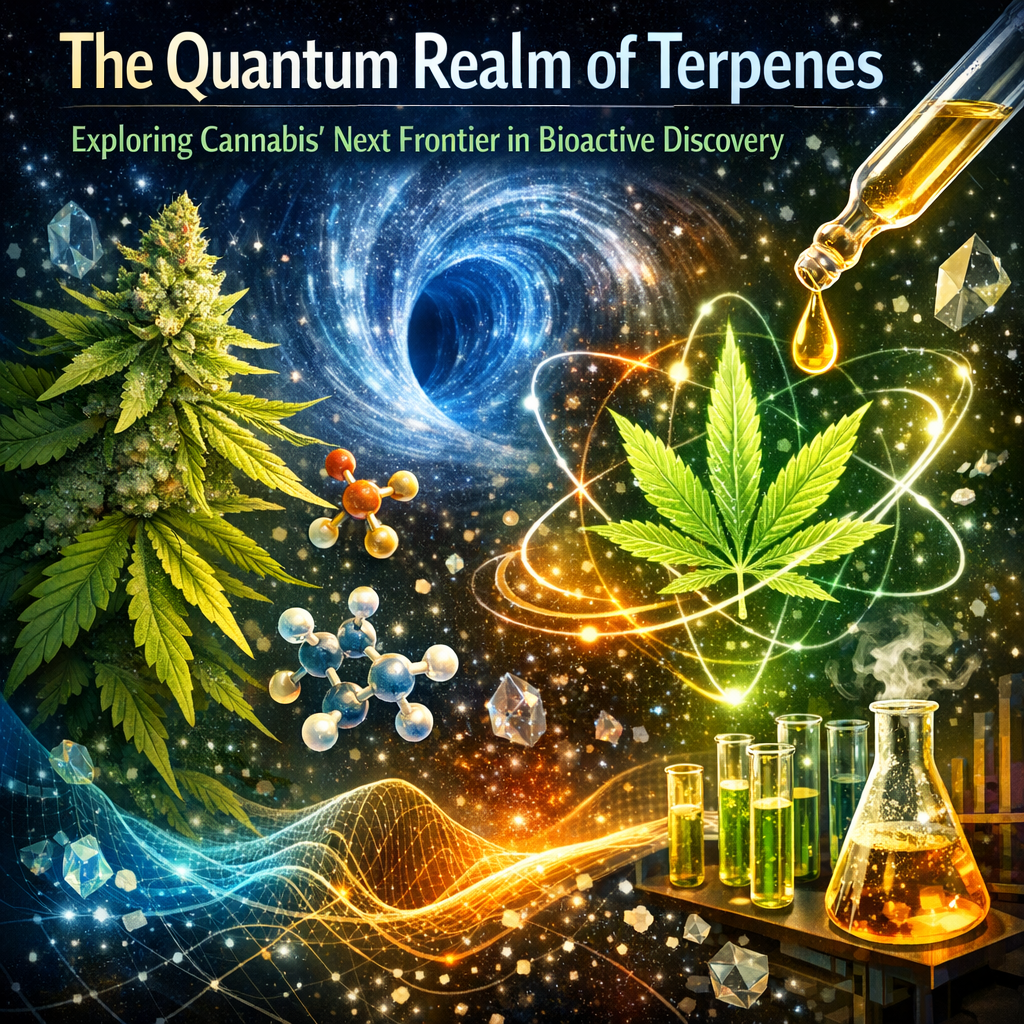
The Quantum Realm of Terpenes: Exploring Cannabis’ Next Frontier in Bioactive Discovery
The fascinating world of cannabis has captivated both consumers and researchers for decades with its myriad of effects and potential health benefits. At the epicenter of this interest is an often-overlooked component: terpenes. These organic compounds are responsible not only for the distinctive aromas and flavors of cannabis but also for harboring a vast potential in the realm of bioactive discovery. As science delves deeper into the quantum mechanics of terpenes, new opportunities for understanding their role in health and medicine emerge, possibly heralding a new era of cannabis exploration.
Terpenes are aromatic compounds found in essential oils of plants, including cannabis. Beyond merely engendering an enticing aroma, terpenes manifest physiological responses through a synergistic dance known as the entourage effect. This theory posits that terpenes interact with cannabinoids, like THC and CBD, amplifying their custodial roles in the endocannabinoid system to promote holistic wellness. Recent advancements in quantum mechanics have allowed scientists to better understand how these small, volatile molecules interface at the molecular level, undergoing transitions that lead to energy states capable of influencing biological systems.
The current exploration into the quantum realm of terpenes is unearthing new insights that could revolutionize the way we perceive cannabis and its therapeutic potential. Terpenes, it seems, might exert their effects not merely through receptor binding but also by influencing cellular processes via quantum dynamics. This bridge between botany and physics could redefine therapeutic contexts and catalyze the development of novel, terpene-based therapies with increased efficacy. As researchers continue to delve into the depths of this intersection, the possibilities appear limitless.
Features: Exploring the Science of Terpenes
Scientific interest in terpenes isn’t new, but recent research focusing on their quantum behavior and interactions in the human body is paving the way for groundbreaking discoveries. A notable study published in the *Journal of Natural Products* explored the quantum chemistry of terpenes, examining their complex molecular geometry and its impact on biological systems. This research provides pivotal understanding points connecting the functional properties of terpenes to their medicinal implications.
Among the most studied terpenes, myrcene, limonene, and linalool showcase diverse therapeutic potentials ranging from anti-inflammatory to anxiolytic effects. For example, myrcene is the most abundant terpene in cannabis, credited with possessing sedative, analgesic, and muscle relaxant properties. A study conducted by the University of São Paulo demonstrated myrcene’s ability to interact with the body’s endocannabinoid system, possibly enhancing the effects of cannabinoids such as THC (SpringerLink).
Terpenes like limonene and linalool have garnered attention for their potential therapeutic roles too. Limonene, abundant in citrus fruit rinds, is associated with mood enhancement and immune support, further bolstered by anti-cancer properties as evidenced by its capacity to hinder cancer cell proliferation in laboratory settings (PubMed). Linalool, characterized by its lavender aroma, is revered for its potential neuroprotective and anxiolytic effects, as highlighted in research from the *Frontiers in Behavioral Neuroscience* which evaluates its efficacy in reducing anxiety and promoting relaxation.
Emerging research in quantum physics sheds light on how these molecules can affect human biology. At the quantum level, terpenes engage in complex interactions that may influence their bioavailability and synergy with other cannabinoids. The quantum effects, such as electron transitions and tunneling, contribute to our understanding of how terpenes modulate the endocannabinoid system with unprecedented precision.
Conclusion
As the study of terpenes continues to evolve, it is clear that their potential extends beyond mere fragrance and flavor. The quantum exploration into these versatile compounds offers profound insight into their therapeutic potentials, fostering innovative advances in cannabis research. By embracing this interplay between the classical and quantum realms, both consumers and professionals in the cannabis industry can tap into new pathways for health and wellness applications, ultimately unlocking the full potential of cannabis with a nuanced understanding of terpenes.
Concise Summary:
The exploration of terpenes in cannabis science is advancing through their study at the quantum level, revealing new dimensions of their interactions with cannabinoids like THC and CBD. These compounds, responsible for the plant’s aromas and flavors, could significantly influence human health through their bioactive properties and interaction with the endocannabinoid system. With advancements in quantum mechanics, researchers are uncovering the complex interactions of terpenes which might lead to novel therapeutic applications. This groundbreaking research underscores potential pathways for enhanced medicinal cannabis products, leveraging terpene-based therapies for broader health benefits.