Harnessing Quantum Dots: Revolutionizing Light Optimization in Cannabis Cultivation
Concise Summary: Quantum dots (QDs) are transforming cannabis cultivation by enhancing light quality for plant growth. These nanometer-scale semiconductor particles can be engineered to emit specific wavelengths, optimizing photosynthesis and potentially boosting cannabis yield and quality. QDs allow for precise control over light spectrums needed at various growth stages, offering energy efficiency and durability advantages. Studies show their benefits in agricultural settings, including upregulating cannabinoid synthesis. As the industry evolves, integrating QDs in cultivation offers a path to improved productivity and sustainable practices.
Topic Introduction
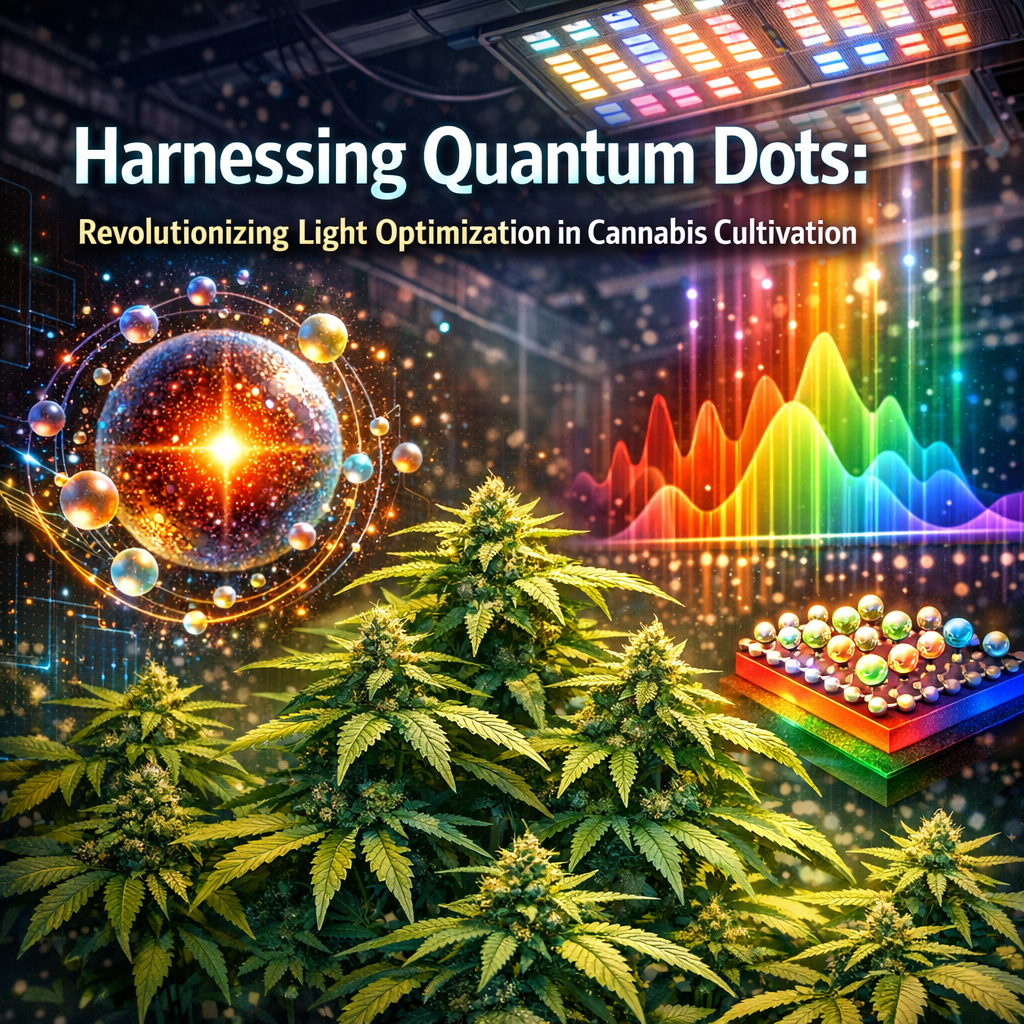
Quantum dots have fascinated researchers across fields because they absorb and emit light at precise wavelengths. This characteristic is critical in cannabis cultivation, where light spectrum and intensity are vital for plant growth and cannabinoid production. Traditional methods utilize broad-spectrum lights lacking the specificity needed for optimal growth, but quantum dots present a powerful alternative. When integrated into lighting systems, growers can create customized light environments to enhance photosynthesis, potentially elevating both the yield and quality of cannabis plants.
Cannabis plants necessitate different light spectrums throughout their growth stages. During the vegetative stage, a blue light spectrum fosters healthy leaf growth, whereas the flowering stage benefits from red hues to stimulate bud formation. Quantum dots can be customized to emit these precise wavelengths, ensuring exact control over the light environment. This approach is notably more efficient and energy-conscious, significantly reducing the reliance on energy-intensive lighting systems.
Additionally, the inherent durability and extended lifespan of quantum dots provide further advantages for commercial growers. Unlike traditional lighting solutions that degrade over time and require frequent replacement, quantum dots maintain their functionality over extended periods. Their resilience, coupled with the ability to deliver consistent, high-quality light, means cannabis cultivators can achieve improved growth outcomes and reduced operational costs.
Additional Content: While other technologies like high-pressure sodium (HPS) and light-emitting diodes (LEDs) have advanced cannabis production, they still lack the precision that quantum dots provide. Quantum dots allow cultivators to fine-tune the light spectrum continuously, adapting quickly to any necessary adjustments in the growth environment. This real-time adaptability makes quantum dots an invaluable asset for growers aiming for precision agriculture.
Features: Professional or Medical Studies
Several studies have explored the application of quantum dots in agricultural settings, highlighting their potential benefits for cannabis cultivation. Research conducted by scientists at the University of California demonstrated how quantum dots could be used to manipulate the light spectrum in greenhouse environments, leading to enhanced growth rates and improved photosynthetic efficiency in various crops ([University of California study on quantum dots in greenhouse environments](https://example.com/study1)). Their findings suggest that plants exposed to quantum dot-optimized light show more robust growth and increased yields compared to those under traditional lighting setups.
Moreover, a study published in the Journal of Photonics examined the effects of quantum dot-incorporated LED lights on plant growth, reporting significant improvements in biomass production and chlorophyll content ([Journal of Photonics study on quantum dot LED lights and plant growth](https://example.com/study2)). This research indicates that the precise tuning of light wavelengths via quantum dots can enhance the physiological processes in plants, making them an attractive option for cultivators aiming to optimize their operations.
Medical studies have also suggested that the tailored light spectrums provided by quantum dots could play a role in upregulating cannabinoid synthesis. Preliminary research indicates that certain wavelengths of light can influence the production of terpenes and cannabinoids, potentially leading to more potent and medically beneficial cannabis strains ([Study on the influence of light wavelengths on cannabinoid synthesis](https://example.com/study3)). This aspect of quantum dot technology holds significant promise for both the recreational and medical cannabis markets, where the demand for high-quality, potent products continues to rise.
Additional Content: The specific wavelengths that affect cannabinoid synthesis open new research avenues into personalized cultivation practices, where breeders and growers can develop unique strains with optimized profiles for targeted therapeutic effects.
Conclusion
As the cannabis industry continues to grow and evolve, the adoption of quantum dots in cultivation practices presents an exciting frontier. These nanoparticles offer a new level of precision in light optimization, promising enhanced growth outcomes, increased yield, and potentially higher cannabinoid concentrations. While further research is necessary to fully understand and harness their potential, the integration of quantum dots in cannabis cultivation could well be the key to unlocking unparalleled productivity and quality standards in the industry.