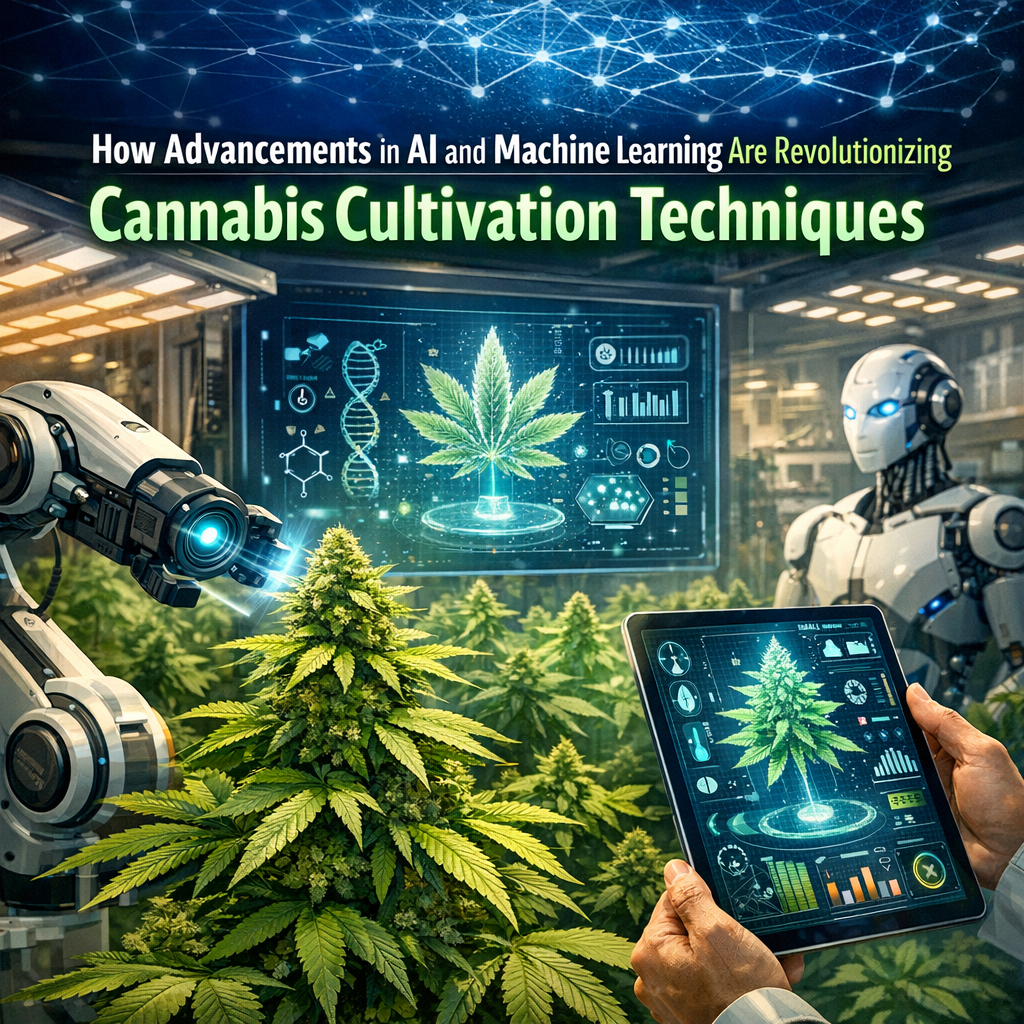
How Advancements in AI and Machine Learning Are Revolutionizing Cannabis Cultivation Techniques
Introduction
Cannabis cultivation has come a long way with modern technology playing a crucial role in enhancing farming practices. Today, artificial intelligence (AI) and machine learning (ML) are at the forefront of this transformation, offering unprecedented precision, efficiency, and sustainability. With the expanding cannabis industry and rising demand, AI and ML technologies equip cultivators with advanced tools to optimize production, enhance crop quality, and minimize environmental impacts.
AI and ML technologies are becoming significant game-changers in key cannabis cultivation areas. From seed selection to environmental control and crop monitoring, these advanced technologies enable growers to exploit vast data for decision-making and automation. Through AI algorithms, growers can predict plant health issues, streamline nutrient systems, and fine-tune climate conditions, all enhancing plant growth and yield.
One major impact of AI and ML in cannabis cultivation is seen in predictive analytics. By utilizing historical data and real-time environmental conditions, AI models can forecast potential threats like pest infestations or disease outbreaks. Early detection through AI-driven analytics allows cultivators to implement preventive measures, safeguarding crops and reducing dependency on chemical interventions. Furthermore, machine learning models facilitate optimal harvesting times, ensuring buds are picked at peak potency.
Moreover, these technologies offer unprecedented insights into genotype and phenotype relationships within cannabis strains, thereby improving breeding programs and strain development. By linking data points like genetic markers and growth traits, AI algorithms aid breeders in creating superior strains with desirable traits, such as higher cannabinoid content and disease resistance. This not only meets consumer demands but boosts the economic viability of cannabis production.
AI and ML also contribute to sustainable cultivation practices. Automated systems with AI efficiently manage resources such as water and electricity, reducing waste and costs. For example, smart irrigation systems using ML algorithms can optimize water usage, ensuring plants receive exactly what they need, conserving precious resources. As the cannabis industry evolves, leveraging AI and ML is crucial for meeting environmental sustainability goals while maintaining competitive advantages.
Features
The application of AI and ML in cannabis cultivation has been explored in numerous professional studies, emphasizing their industry value. A study published in the journal *Plant Methods* underscores AI’s ability to detect and diagnose plant diseases with high accuracy. Utilizing machine learning algorithms in image processing, researchers revealed AI systems could identify plant stress factors earlier than conventional methods, significantly impacting cannabis cultivators by enabling prompt issue resolution and reducing crop losses.
Another study from *Frontiers in Plant Science* examined AI’s role in genotype analysis, substantially enhancing cannabis breeding programs. By utilizing AI-driven models, the study demonstrated how genetic data could predict plant traits, thereby expediting the development of new strains with desired characteristics. This research highlights AI’s potential to address bottlenecks in traditional breeding, offering a scientific edge in cultivating premium-quality cannabis.
Furthermore, AI and ML integration in environmental control systems shows promising results in cannabis greenhouse management. Insights shared by [Agrify](https://www.agrify.com/solutions-2/), a leader in precision-controlled agriculture, noted automated systems with AI can monitor and regulate climate conditions, like humidity and temperature, with unmatched precision. Such advancements contribute to stable growing environments, promoting healthier plant growth and maximizing yield potential.
Machine learning also plays a critical role in energy efficiency. Research by the [University of Florida](https://journals.ashs.org/hortsci/view/journals/hortsci/55/3/article-p436.xml) details the development of AI-guided light scheduling systems, which optimize light use by adapting to a plant’s life cycle. This approach enhances photosynthesis and reduces electricity consumption, providing a sustainable cannabis cultivation solution.
The utilization of AI and ML technologies is transforming the cannabis industry by boosting operational efficiencies and advancing crop science. As these technologies evolve, their applications will likely expand, offering new opportunities for cannabis cultivation and research.
Conclusion
The incorporation of AI and ML introduces a new era of high-tech farming in cannabis cultivation. These advancements empower cultivators to optimize processes, enhance production efficiency, and offer sustainable solutions while meeting rising consumer demands. The future promises continuous improvements in yield quality, environmental stewardship, and overall cannabis industry prosperity.
References
1. [AI in Plant Diagnostic Systems](https://link.springer.com/article/10.1007/s11032-020-01170-6)
2. [Accelerating Breeding with AI](https://www.frontiersin.org/articles/10.3389/fpls.2020.00718/full)
3. [Agrify’s Precision-Controlled Agriculture](https://www.agrify.com/solutions-2/)
4. [AI-guided Light Scheduling](https://journals.ashs.org/hortsci/view/journals/hortsci/55/3/article-p436.xml)
Concise Summary
Advancements in AI and ML are fundamentally transforming cannabis cultivation by optimizing production processes, enhancing crop quality, and promoting sustainability. These technologies improve predictive analytics, genotype analysis, environmental control, and resource management, offering precision in pest detection, plant breeding, climate regulation, and energy efficiency. Studies underscore AI’s ability to diagnose plant diseases promptly and facilitate strain development, while ML optimizes resource usage. As the cannabis industry evolves, AI and ML spearhead a new era of high-tech, sustainable, and efficient farming practices.