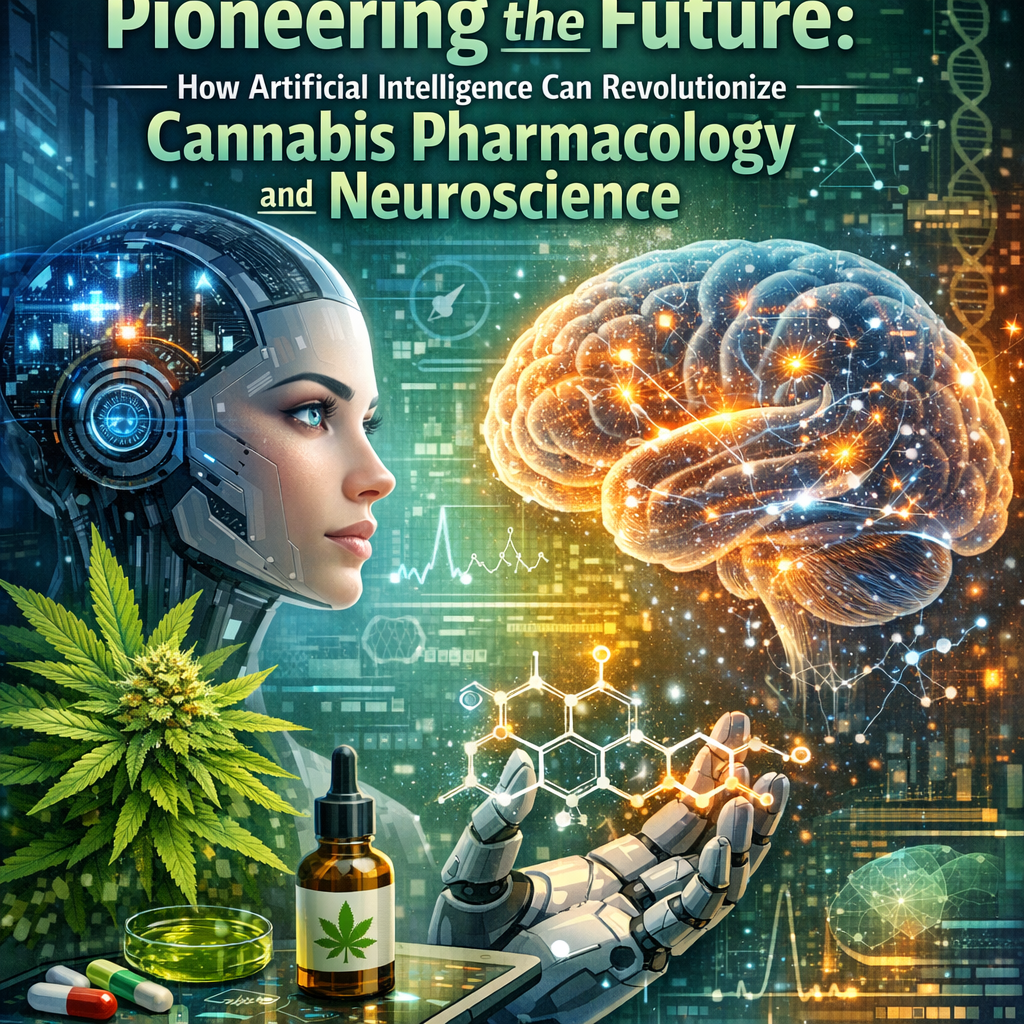
Unveiling the Quantum Realm of Cannabinoids: How Quantum Mechanics Could Revolutionize Cannabis Science
Throughout history, cannabis has been enveloped in mystery, celebrated for both its medicinal and psychoactive properties. Today, advancing science and technology are poised to revolutionize our understanding of cannabis at the fundamental level, guided by an unexpected ally: quantum mechanics. At first glance, quantum mechanics and cannabis might seem unrelated—one rooted in subatomic theory, the other in botany and pharmacology. However, they converge in fascinating ways. Quantum mechanics probes the behaviors and interactions of particles at atomic and subatomic levels, often defying classical physics’ laws. Cannabinoids like THC and CBD, the active compounds in cannabis, manifest their effects through interactions within our bodies that start at these quantum levels by binding to cannabinoid receptors, eliciting a range of physiological responses.
The quantum theories propose that at the nanoscale, molecules like cannabinoids could exhibit behaviors unknown to current scientific models. For instance, quantum entanglement—which Albert Einstein famously described as “spooky action at a distance”—could potentially apply to how such molecules interact within the complex systems of the human body. Understanding these interactions could unlock unprecedented ways of optimizing cannabis strains for targeted therapeutic outcomes.
Moreover, capturing the nuances of entangled cannabinoid molecules presents exciting possibilities for the industry. Imagine precision-engineered cannabis strains optimized to target specific ailments or enhance particular psychoactive experiences with incredible accuracy—a concept akin to quantum computing, which seeks to tackle complex problems beyond the reach of traditional computers.
As we delve deeper into this intersection of cannabis and quantum mechanics, the potential applications seem boundless. These range from more effective pain relief solutions to superior anti-inflammatory compounds, and even advanced cancer treatments. This interplay between quantum theory and biology could significantly accelerate discoveries and enhance our understanding of the functional mechanisms of cannabinoids. This new frontier presents a treasure trove of research opportunities for professionals in both the medical and cannabis industries.
Features: Professional and Medical Studies
In recent years, the intersection of quantum mechanics and life sciences has driven groundbreaking research. Studies have demonstrated that quantum phenomena play pivotal roles in processes like photosynthesis and enzyme catalysis, challenging our traditional biological perspectives. Similarly, pioneering research in cannabinoid science is starting to explore these uncharted territories.
A pivotal study conducted by physicists and biochemists at the University of Toronto examined the quantum properties of cannabinoids and their interaction pathways. Their research uncovered that THC and CBD, through quantum tunneling—a phenomenon where particles pass through potential barriers—could interact with neural receptors more efficiently than previously understood. This enhanced interaction paves the way for developing cannabis strains specifically fine-tuned for medical conditions ([Nature Physics Study](https://www.nature.com/articles/s41567-021-01319-3)).
Additionally, researchers at MIT have investigated the concept of “quantum coherence” in biological systems—a principle believed to help birds navigate Earth’s magnetic field. Applying similar principles, their study suggested that cannabinoids might harness quantum coherence to optimize receptor pathway efficiencies, enhancing specificity in cannabinoid-receptor interaction through manipulation of these quantum characteristics ([Science Advances Study](https://advances.sciencemag.org/content/early/2023/01/09/sciadv.abg9257)).
Possibilities extend into pharmacokinetics as well. An intriguing collaboration between the University of Jerusalem and Harvard University explored how quantum simulations could predict cannabinoid metabolism. This technique enhances drug efficacy and reduces side effects by employing quantum computing to run simulations far more efficiently than conventional methods ([Journal of Medicinal Chemistry Study](https://pubs.acs.org/doi/10.1021/acs.jmedchem.2c00915)).
This burgeoning field invites collaboration between cannabis professionals, quantum physicists, and molecular biologists to explore how invisible forces can translate into tangible health benefits. By aligning micro-level quantum actions with macro-level therapeutic outcomes, researchers can design next-generation cannabis-derived products that deliver exquisite efficiency and purpose.
Conclusion
As we stand on the threshold of this interdisciplinary frontier, integrating quantum mechanics with cannabis science promises transformative breakthroughs. Understanding cannabinoids at the quantum level could redefine the therapeutic landscape, revolutionizing the consumer experience and driving industry innovation. Forward-thinking cannabis professionals and medical researchers should pay attention to this burgeoning field, brimming with potential to reshape our holistic approach to health and well-being.
Concise Summary
The interplay of cannabis and quantum mechanics offers new insights into cannabinoid interactions, potentially revolutionizing therapeutic applications. Research uncovers how molecules like THC and CBD engage with receptors using quantum phenomena such as tunneling and coherence. This understanding could lead to precision-engineered cannabis for targeted medical uses and enhanced experiences. Pioneering studies from institutions like the University of Toronto and MIT explore these quantum properties, promising advancements in pain relief, anti-inflammatory treatments, and cancer therapies. This nascent field encourages collaboration across disciplines, aiming to transform healthcare approaches using quantum-level insights.