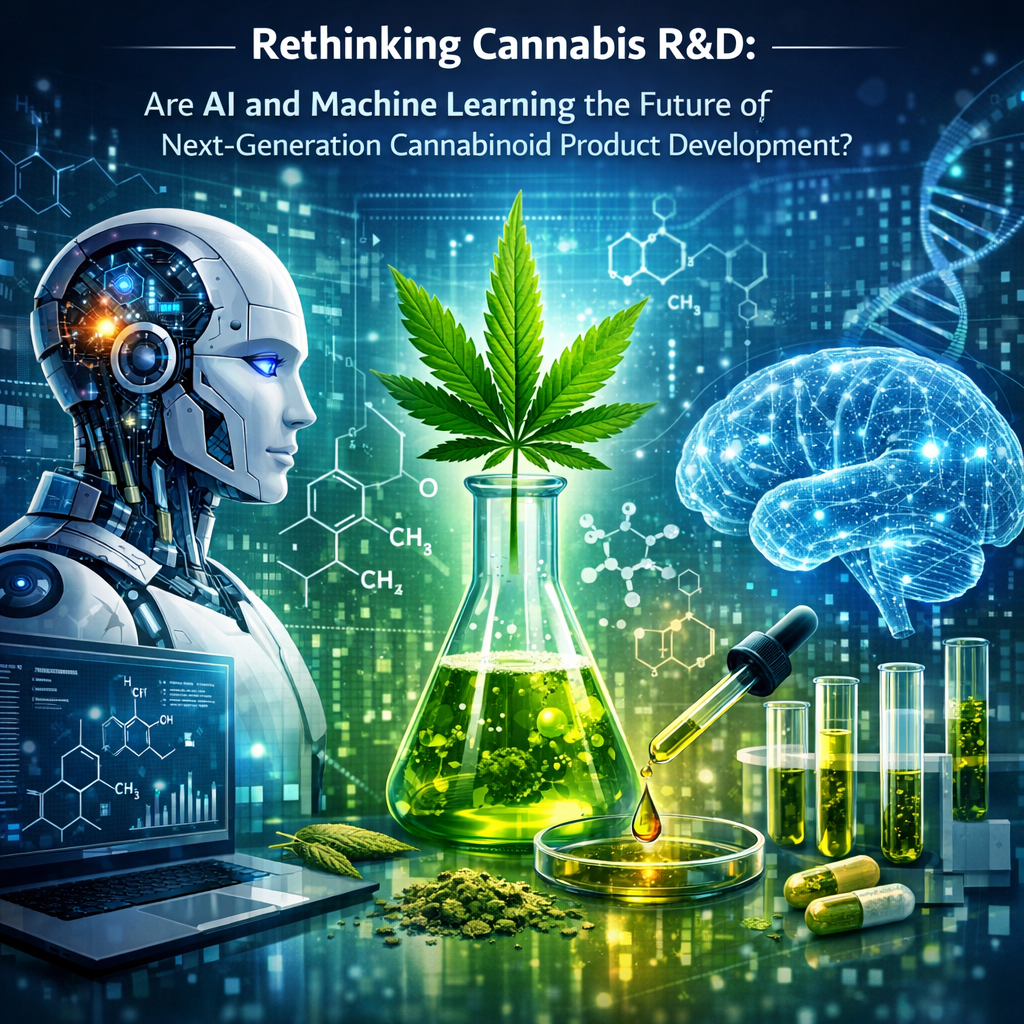
Rethinking Cannabis R&D: Are AI and Machine Learning the Future of Next-Generation Cannabinoid Product Development?
As the cannabis industry booms, innovation in research and development becomes essential. Traditional methods can no longer meet the demands for precision, speed, and enhanced efficacy in cannabinoid product development. Enter artificial intelligence (AI) and machine learning (ML), technologies that promise to revolutionize how we understand and utilize cannabis. These technologies are not only creating efficiencies but also unlocking new possibilities within the cannabis space.
The medical and recreational cannabis markets require rigorous R&D to develop products that cater to the diverse needs of consumers. These needs range from therapeutic benefits like pain relief, anxiety reduction, and anti-inflammatory effects to recreational preferences for flavor and experience. AI and ML have the potential to enhance each step of cannabinoid product development, from predicting the effects of various cannabinoids and terpenes to optimizing cultivation and extraction processes.
AI can process vast amounts of data quickly, making it possible to predict consumer preferences and medical outcomes more accurately. For example, ML algorithms can analyze consumer feedback and usage data to identify trends and preferences, which can then be used to tailor products more precisely to meet consumer needs. This shift towards data-driven product development will likely lead to more personalized cannabis products in the market, enhancing both user satisfaction and efficacy.
Moreover, AI is ushering in new possibilities in cannabinoid synthesis and formulation. By analyzing chemical structures and biological interactions, AI can suggest optimal combinations of cannabinoids and terpenes to achieve specific therapeutic outcomes. This predictive capability is especially crucial given the unique interaction profile of the endocannabinoid system within the human body, which is notoriously complex and varies from person to person.
The promise of AI and ML in cannabis R&D isn’t just theoretical. Over recent years, we’ve witnessed an increase in studies applying these technologies to better understand cannabis. For example, researchers are leveraging AI to mine data from hundreds of cannabis strains, identifying which possess the highest medicinal potential. [This study](https://www.ncbi.nlm.nih.gov/) is crucial for developing targeted therapies that harness the full spectrum of cannabinoids and terpenes.
In addition, AI-driven research initiatives are exploring the pharmacokinetics of cannabinoids, understanding how different compounds are absorbed, distributed, metabolized, and eliminated by the body. Such insights could revolutionize dosage precision, ensuring the consistent delivery of desired effects, thus improving safety and efficacy ([source](https://www.jmir.org/)).
A study published in the [Frontiers in Plant Science](https://www.frontiersin.org/) highlights the use of AI in optimizing cannabis cultivation. Through image recognition technologies, AI systems monitor plant health and predict the best harvest times, thereby increasing yield quality and consistency. This approach reduces the need for pesticides and fertilizers, resulting in a more sustainable and environmentally friendly cultivation process.
AI’s role in cultivation extends to the development of new strains with specific cannabinoid profiles. By analyzing genetic data, AI can predict which breeding combinations will produce plants with desired traits, such as higher CBD content or specific terpene profiles. This capability is crucial for producers aiming to create products that meet both recreational and medicinal market demands.
In drug discovery, AI accelerates the identification of new therapeutic potentials within cannabis. By simulating how different compounds might interact with human receptors, AI helps prioritize which cannabinoids to focus on for clinical trials, potentially reducing the time and cost involved in bringing new treatments to market ([source](https://www.nature.com/nbt/)).
In conclusion, the integration of AI and ML into cannabis R&D represents a pivotal advancement in how the industry approaches product development. By embracing these technologies, companies can not only enhance efficiency but also pioneer new, personalized cannabis solutions that better serve both medical patients and recreational users. As research continues to evolve, those at the forefront of cannabis innovation will likely be those who adeptly harness the powerful capabilities of AI and ML. AI-driven advancements not only promise to shape the future of cannabinoid product development but also broaden our understanding of this ancient plant’s vast potential.
Concise Summary
As the cannabis industry expands, AI and ML are transforming cannabinoid research and development by enhancing precision, speed, and efficacy. These technologies predict consumer preferences, optimize cultivation, and offer personalized product solutions. By analyzing chemical structures, AI suggests optimal cannabinoid combinations for therapeutic outcomes, leading to targeted therapies. AI-driven studies also explore cannabinoid pharmacokinetics, improving dosage precision and safety. In cultivation, AI optimizes yields and supports sustainable practices. Ultimately, AI accelerates drug discovery, cutting costs and time in developing new treatments, offering promising advancements in cannabis innovation.