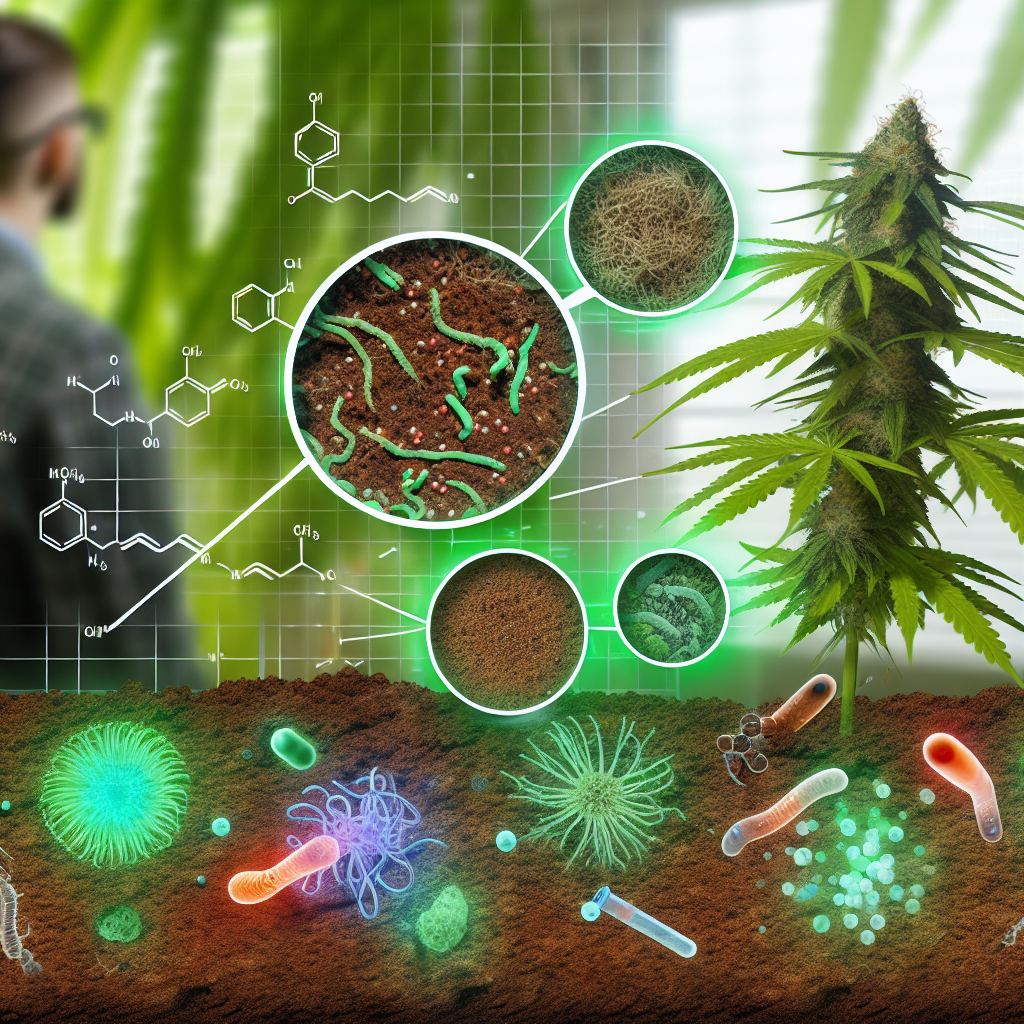
Unlocking the Future: Quantum Dots in Cannabis Cultivation for Precision Growth and Enhanced Potency
Introduction
In the rapidly evolving world of cannabis cultivation, innovative advancements are constantly being sought to improve product quality, enhance potency, and increase overall yield. One such groundbreaking technology that holds immense promise is the application of quantum dots in agriculture. These nanoscale semiconductor particles have already infiltrated industries such as medicine, technology, and materials science, but their entrance into the agricultural sector presents a revolutionary leap forward—especially for cannabis cultivation.
Quantum dots possess unique optical and electronic properties that make them incredibly valuable in diverse applications. Within the realm of cannabis, these properties can be harnessed for more precise cultivation processes. The allure of quantum dots lies in their ability to optimize photosynthesis by tailoring the light spectrum cannabis plants receive. This spectrum tuning enhances various plant growth parameters and, ultimately, cannabinoid production. As cannabis growers know, the right light plays a critical role in influencing the morphological and chemical characteristics of cannabis plants.
The potential of quantum dots extends beyond mere growth enhancement. They also promise greater precision in nutrient absorption and pest control, leading to healthier and more robust plants. When it comes to cannabinoid production, the nano-scale precision offered by quantum dots could revolutionize the way specific strains are cultivated to yield higher concentrations of desired cannabinoids, such as THC and CBD.
The integration of quantum dots into cannabis cultivation not only amplifies growth and potency; it also aligns with a larger environmental ethic. By optimizing light use and reducing resource waste, this technology paves the way for more sustainable cultivation practices. As we unlock this new avenue of precision growth, both consumers and professionals stand to benefit from cannabis that is not only stronger and more consistent but also greener in terms of its ecological footprint.
Features
Quantum dots have earned a reputation for pushing the boundaries of conventional methods across multiple scientific disciplines. In agriculture, these tiny particles can help plants grow more effectively by enhancing the light they use for photosynthesis. A 2020 study published in [“Nature Communications”](https://www.nature.com/articles/s41467-020-15247-4) explored how quantum dots could be used to control stomatal responses in plants, enhancing their efficiency in water use and gas exchange—both crucial aspects of healthy plant development.
In the field of cannabis, early studies indicate that quantum dots can act as a form of augmented reality sunglasses for plants. By converting more of the sun’s rays into the specific red and blue wavelengths that are most beneficial for photosynthesis, these nanoparticles can significantly boost plant growth and cannabinoid concentration. A notable study from the [“Journal of Nanobiotechnology”](https://jnanobiotechnology.biomedcentral.com/) discussed the potential for quantum dots to increase the expression of genes related to cannabinoid synthesis, underscoring the promise this innovation holds for precision agriculture and enhanced cannabis chemistry.
Furthermore, the adaptability of quantum dots makes them ideal for fostering controlled growing environments. Researchers are investigating how these particles can be incorporated into greenhouse designs to dynamically adjust light spectra in response to plant needs throughout their life cycle. Evidence suggests that this adaptability allows for the fine-tuning of plant characteristics on a macro scale, ultimately resulting in higher-quality yields and more potent products.
Lastly, the sustainability angle cannot be ignored. By making more efficient use of light, quantum dots could lead to savings in energy and water, contributing to a more eco-friendly cultivation model. This is particularly relevant in an era where environmental impact is becoming a critical metric for both producers and consumers.
Conclusion
In conclusion, quantum dot technology represents a frontier in cannabis cultivation that is poised to transform the industry. By offering unparalleled precision in growth and potency, along with significant potential for sustainability improvements, quantum dots hold the key to the future of cannabis production. As research and application continue to expand, the promise of more potent, efficient, and environmentally responsible cannabis cultivation becomes truly attainable. Embracing this cutting-edge technology could position cultivators not only to meet increasing consumer demand but also to set new standards in quality and environmental stewardship.
Concise Summary
Quantum dots are nanoscale semiconductor particles that offer significant potential in cannabis cultivation, enhancing growth, potency, and sustainability. These particles can optimize light absorption, facilitating more efficient photosynthesis and increasing cannabinoid production, particularly THC and CBD. Additionally, quantum dots can improve nutrient absorption and pest control. Studies have shown their ability to transform cannabis cultivation by fine-tuning plant growth settings in controlled environments, like greenhouses, and supporting environmental sustainability by reducing energy and water usage. This technology is increasingly significant for meeting consumer demand and setting eco-friendly industry standards.