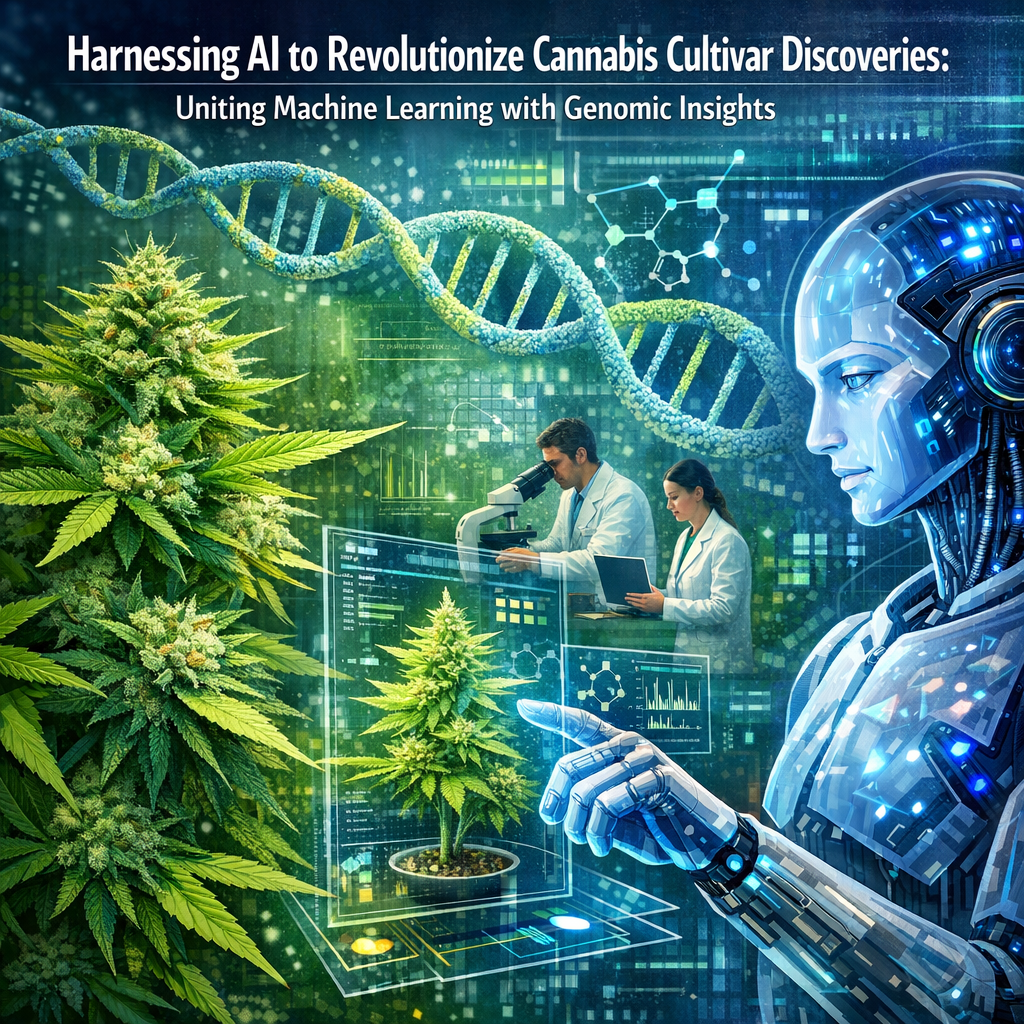
Harnessing AI to Revolutionize Cannabis Cultivar Discoveries: Uniting Machine Learning with Genomic Insights
Introduction
The cannabis industry is undergoing rapid transformation, driven by innovations in technology and a deeper understanding of the plant’s genetic complexities. At the forefront of this evolution is the integration of artificial intelligence (AI) and machine learning with genomic research, which is poised to usher in a new era of cannabis cultivar discovery and development. This exciting confluence of advanced technology and botanical science has the potential to revolutionize how new strains are bred, cultivated, and utilized in both medical and recreational contexts.
Cannabis plants are genetically diverse, with thousands of cultivars exhibiting a wide range of chemical profiles. Each cultivar’s unique characteristics are dictated by its genetic makeup, impacting factors such as cannabinoid content, terpene profiles, growth patterns, and disease resistance. Traditional methods of developing new cannabis strains have relied on lengthy processes of trial and error, guided by intuition and experience. This approach, while valuable, is often time-consuming and limited in scope.
Enter AI-driven genomic analysis, a tool that offers unprecedented precision and speed. By leveraging the vast computational power of machine learning algorithms, researchers can sift through huge amounts of genetic data to identify patterns and correlations that humans alone might overlook. AI can predict which genetic markers are associated with desirable traits, such as higher THC or CBD levels, specific terpene profiles, or improved growth cycles. This allows breeders to develop new strains tailored to specific needs and preferences more efficiently than ever before.
Moreover, the integration of AI with genomics opens up new possibilities for personalized medicine. By understanding the genetic basis of how cannabis compounds interact with the human endocannabinoid system, scientists can design strains that target specific medical conditions, potentially improving therapeutic outcomes. This not only benefits patients seeking relief from ailments such as chronic pain, anxiety, or epilepsy but also supports the broader acceptance and integration of cannabis in healthcare.
Features
Emerging research highlights the transformative potential of AI in cannabis cultivation. In 2019, a study published in Frontiers in Plant Science demonstrated how machine learning models could accurately predict cannabis chemotype from plant DNA. This breakthrough suggests that, by decoding the plant’s genetic instructions, AI can significantly streamline the breeding process, reducing the time and resources needed to create new, desirable strains.
Furthermore, AI is effectively identifying disease-resistant cannabis cultivars through genomics. A project led by Trait Biosciences investigated using machine learning to detect genetic markers in cannabis associated with resistance to powdery mildew, a common and costly issue for growers. By identifying and utilizing such markers, AI accelerates the development of hardier plants, reducing both the environmental and financial impact of chemical treatments.
The application of AI extends beyond breeding. It is instrumental in optimizing cultivation conditions by analyzing data from various environmental factors such as light, temperature, and humidity. For instance, a collaboration between Nexus Greenhouse Systems and Distributed Bio, Inc. utilized AI-driven predictive modeling to optimize cannabis growth environments, enhancing yield and consistency. This level of control enables cultivators to produce higher-quality cannabis more sustainably, benefiting both producers and consumers.
AI’s potential in promoting medical cannabis applications is especially compelling. At the intersection of AI and personalized medicine, researchers are exploring how to tailor cannabis treatments to individual patients based on genetic insights. A notable example is the work done by scientists at the University of Colorado Boulder, where AI models were used to analyze data from cannabis users and predict how different strains affected various symptoms. This research paves the way for strain development aimed at optimizing therapeutic effects for conditions such as chronic pain, PTSD, and multiple sclerosis.
Conclusion
The merging of AI with genomic insights marks a pivotal advancement in cannabis research and production. By making the traditional processes of breeding and cultivation more precise, efficient, and responsive to consumer needs, AI not only advances the cannabis industry but also strengthens its credibility as an essential component in modern medicine. As research continues to evolve, AI holds the promise of unlocking the full potential of cannabis, yielding benefits for producers, patients, and enthusiasts alike.
Concise Summary: AI and machine learning integrate with genomic research to transform the cannabis industry, facilitating precise and rapid breeding of beneficial cultivars. This synergy enhances medical and recreational applications, allowing for personalized strain development targeting specific health conditions. AI-driven genomic analysis accelerates disease-resistant strain identification, optimizing sustainable cultivation processes. These technological advancements reaffirm cannabis’s therapeutic potential and ensure its growing role in modern medicine.