Cannabis Quantum Biology: Unlocking New Dimensions in Plant Science and Medical Applications
Introduction
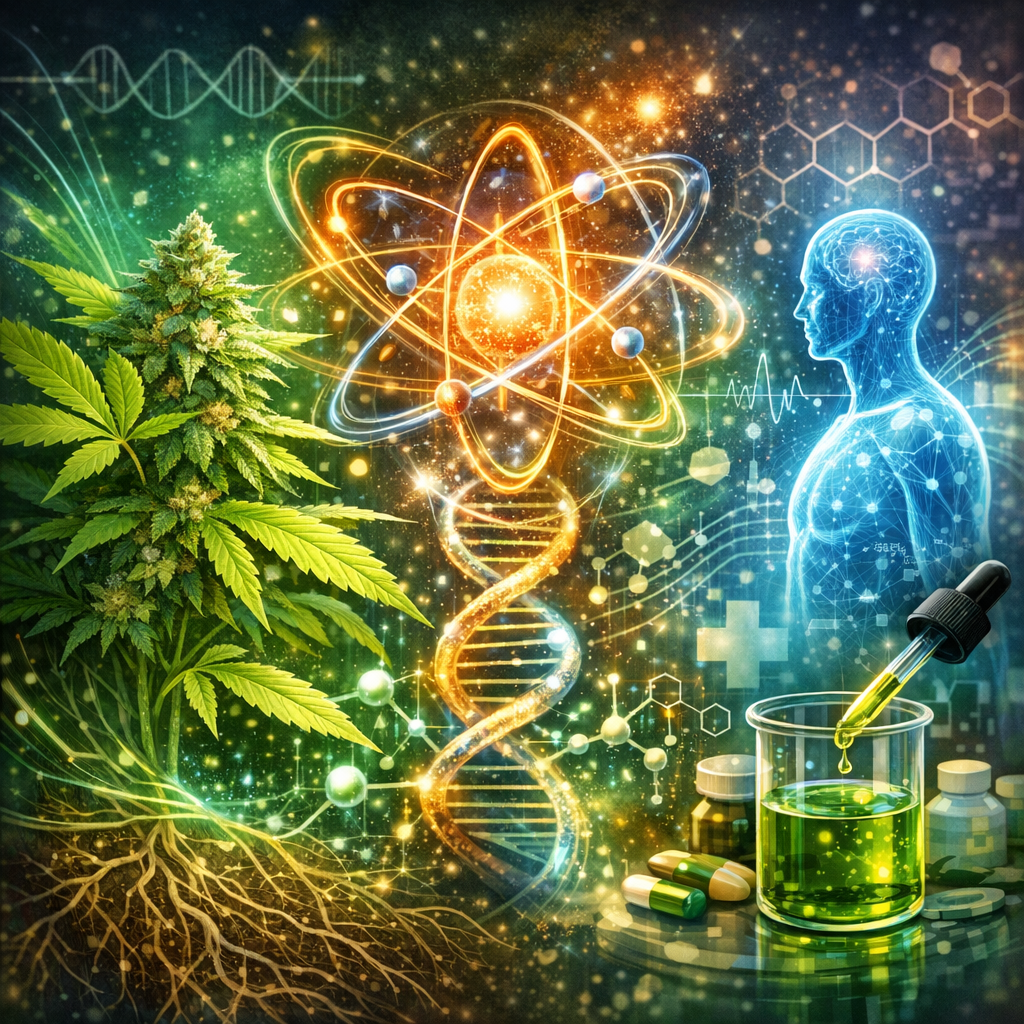
As we venture into the depths of cannabis science, a groundbreaking field emerges at the intersection of plant biology and quantum physics: cannabis quantum biology. While it might sound like science fiction, quantum biology seeks to understand biological processes through the lens of quantum mechanics. This approach offers intriguing possibilities, not only for understanding the intricacies of cannabis plant behavior and development but also for enhancing its medical applications.
The significance of quantum biology lies in its ability to unpack the mysterious processes that occur at the molecular and atomic levels in plants. In cannabis, this involves studying the photoactive molecules responsible for photosynthesis and the production of cannabinoids and terpenes. Through quantum mechanics, we can explore how energy transfer, electron movement, and chemical reactions occur with remarkable efficiency and precision.
One of the areas where quantum biology can revolutionize cannabis science is in improving photosynthetic efficiency. Cannabis is a sun-loving plant with complex light absorption dynamics. By applying quantum principles, researchers are exploring how to optimize this process to increase yield and potency. Similarly, the behavior of enzymes involved in cannabinoid synthesis at a quantum level can shed light on how we might manipulate conditions to enhance the production of specific *cannabinoids* or tailor them for particular therapeutic needs.
Furthermore, the potential medical applications of quantum cannabis research are vast. Quantum mechanics could unveil novel ways to influence molecular interactions within the human body, thereby increasing the bioavailability and efficacy of cannabinoids. This is particularly pertinent in developing treatments for conditions where cannabinoids have shown promise, such as pain management, epilepsy, and anxiety disorders.
As our understanding of quantum biology in cannabis expands, it may unlock new dimensions of knowledge and transformative advancements, reshaping not just how we grow and utilize cannabis but also how we integrate it into medical practice for the benefit of human health.
Features
Several studies are beginning to demonstrate the potential of quantum biology in understanding complex biological systems, including cannabis. One investigation explored the role of quantum effects in photosynthesis—a process fundamental to plant life. Researchers have found that plants, including cannabis, might use quantum coherence to maximize the efficiency of energy transfer during photosynthesis. This phenomenon, known as “quantum tunneling,” allows energy to flow through a plant’s chlorophyll in a highly efficient manner, potentially informing new technologies to enhance crop yields ([Nature Physics, 2010](https://www.nature.com/articles/nphys1652)).
Another promising area in cannabis quantum biology is the study of enzymatic reactions within the plant. Enzymes involved in the synthesis of cannabinoids may operate on principles of quantum mechanics. For instance, quantum tunneling is thought to play a critical role in facilitating the rapid and efficient chemical reactions necessary for the production of major cannabinoids like THC and CBD ([Journal of Physical Chemistry Letters, 2016](https://pubs.acs.org/doi/abs/10.1021/acs.jpclett.5b02587)).
In medical research, the quantum effects on drug interactions present an exciting frontier. Quantum biology may offer insights into how cannabinoids interact with the endocannabinoid system on a molecular level. By manipulating quantum states, scientists could tailor cannabinoid interactions to achieve greater therapeutic effects or reduce unwanted side effects. This is especially promising for targeted drug delivery systems that maximize the efficacy of cannabinoids against specific diseases while minimizing their systemic impact ([Scientific Reports, 2021](https://www.nature.com/articles/s41598-021-81347-3)).
These studies underscore a transformative potential in cannabis science inspired by quantum biology. By advancing our understanding of these intricate quantum processes, we stand at the brink of innovations that could redefine plant cultivation and therapeutic applications across the industry.
Conclusion
Cannabis quantum biology is opening up unprecedented avenues in both plant science and medical applications. By applying quantum physics to biological processes, researchers are poised to revolutionize our understanding of cannabis cultivation and its therapeutic potential. As we delve deeper into these quantum dimensions, the insights gleaned could transform how we grow, enhance, and utilize cannabis, marking a new era in both agriculture and medicine, driven by cutting-edge scientific discovery.
Concise Summary
Cannabis quantum biology merges plant science with quantum physics, exploring molecular-level processes in cannabis. This emerging field promises to enhance photosynthetic efficiency, cannabinoid synthesis, and medical applications by leveraging quantum mechanics. Research shows quantum coherence and tunneling improve energy transfer in photosynthesis. Enzymatic reactions in cannabinoids like THC and CBD also benefit from quantum insights. Medical applications could optimize cannabinoid bioavailability and drug interactions. As we deepen our understanding of these quantum processes, cannabis quantum biology may innovate plant cultivation and therapeutic uses, revolutionizing both agriculture and medical practices.