AI-Driven Revolution: How Biosensors Are Set to Transform Precision Cannabis Cultivation in 2024
Introduction:
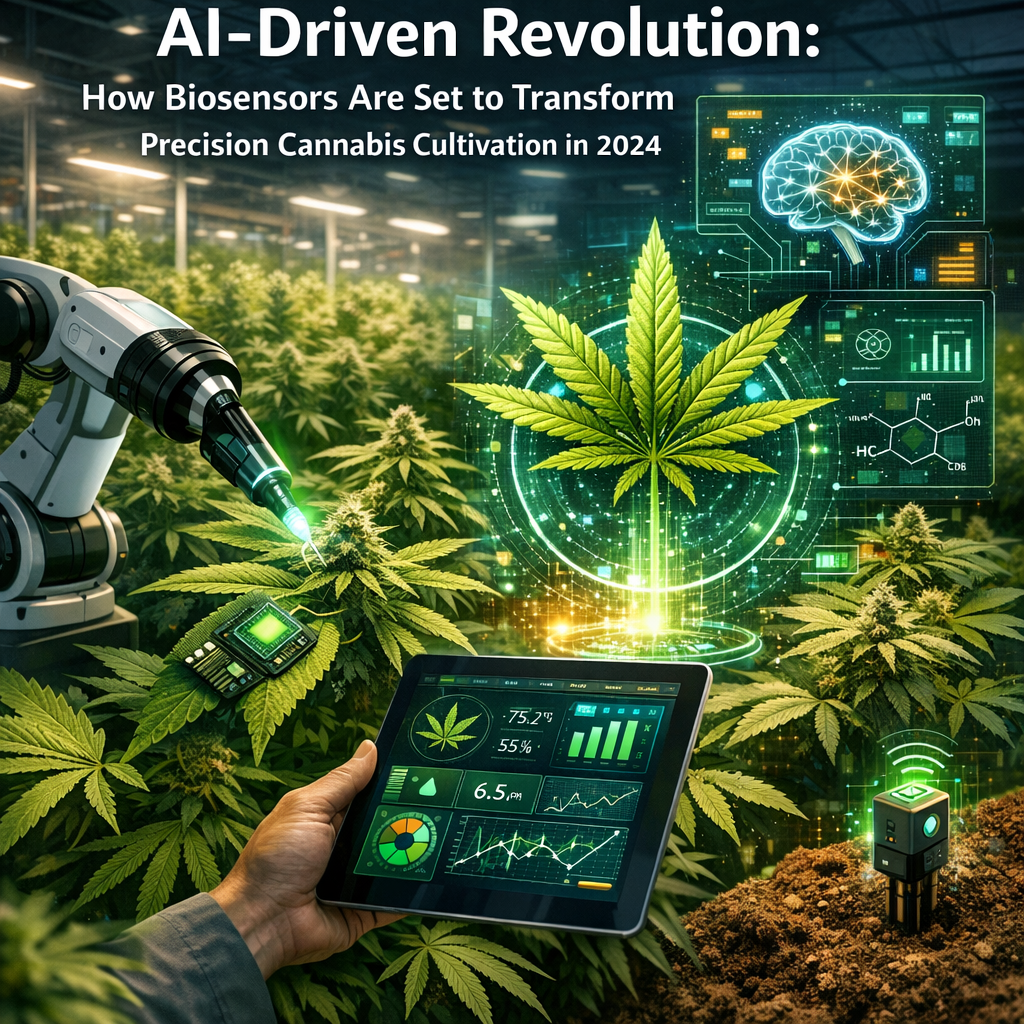
In recent years, the cannabis industry has been on the brink of a technological revolution, with artificial intelligence (AI) and biosensors poised to redefine cultivation practices. As the sector continues to expand, the demand for precision, efficiency, and sustainability in cultivation processes has never been greater. Enter the AI-driven biosensors, innovative tools that promise to transform how cannabis is cultivated by offering unparalleled insights into plant health and environmental conditions.
The precision cultivation movement stems from the need for consistency and quality in cannabis products, addressing both consumer expectations and regulatory standards. Biosensors are at the forefront of this movement, leveraging AI to provide real-time feedback on vital parameters like humidity, temperature, soil composition, and plant health. With the cannabis market projected to reach astronomical figures, the adoption of these technological advancements can enhance yields, reduce waste, and optimize resource use.
In 2024, we anticipate a significant leap in the integration of AI and biosensors in cannabis cultivation, driven by increased accessibility and refined technologies. These sophisticated devices not only monitor plant conditions but also use predictive analytics to offer actionable insights, empowering growers with data-driven decision-making. Additionally, the synergy of AI with agricultural biotechnology allows for the genetic mapping of cannabis strains, ensuring desired traits are enhanced and undesired ones are mitigated.
As climate change continues to pose challenges to agriculture, the cannabis industry stands to benefit immensely from biosensors. These devices can predict and mitigate adverse environmental effects, offering cultivators a proactive approach to pest and disease management. By minimizing chemical interventions, biosensors contribute to the production of cleaner, more sustainable cannabis products.
Overall, the potential of AI-driven biosensors in cannabis cultivation is vast, heralding an era of precision agriculture that aligns with the industry’s rapid commercialization and evolving consumer demands. This article delves into how these technologies are reshaping cannabis cultivation, backed by current research and developments.
Features:
Numerous professional and medical studies underscore the transformative potential of biosensors in agriculture. One prominent research area focuses on phenotyping, where biosensors provide critical insights into plant physiology and genetics. A study published in *Frontiers in Plant Science* highlights how biosensors can capture detailed phenotypic data, significantly enhancing breeding precision for plant improvement, including cannabis.
Moreover, the application of AI in conjunction with biosensors has been explored in the context of predictive modeling. A study in the *Journal of Controlled Release* discusses how machine learning models, when combined with biosensor data, can accurately predict plant growth and yield outcomes. This integration enables cultivators to optimize environmental settings and improve crop performance.
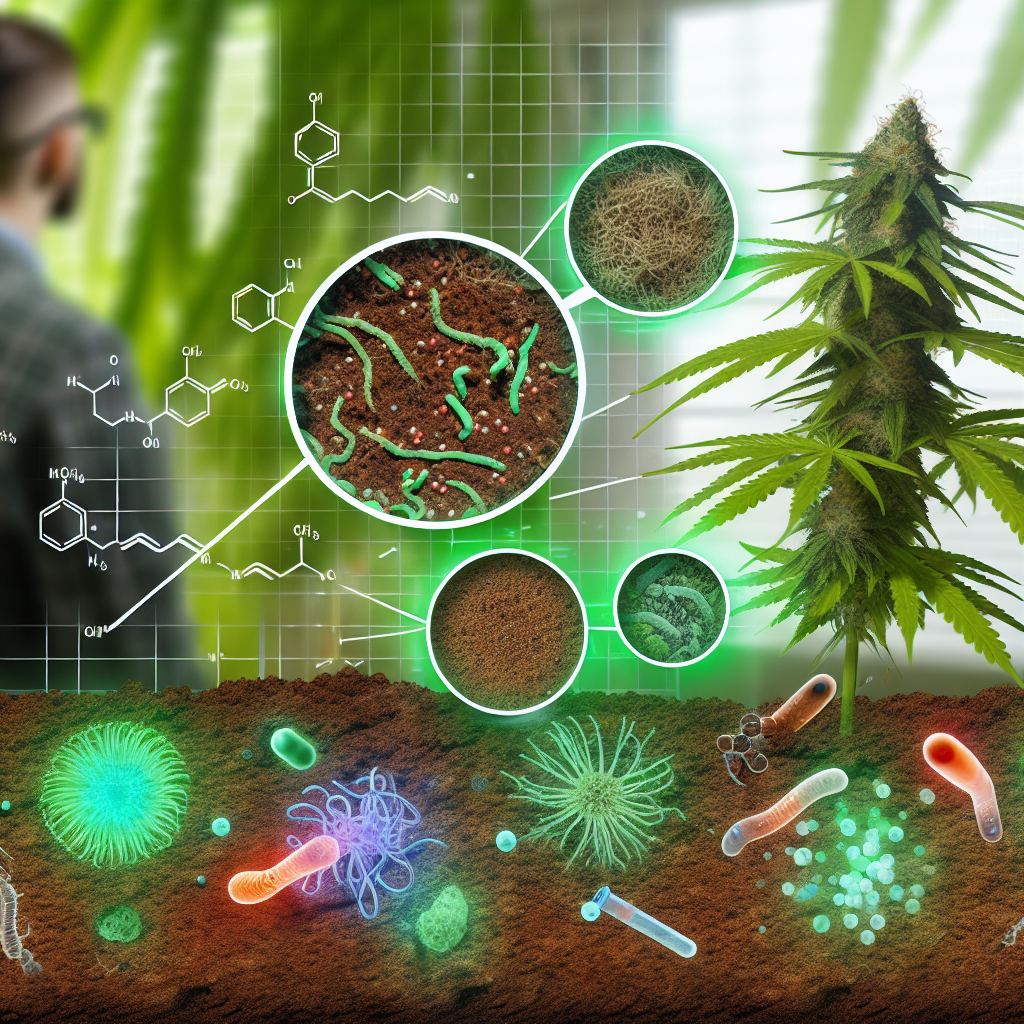
Biosensors also play a crucial role in detecting plant stress indicators, which are pivotal in maintaining plant health. Research featured in *Biosensors and Bioelectronics* illustrates how these sensors measure intricate biochemical markers, allowing for early detection of stress factors like nutrient deficiency or pathogen attack. By addressing these issues promptly, growers can prevent yield loss and ensure optimal plant development.
In terms of sustainability, biosensor technologies contribute to efficient water and nutrient management, critical for environmentally conscious cannabis cultivation. An enlightening study from *Environmental Science & Technology* demonstrates how soil moisture biosensors can tailor irrigation schedules, minimizing water usage without compromising crop quality. This capability aligns with sustainable agriculture goals and supports the industry’s environmental stewardship.
As cannabis transitions into a mainstream commodity, the intersection of AI, biosensors, and cannabis cultivation represents a significant advance in achieving high-quality, consistent, and safe products. The ongoing collaboration between technology developers and agricultural researchers suggests a promising future where cannabis cultivation is more than just a crop—it’s a precision-driven science.
Conclusion:
As we look towards 2024, the integration of AI-driven biosensors in cannabis cultivation represents a formidable evolution in the industry. By enhancing precision and sustainability, these advancements promise to meet the challenges of a growing market with innovation and efficiency. With continuous research and development, the future of cannabis cultivation is set to embrace an era of technological excellence, meeting the demands of both producers and consumers.
Concise Summary:
The cannabis industry is on the cusp of a technological transformation with the integration of AI-driven biosensors. These advanced tools provide real-time insights into plant health and environmental conditions, promising to revolutionize precision cannabis cultivation. By ensuring consistency, enhancing yields, and optimizing resource use, these innovations support sustainability and meet consumer demands. Studies highlight the potential of biosensors in improving plant physiology and managing stress, while AI models optimize growth and output. As cannabis becomes mainstream, this technological leap will drive high-quality, safe production, positioning the industry for a precision-driven future.
References:
– Frontiers in Plant Science
– Journal of Controlled Release
– Biosensors and Bioelectronics
– Environmental Science & Technology