Harnessing Quantum Biology to Unlock Cannabis’ Full Therapeutic Potential: Revolutionary Insights from the Frontiers of Science
Introduction
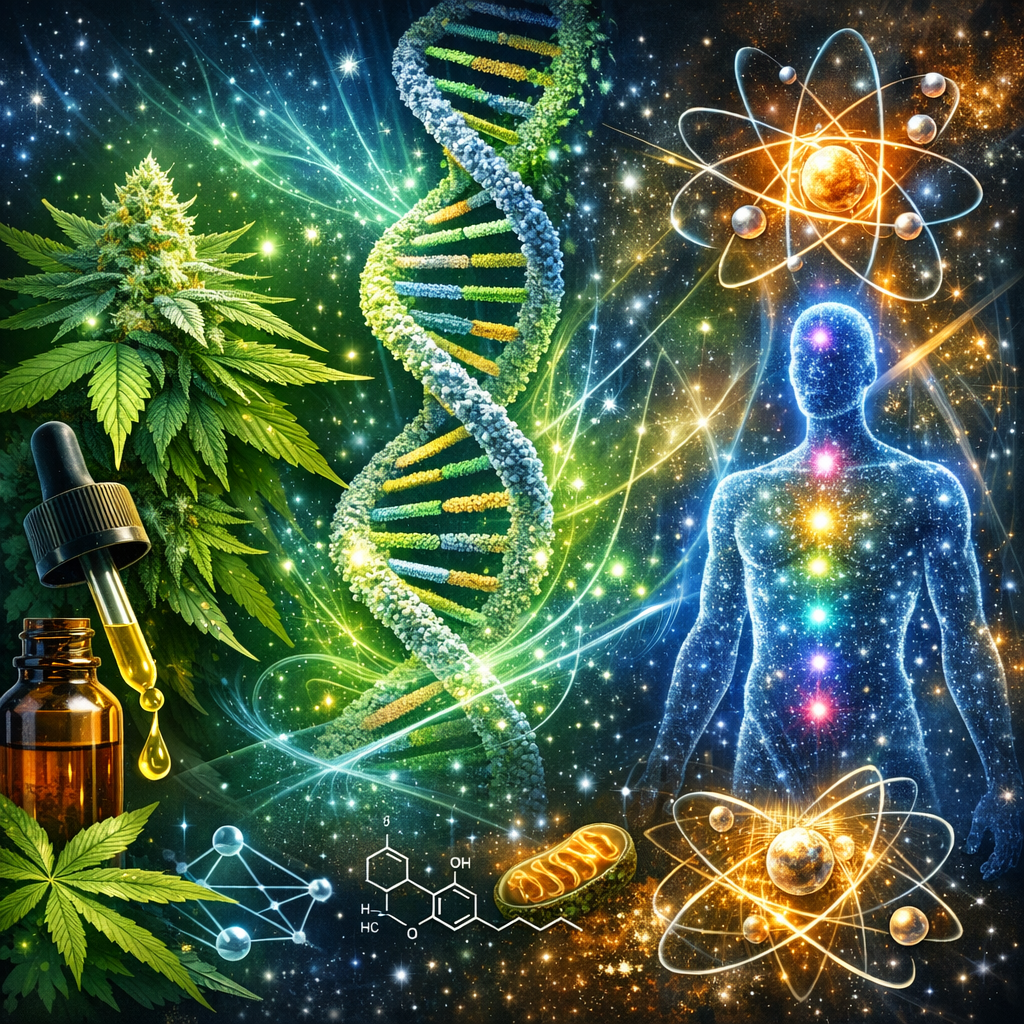
In recent years, the intersection of quantum biology and cannabis science has opened up fascinating new possibilities in the understanding and potential enhancement of cannabinoids’ therapeutic effects. Quantum biology, a field that explores quantum phenomena within biological systems, offers groundbreaking insights into how living organisms, including humans, operate on a microscopic level. This understanding could revolutionize how we perceive and utilize the biological processes involved in cannabis consumption and its effects on the body.
Cannabis has long been recognized for its medical and therapeutic properties, with cannabinoids like THC and CBD at the forefront of research. These compounds interact with the human endocannabinoid system, which plays a critical role in regulating various physiological processes such as appetite, mood, and pain sensation. However, recent studies suggest that quantum mechanics may influence these interactions in ways previously uncharted.
At the heart of quantum biology are phenomena such as superposition, entanglement, and quantum tunneling. These concepts, foundational to quantum physics, describe behaviors at atomic and subatomic levels that could influence how biological molecules interact, bond, and function. For instance, electrons moving within molecules might utilize quantum tunneling to influence reaction rates or pathways in metabolic processes, potentially impacting how cannabinoids are processed or how they bind to receptors.
Understanding these quantum interactions could lead to novel methods for increasing the efficacy of cannabis-based therapies. Imagine tailoring cannabis strains not just for their cannabinoid profiles but also for their quantum biological properties, thus creating more targeted and effective treatment options for medical conditions ranging from chronic pain to neurological disorders. Such advances could revolutionize both personal consumption and broader medical practices, pushing the boundaries of what cannabis can achieve in therapeutic contexts.
Features
Recent research has started to delve into the fascinating possibilities that quantum biology presents for cannabis. One emerging area of focus is quantum coherence in photosynthesis. Certain studies suggest that plants, including cannabis, use quantum coherence to optimize the efficient capture of light energy, which could have implications for both the cultivation and compound production in cannabis plants. Understanding how cannabis plants harness these quantum effects might reveal methods to boost yields or enhance cannabinoid potency, thus improving their therapeutic applications.
A notable study published in [Nature Physics](https://www.nature.com/articles/nphys1857) explored quantum walk mechanisms in biomolecules, potentially applicable to cannabinoids and their metabolic pathways. Quantum walks describe the random movement of quantum particles and could illustrate how cannabinoids navigate complex biological systems efficiently, maximizing their bioavailability and effectiveness. By applying these principles, researchers might unlock new strategies for enhancing the absorption and efficacy of cannabis-derived treatments.
Furthermore, the quantum Zeno effect—where systems can be ‘frozen’ in certain states with repeated observation—may have implications for understanding cannabinoid receptor interactions. According to research discussed in [Physical Review Letters](https://journals.aps.org/prl/abstract/10.1103/PhysRevLett.85.2877), repeated interactions at the quantum level could potentially stabilize certain therapeutic states, opening the door for more precise control over the therapeutic outcomes of cannabis use.
Moreover, a study highlighted in the [Journal of Chemical Physics](https://aip.scitation.org/doi/10.1063/5.0058134) emphasized the potential of utilizing quantum entanglement to explore the relationship between cannabinoids and receptor sites. Entanglement might provide new insights into how multiple cannabinoids work synergistically, an effect known as the entourage effect, which could lead to the development of more effective, multi-cannabinoid formulations.
Conclusion
The integration of quantum biology into cannabis research represents a revolutionary frontier in optimizing the therapeutic potential of cannabinoids. By leveraging quantum phenomena, scientists and industry professionals can develop more effective and tailored cannabis-based therapies. As the field continues to evolve, the marriage of quantum mechanics and cannabis science promises to break new ground in both personal health and medical practice, opening a new era of innovation and discovery.
Concise Summary:
Quantum biology offers revolutionary insights into cannabis’ therapeutic potential by exploring quantum phenomena in biological systems. Recent studies suggest that quantum mechanics, like superposition and entanglement, influence how cannabinoids’ therapeutic effects could be optimized. Quantum coherence in photosynthesis, quantum walks, and the quantum Zeno effect are key areas of interest, potentially enhancing cannabinoid bioavailability and therapeutic outcomes. Understanding these interactions may lead to more effective cannabis therapies and tailored treatments. The integration of quantum biology into cannabis science could transform therapeutic applications, marking a significant advance in medical research and personal health optimization.