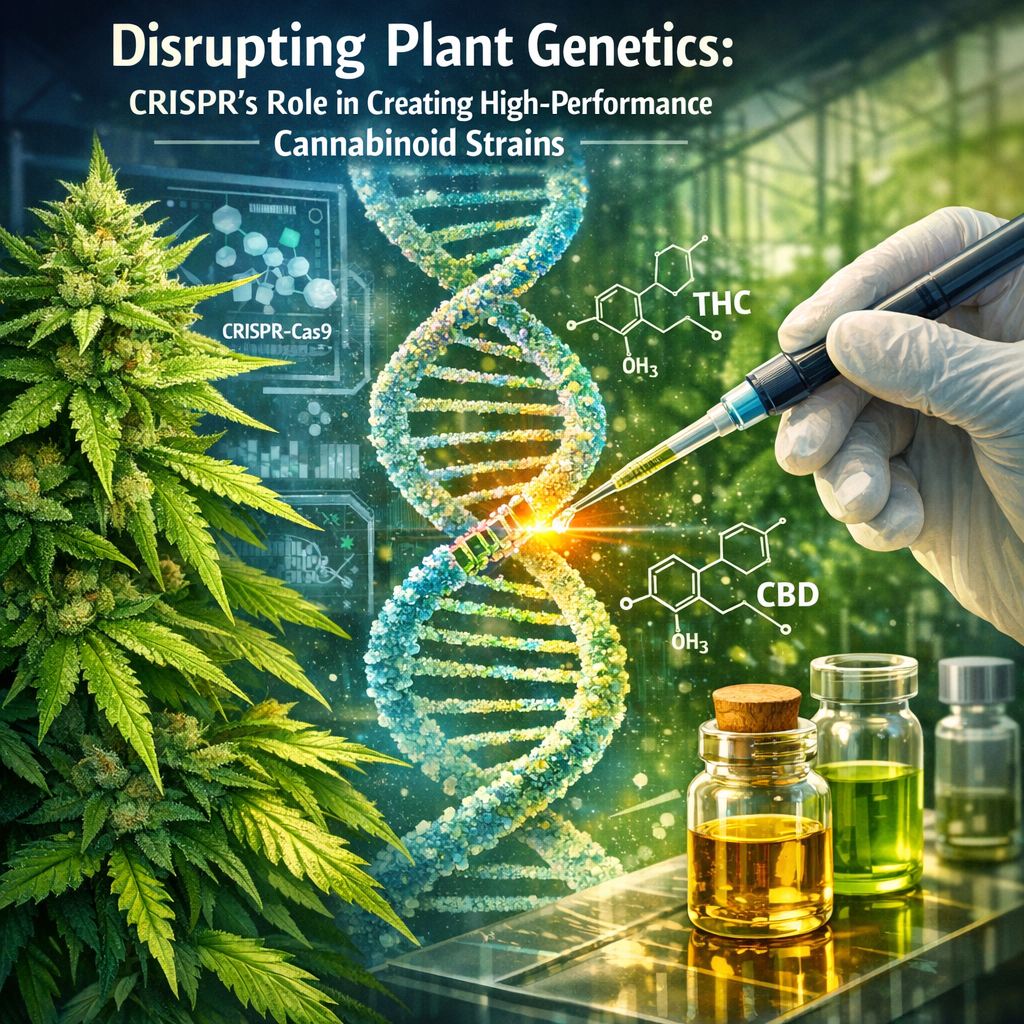
Disrupting Plant Genetics: CRISPR’s Role in Creating High-Performance Cannabinoid Strains
The arena of cannabis cultivation is evolving at an unprecedented pace, driven by technological advancements that promise to revolutionize the industry. One of the most groundbreaking innovations in recent years is the application of CRISPR-Cas9 technology in plant genetics. CRISPR, an acronym for Clustered Regularly Interspaced Short Palindromic Repeats, is a gene-editing technology that allows scientists to alter DNA sequences with precision. This technology has become a disruptive force in various fields, from medicine to agriculture, and its application in cannabis genetics is opening new doors for both consumers and professionals in the marijuana industry.
Cannabis plants contain over 100 cannabinoids, including the well-known compounds THC and CBD. Each of these cannabinoids has specific effects and therapeutic benefits, making them invaluable to both medical and recreational users. Traditional methods of breeding cannabis plants to enhance specific traits are often time-consuming and imprecise, relying on a mix of trial and error. However, with CRISPR technology, scientists can now target specific genes responsible for traits such as potency, flavor, yield, and disease resistance, and modify them to produce new, high-performance strains.
This precision in genetic manipulation not only enhances our understanding of cannabis at a molecular level but also accelerates the creation of custom strains tailored to meet specific medical or consumer needs. Imagine a world where patients can access cannabinoid profiles optimized for particular medical conditions, or where connoisseurs can enjoy unique flavors and aromas crafted through genetic engineering. The potential is nearly limitless, and as CRISPR technology becomes more refined, its impact on cannabis cultivation is expected to be profound.
Features
Several professional and medical studies have started to explore the implications of CRISPR technology in plant genetics, including cannabis. One significant study published in the journal [*Nature Biotechnology*](https://www.nature.com/articles/nbt.2842) highlights CRISPR’s efficiency in editing plant genomes, noting that the technology can create precise, heritable changes in ways traditional breeding cannot. By utilizing CRISPR, scientists can disrupt or enhance specific gene functions, allowing for targeted improvements in plant traits such as higher cannabinoid concentrations or resistance to common pests and diseases.
In cannabis, this could mean precisely increasing the levels of cannabinoids like CBG (Cannabigerol), which has shown promise in treating inflammatory and neurological disorders. A study from the [University of California, Davis](https://www.ucdavis.edu/news/crispr-gene-editing-technology-revolutionize-breeding), demonstrated the potential of CRISPR in plants by successfully editing the DNA of tomatoes to produce longer shelf life and improved nutritional value, indicating similar prospects for cannabis strains aimed at enhanced loss reduction and optimized growth cycles.
CRISPR also offers potential benefits in terms of sustainability. Cannabis cultivation can be resource-intensive, necessitating significant amounts of water, nutrients, and energy. By using CRISPR to develop strains that require fewer resources or have improved pest resistance, growers might reduce the environmental footprint of cannabis production—an increasingly important factor as legal markets expand and regulatory pressures rise.
It’s worth noting that the application of CRISPR in cannabis remains at a nascent stage, with ongoing studies required to ensure the modifications are safe and do not produce unintended consequences. Ethical considerations also play a role, as with any genetically modified organism, but the precision and potential benefits might outweigh these concerns.
Conclusion
CRISPR technology is positioned to be a game-changer in the cannabis industry, offering unprecedented control over plant genetics that promises to enhance performance, sustainability, and therapeutic potential. As research progresses, the collaboration between geneticists, cultivators, and medical professionals will be crucial in harnessing this technology responsibly and effectively. For both consumers looking for novel experiences and medical users seeking enhanced therapeutic benefits, CRISPR’s role in cannabis cultivation represents a new frontier worth watching closely.
References
– [Nature Biotechnology on CRISPR-Cas9](https://www.nature.com/articles/nbt.2842)
– [University of California, Davis on CRISPR Applications](https://www.ucdavis.edu/news/crispr-gene-editing-technology-revolutionize-breeding)
– [Research article on CRISPR and Cannabinoid Production](https://pubs.acs.org/doi/10.1021/acsomega.1c00733)
Concise Summary
CRISPR-Cas9 technology is transforming cannabis cultivation by providing precision in gene-editing, which can enhance traits like potency, flavor, yield, and disease resistance. This innovation promises to accelerate the creation of custom strains tailored for specific medical or consumer needs. While the technology is still in early stages with safety studies ongoing, its potential benefits in performance, sustainability, and therapeutic applications are profound. The future of cannabis cultivation lies in the collaboration of geneticists and cultivators to responsibly harness CRISPR’s capabilities, paving the way for optimized and sustainable cannabis strains.