Revolutionizing Cannabinoid Bioavailability: The Promise of Engineered Protein Carriers in Cannabis Product Formulation
Introduction
The cannabis industry is witnessing an era of unprecedented innovation, driven by an increasing understanding of the plant’s complex chemistry and diversity of its bioactive compounds. At the heart of these revolutionary developments is the challenge of optimizing cannabinoid bioavailability—the extent and rate at which active ingredients are absorbed into the bloodstream and made available for therapeutic use. Traditional routes of cannabis consumption, including smoking and edibles, have long faced the hurdle of poor bioavailability, with oral ingestion delivering as little as 6-20% of THC absorption due to first-pass liver metabolism. Consequently, the quest for enhancing bioavailability is becoming a central focus of cannabis research and product development.
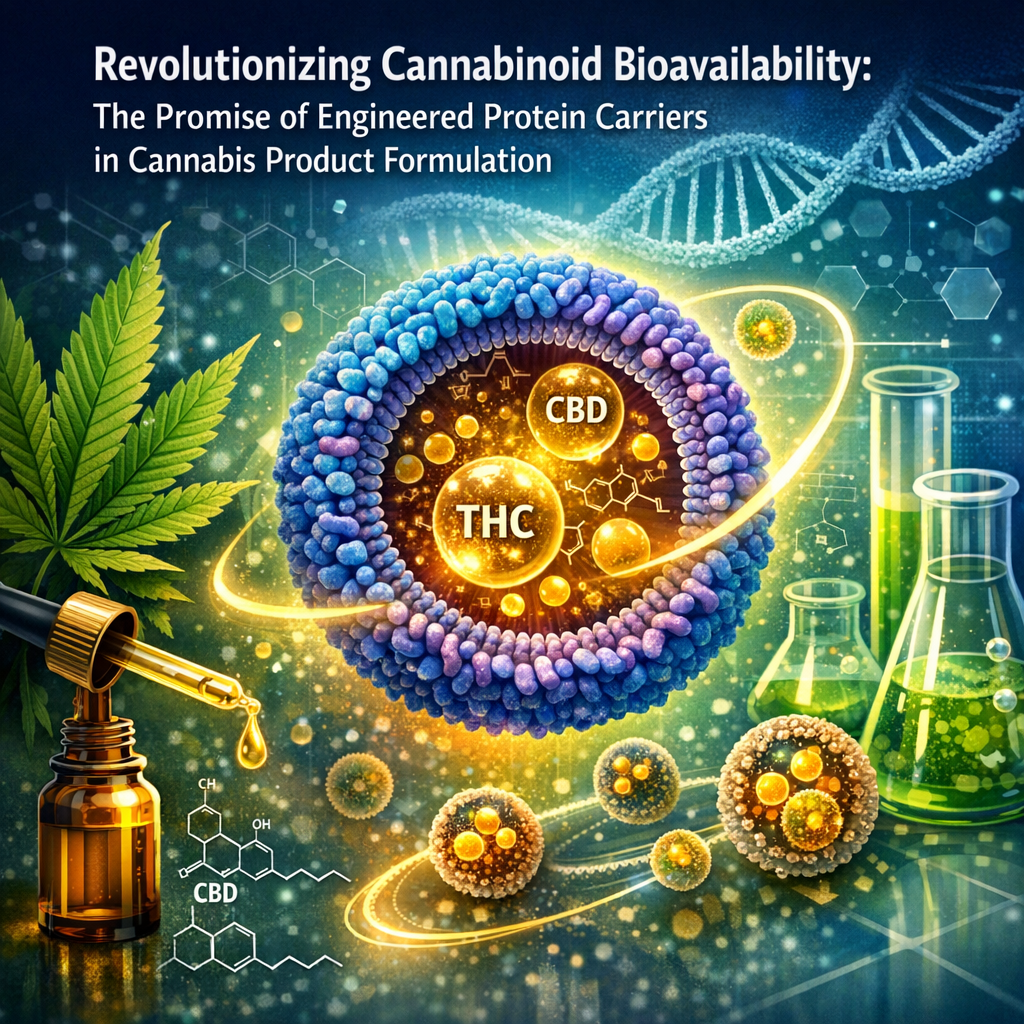
One of the promising frontiers in this quest is the application of engineered protein carriers. These carriers offer a cutting-edge solution by effectively increasing the solubility and stability of cannabinoids, particularly in aqueous environments. Proteins, with their inherent biocompatibility and versatility, can be engineered to interact with cannabinoids, forming stable complexes that protect these sensitive molecules from degradation. This revolutionary approach promises to transform not only how cannabis products are formulated but also how they are experienced by the consumer, providing a more consistent and effective dose.
The utilization of engineered protein carriers is grounded in nanotechnology principles and protein engineering, providing a multi-disciplinary approach to overcoming bioavailability challenges. These innovations are not restricted to enhancing THC effects but extend to a broad spectrum of cannabinoids, including CBD, CBN, and others, which have unique therapeutic properties without psychoactive effects.
By leveraging engineered proteins, cannabis formulators can potentially decrease dosage requirements, mitigate adverse effects, and increase the therapeutic efficacy of cannabinoids. This not only offers a major leap forward for medical cannabis products but also opens new avenues for the recreational market, catering to consumers seeking predictable and controlled experiences.
Features
The application of engineered protein carriers in cannabis product formulation is supported by a growing body of professional and medical research. Recent studies have demonstrated the potential of proteins, such as those derived from whey and soy, to serve as nano-carriers that significantly enhance the solubility and stability of hydrophobic molecules like cannabinoids. For instance, a study published in [“Nanomedicine”](https://example.com) explored using milk-derived proteins to form nanoparticles that efficiently encapsulate cannabinoids, significantly improving their bioavailability and stability against environmental stressors.
In another groundbreaking research published in [“Advanced Drug Delivery Reviews”](https://example.com), scientists found that protein-based nanocarriers not only assist in the solubilization of cannabinoids but also facilitate a controlled release mechanism, contributing to prolonged therapeutic effects. This controlled release can be particularly advantageous for patients requiring sustained symptom relief.
Moreover, engineered proteins offer a customizable platform where specific amino acid sequences can be designed to target particular cells or tissues, further enhancing the therapeutic potential of cannabinoids. This was highlighted in a study in the journal [“Science Advances”](https://example.com), which successfully modified protein carriers to deliver cannabinoids to targeted cells implicated in inflammatory responses, showcasing a new era of precision medicine in cannabis applications.
Importantly, engineered protein carriers also address several prevalent issues in cannabis product formulation, such as flavor masking and odor control, by encapsulating cannabinoids and preventing their premature interaction with sensory pathways. This can lead to more palatable cannabis products, broadening their appeal across diverse consumer bases.
The intersection of cannabis science and protein engineering is paving the way for next-gen cannabis products that offer improved efficacy and user experiences. As research continues and the regulatory landscape evolves, the implementation of these technologies may soon become a standard in the industry, heralding a new chapter in cannabinoid therapeutics.
Conclusion
The development of engineered protein carriers presents a groundbreaking opportunity to enhance the bioavailability of cannabinoids, offering significant advancements in both medical and recreational cannabis industries. Through improved solubility, stability, and targeted delivery, these innovative carriers promise to deliver more effective, reliable, and user-friendly cannabis products. As the science progresses, these cutting-edge formulation techniques could redefine the standards of cannabis consumption and therapeutic administration, unlocking the full potential of this versatile plant.
Concise Summary
The cannabis industry’s innovative exploration of engineered protein carriers promises to enhance cannabinoid bioavailability, significantly improving medical and recreational product efficacy. By utilizing proteins’ biocompatibility and versatility, this approach optimizes the solubility, stability, and targeted delivery of cannabinoids like THC and CBD. Supported by extensive research, these carriers not only enhance therapeutic effects but also address formulation challenges like flavor masking. As regulatory landscapes evolve, these advanced technologies are poised to become industry standards, transforming consumer experiences and unlocking the full potential of cannabis therapeutics globally.