Unraveling the Quantum Biology Behind Cannabis: A New Frontier in Plant Manipulation and Product Development
Introduction
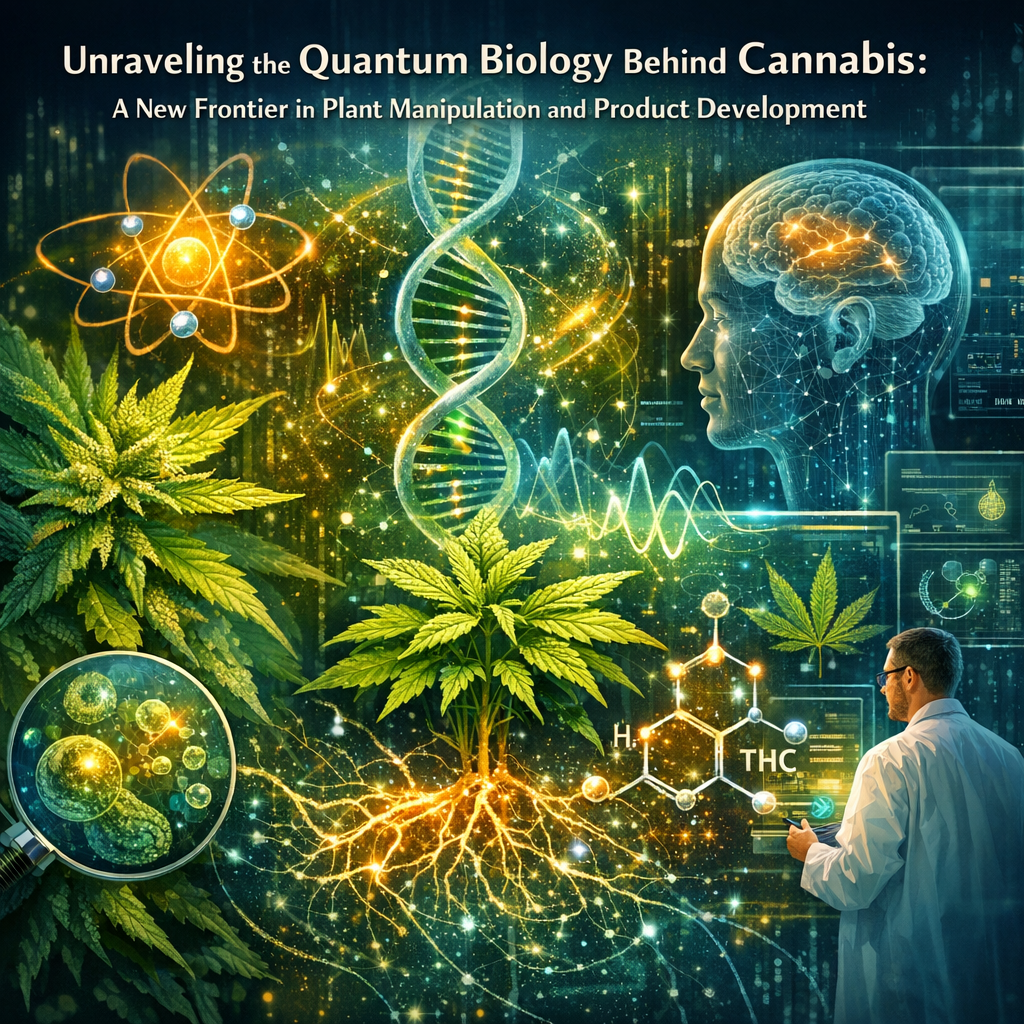
The intersection of quantum biology and cannabis presents a groundbreaking frontier in plant manipulation and product development. While the term “quantum biology” might evoke images of science fiction, it is an emerging scientific field that explores quantum mechanics within biological processes. Quantum biology investigates how quantum phenomena—traditionally applied to non-living systems—play a role in living organisms, such as plants like cannabis.
Cannabis, a plant deeply intertwined with human history, is now at the cutting edge of scientific inquiry. As researchers utilize advanced methodologies to understand its complex biochemistry, new insights emerge about its growth, psychoactive effects, and therapeutic potentials. But how does quantum biology fit into this picture?
Quantum biology posits that certain biological systems operate at a quantum level, utilizing properties such as superposition and entanglement. In the context of cannabis, this could drastically change how we approach breeding, growing, and developing cannabis-based products. By understanding the quantum dynamics within cannabis plants, particularly in cannabinoid biosynthesis and terpene production, scientists could revolutionize how these plants are manipulated to enhance desirable attributes or mitigate unwanted ones.
The implications for medical and professional marijuana spaces are substantial. New product development could yield strains with tailored cannabinoid profiles, increasing potency or enhancing specific therapeutic effects. For consumers and patients, this means more precise dosages and targeted treatments, potentially reducing side effects and maximizing benefits.
As the cannabis industry grows exponentially, integrating quantum biology could push boundaries previously considered unattainable. Cultivators, researchers, and product developers stand at the brink of an era where cannabis plant biology manipulation aligns with the most advanced principles of physics. This article explores emerging studies and how unlocking the quantum secrets of cannabis can revolutionize the industry.
Features
In recent years, there has been a growing scientific curiosity about potential quantum effects in biological systems, including cannabis. A key area of exploration is the photosynthesis process. Studies suggest that certain photosynthetic pathways may exploit quantum coherence to enhance energy transfer efficiency [Harvard Gazette](https://news.harvard.edu/gazette/story/2010/12/quantum-secrets-of-photosynthesis-at-room-temperature/). Applying these insights to cannabis could optimize light absorption during growth, potentially increasing yield and potency without additional resource expenditure.
A significant study investigating quantum biology in enzymatic reactions highlights its relevance to cannabis. Researchers have identified that enzyme catalysis might involve quantum tunneling, where particles pass through energy barriers instead of over them, potentially altering cannabinoid synthesis [Nature Chemistry](https://www.nature.com/articles/nchem.568). If applicable to cannabis, this could enable enhanced cannabinoid production, maximizing the plant’s beneficial properties.
Moreover, research into quantum entanglement within cellular structures offers intriguing insights. Some hypotheses suggest that plant cells might use quantum entanglement for optimal communication and information transfer across large molecular structures [Scientific American](https://www.scientificamerican.com/article/does-quantum-mechanics/). For cannabis, this might mean more efficient coordination within its biochemical pathways, affecting everything from hormone regulation to stress response mechanisms.
Emerging studies also point to quantum biology’s role in understanding terpene production—compounds responsible for cannabis’s aroma and therapeutic effects. The quantum behavior within the lipoxygenase pathway, crucial for terpene and flavor compound synthesis, is a subject of interest [Journal of the American Chemical Society](https://pubs.acs.org/doi/10.1021/ja00064a034). By leveraging this understanding at the quantum level, researchers could manipulate terpene profiles for bespoke cannabis strains, enhancing their appeal and applicability in both recreational and medical markets.
Conclusion
The exploration of quantum biology in cannabis is in its early stages, but it promises a future where plant manipulation and product development are exponentially advanced. Integrating quantum principles into biological processes could revolutionize the cannabis industry and beyond. By decoding these quantum secrets, the future holds the promise of unprecedented breakthroughs in the cultivation, application, and therapeutic potential of cannabis. As the scientific community continues to unravel these mysteries, the horizons for cannabis could become virtually limitless.
Concise Summary
Quantum biology applies quantum mechanics to biological processes, promising revolutionary advances in cannabis cultivation and product development. By leveraging quantum phenomena like superposition and entanglement, researchers could enhance cannabinoid and terpene profiles, optimizing therapeutic effects and reducing side effects. Studies suggest that quantum effects could improve light absorption in photosynthesis, boost enzyme reactions via quantum tunneling, and facilitate efficient cellular communication, potentially increasing cannabis yields and potency. This integration of cutting-edge physics with cannabis research could transform the industry, offering precise, tailored products for both recreational and medical markets.