Beyond THC and CBD: Unveiling Revolutionary Botanical Synergies in Advanced Cannabinoid Formulations
The realm of cannabis science has long been dominated by the two most recognized cannabinoids: tetrahydrocannabinol (THC) and cannabidiol (CBD). These pioneering compounds are celebrated for their diverse therapeutic effects and have been critically acclaimed in both medical and recreational contexts. However, as the cannabis industry grows, new dimensions of this botanical treasure trove are being uncovered. This article explores the innovative landscape of cannabinoid formulations, going beyond THC and CBD to delve into other lesser-known cannabinoids and the synergistic botanical ingredients that enhance their efficacy.
In the ever-evolving cannabis market, scientists and product developers are pushing the boundaries of what these formulations can achieve. The cannabis plant is home to over 100 cannabinoids, but research has often been concentrated on THC and CBD due to their abundance and pronounced effects. Yet, emerging studies underscore the potential of minor cannabinoids like cannabigerol (CBG), cannabinol (CBN), and tetrahydrocannabivarin (THCV). These compounds show promising therapeutic benefits, ranging from anti-inflammatory and neuroprotective properties to appetite suppression and potential weight management, as seen in THCV studies.
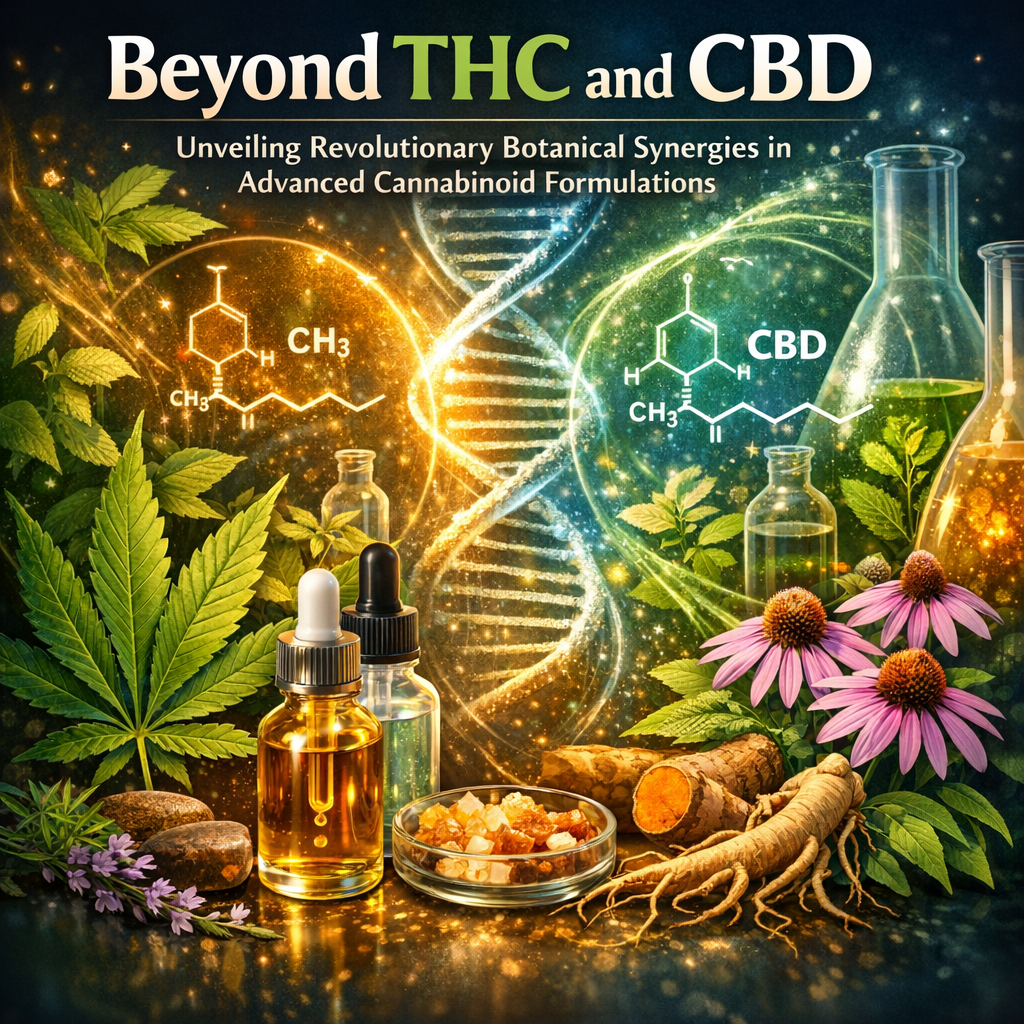
Furthermore, the entourage effect—a theory proposing that cannabinoids function more effectively when combined with other botanical compounds—has galvanized enthusiasm for crafting advanced formulations. Terpenes and flavonoids, often dismissed as mere aromatic components, are now recognized for their modulatory contributions. These naturally occurring compounds can alter and enhance the effects of cannabinoids by influencing receptor activity or providing complementary therapeutic effects.
For professionals in the industry, understanding these complex synergies is crucial for developing cutting-edge products. By honing in on specific therapeutic profiles and optimizing cannabinoid ratios, formulators can create products that are not only potent but are also tailored to meet specific consumer needs. As scientific exploration widens its scope, the potential for creating novel therapeutic options expands, offering a glimpse into a future where cannabis-based interventions become more targeted and effective than ever.
Features
Recent studies delve into the fascinating interactions within cannabis’ chemical matrix, bringing to light the potential medical uses of lesser-known cannabinoids. Cannabigerol (CBG), for example, is gaining traction due to its ability to act as an anti-inflammatory agent. Accumulating evidence suggests that CBG can inhibit the growth of colorectal cancer cells and potentially abate the progression of other cancer types. A study published in “[Frontiers in Pharmacology](https://www.frontiersin.org/articles/10.3389/fphar.2018.00359/full)” highlighted CBG’s role as a promising anticancer compound due to its interaction with specific molecular targets.
Moreover, cannabinol (CBN) is being investigated for its potential as a sleep aid and neuroprotective agent. Although still in the early stages of research, findings suggest CBN might slow the degeneration of neurons in conditions like amyotrophic lateral sclerosis (ALS). THC, though known for its psychoactivity, when combined with CBD or terpenes, transforms into a potent analgesic or anxiolytic.
Meanwhile, researchers are expanding on the synergistic potential of terpenes and flavonoids. Terpenoids, like myrcene and limonene, are not only responsible for the distinct scents of cannabis strains but offer notable benefits such as stress relief and immune system enhancement. They may work harmoniously with cannabinoids, augmenting their therapeutic effects—a phenomenon that opens exciting avenues for product innovation.
The trend toward precision medicine also sees the integration of other botanicals, such as adaptogens, into cannabinoid formulations. Herbs like ashwagandha and ginseng might complement the physiological effects of cannabis by enhancing adaptability to stress or improving cognitive function. This targeted approach not only boosts consumer confidence but also underscores the importance of scientific validation in product development.
Conclusion
The ongoing wave of research into cannabis constituents represents a promising frontier for both consumers and the medical community. By venturing beyond THC and CBD, we are only beginning to unravel the full therapeutic potential of the cannabis plant. As our understanding deepens, advanced formulations harnessing unique cannabinoid and botanical synergies are poised to revolutionize the industry, offering more personalized and effective solutions.
References
1. [Frontiers in Pharmacology article on CBG’s anti-cancer potential](https://www.frontiersin.org/articles/10.3389/fphar.2018.00359/full)
2. [Article exploring potential of CBN in neuroprotection](https://pubmed.ncbi.nlm.nih.gov/10728427/)
3. [Entourage effect and terpene synergies explained](https://www.leafly.com/news/cannabis-101/what-is-the-entourage-effect)
Concise Summary
Emerging research in cannabis science highlights the potential of lesser-known cannabinoids such as CBG, CBN, and THCV beyond the well-known THC and CBD. These compounds, along with terpenes and flavonoids, may offer synergistic effects that enhance therapeutic potential, including anti-inflammatory, neuroprotective, and weight management benefits. Innovations in cannabinoid formulations are pushing toward precision medicine approaches, integrating adaptogens like ashwagandha and ginseng for improved stress adaptation and cognitive function. This evolving landscape is set to provide more personalized therapeutic options, revolutionizing the cannabis industry.