Blending Cannabis with CRISPR: Engineering Next-Gen Strains for Targeted Therapeutic Effects
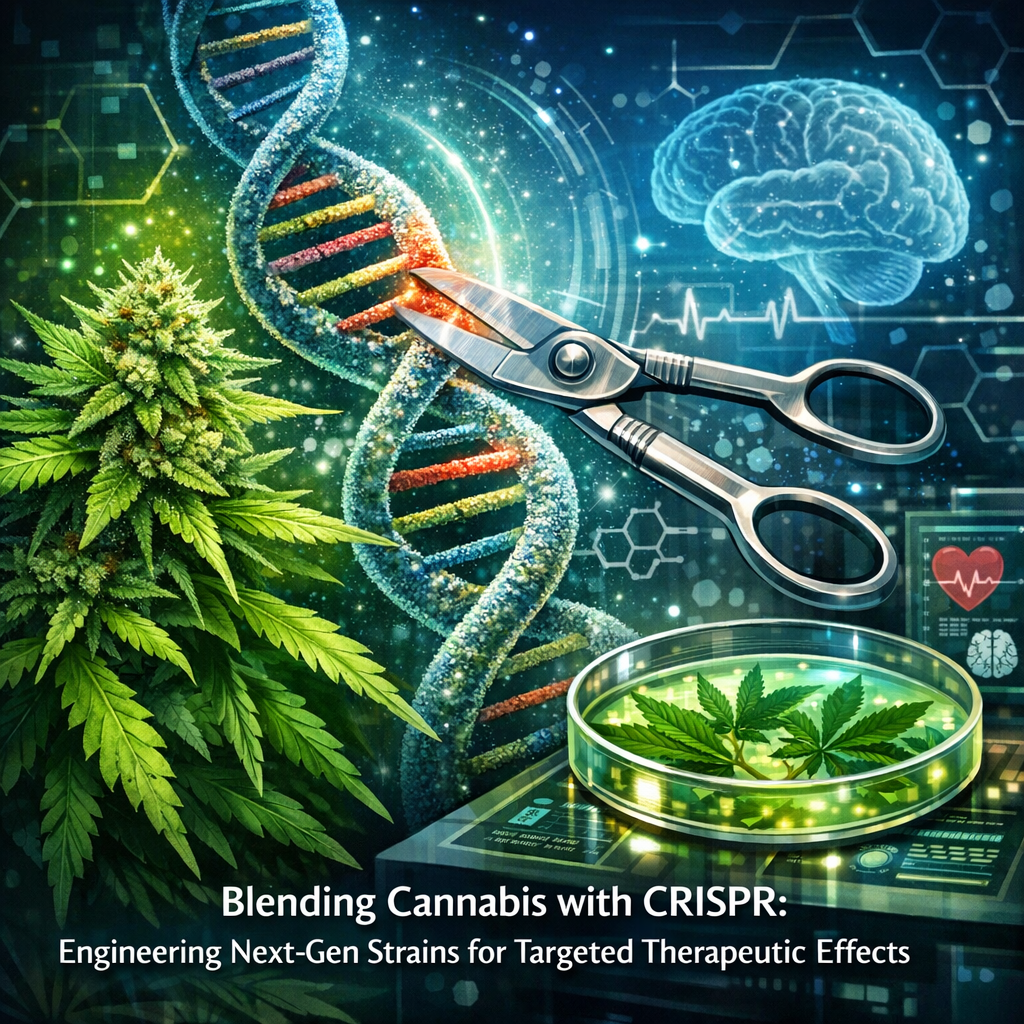
The intersection of cannabis and genetic engineering promises to redefine therapeutic applications and consumer experiences. Amid increasing legalization and research initiatives, cannabis stands as both a recreational and medicinal powerhouse. Historically, selective breeding has been the cornerstone of cannabis cultivation, allowing for enhanced flavors, increased yields, and varied psychoactive effects. However, today’s genetic toolbox offers unprecedented precision. Enter CRISPR, the groundbreaking technology originally developed as a bacterial defense mechanism, which now facilitates precise genome editing. By applying CRISPR to cannabis, researchers are poised to craft new strains with targeted therapeutic effects, offering bespoke solutions to medical conditions and revolutionizing personal cannabis experiences.
CRISPR, or Clustered Regularly Interspaced Short Palindromic Repeats, functions like a biological version of a word-processing tool’s “find and replace,” enabling scientists to edit DNA with remarkable accuracy. This revolutionary technology has already made waves in fields like agriculture, medicine, and biotechnology. Transposing this potential to cannabis, CRISPR may revolutionize strain development, enabling the fine-tuning of cannabinoid profiles and the amplification of desired traits while minimizing unwanted ones. Imagine strains developed specifically to maximize the anti-inflammatory properties of cannabidiol (CBD) or others engineered to express high levels of particular terpenes to target anxiety relief.
The therapeutic applications of cannabis are vast, from pain management and appetite stimulation to epilepsy treatment and anxiety relief. However, the full potential of cannabis is yet undelivered due to the plant’s complex chemical composition. While approximately 100 cannabinoids have been identified, the precise effects and interactions of these compounds remain incompletely understood. By integrating CRISPR into cannabis cultivation, scientists can enhance the understanding of these interactions and develop strains tailored to treat specific medical conditions more effectively.
Features: Pioneering Studies in Cannabis and CRISPR Technology
One of the primary targets in cannabis genome editing is enhancing the therapeutic efficacy of cannabinoids. A 2020 study published in [Frontiers in Plant Science](https://www.frontiersin.org/) outlined successful CRISPR-Cas9 genome editing in cannabis, demonstrating potential modifications in cannabidiol (CBD) and tetrahydrocannabinol (THC) pathways. By targeting the genes that govern cannabinoid synthesis, scientists can potentially isolate and augment specific compounds, resulting in strains with predefined chemical profiles.
Moreover, terpenes—aromatic compounds found in cannabis—can also be influenced by CRISPR. Terpenes are believed to contribute to the entourage effect, where different cannabis compounds work together synergistically to enhance therapeutic benefits. In a study published by [Plant Physiology](https://academic.oup.com/plphys/pages/About), researchers used CRISPR to target genes related to terpene biosynthesis, offering insights into increasing terpenoid concentration in crops, including cannabis.
A landmark study led by the University of California, Berkeley, introduced the concept of using CRISPR to develop yeast strains capable of producing cannabinoids, offering a scalable and consistent method of production. This biotechnological leap could pave the way for the development of new cannabis-based pharmaceuticals (source: [Nature](https://www.nature.com/)).
These studies underscore how CRISPR facilitates unparalleled control over cannabis plant genetics. The potential for developing “designer” cannabis strains tailored for specific therapeutic outcomes is not merely a distant dream but an achievable reality.
Conclusion
The fusion of cannabis cultivation with CRISPR genome editing stands at the brink of ushering in a new era of therapeutic precision and efficiency. By fine-tuning cannabis genetics, new strains with tailored cannabinoid and terpene profiles are within reach, offering unprecedented opportunities for personalized medicine. The future holds the promise of not only understanding the depths of cannabis’s therapeutic potential but also engineering it to better serve individualized health needs. As research continues to evolve, both patients and professionals in the cannabis industry can look forward to a horizon filled with innovative possibilities.
Concise Summary
The combination of CRISPR genome editing and cannabis cultivation is set to transform therapeutic and recreational cannabis use. CRISPR enables precise editing of DNA, allowing scientists to develop cannabis strains with specific cannabinoid and terpene profiles tailored for enhanced therapeutic effects. Studies indicate CRISPR can significantly impact cannabinoid synthesis and terpene concentration, offering advancements in personalized medicine. This cutting-edge technology has the potential to create customized strains for pain management, epilepsy, and anxiety relief, fundamentally changing the medical cannabis landscape.