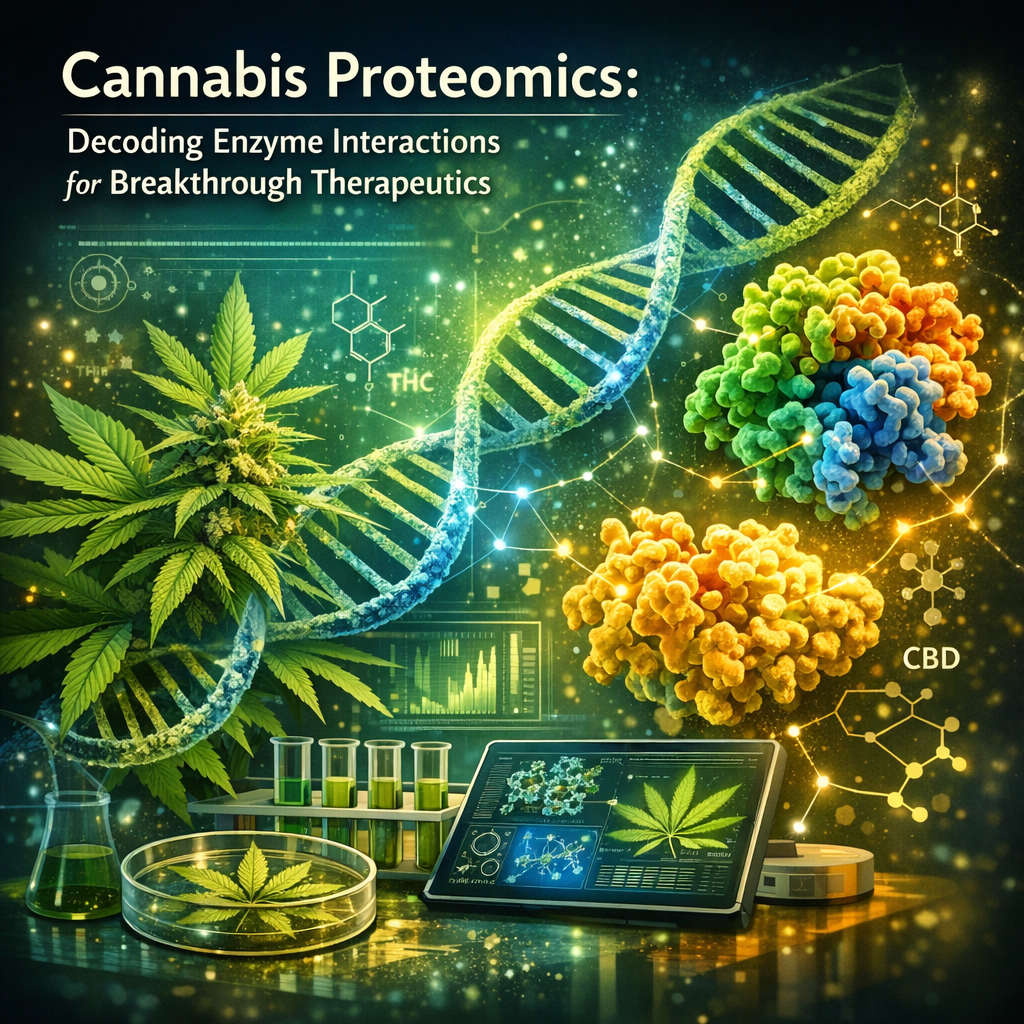
Cannabis Proteomics: Decoding Enzyme Interactions for Breakthrough Therapeutics
Introduction
The therapeutic potential of cannabis has been a focal point of both anecdotal evidence and scientific research for decades. In recent years, the realm of proteomics—the large-scale study of proteins, particularly their structures and functions—has emerged as a promising field for deciphering cannabis’s complex interactions with the human body. Proteomics provides a detailed view of proteins’ involvement in health and disease management. In the context of cannabis, proteomic studies aim to elucidate how the plant’s biologically active compounds, primarily cannabinoids, interact with various proteins and enzymes within the body.
Cannabis proteomics focuses on revealing the interaction between cannabinoids and enzymes, potentially unlocking new therapeutic avenues for diseases that are currently difficult to manage. This exploration is particularly crucial for conditions like chronic pain, epilepsy, and multiple sclerosis, where traditional treatments may fall short. Understanding the enzyme interactions at the molecular level allows researchers and medical professionals to innovate targeted therapies involving specific cannabinoids. These therapies can be more effective and have fewer side effects compared to broad-spectrum cannabis products.
Moreover, cannabis proteomics can shed light on the plant itself, offering insights into the unique enzymatic pathways that dictate cannabinoid production. This knowledge could revolutionize cannabis cultivation, allowing for the development of strains with tailored cannabinoid profiles optimized for specific therapeutic needs. In concert with personalized medicine, proteomics could transform how patients receive treatment, ensuring that cannabis-based interventions are as effective as possible for individual health profiles.
The intersection of cannabis and proteomics stands at the frontier of medical research, presenting a myriad of possibilities for innovation in therapeutics. As scientists continue to decode the complex web of protein interactions modulated by cannabis compounds, the understanding of its full potential as a therapeutic agent in the medical community is growing. This blog explores recent advances in this field, highlighting professional and medical studies that pioneer the use of cannabis proteomics for breakthrough therapies.
Features
One of the cornerstone studies in the field of cannabis proteomics was conducted by researchers aiming to map out cannabinoid interactions within the human proteome. Published in the [Journal of Proteome Research](https://pubs.acs.org/loi/jprobs), this study employed advanced proteomics techniques to pinpoint specific interactions between THC, CBD, and human enzymes that play a role in inflammation and pain modulation. The findings revealed that cannabinoids interact with numerous proteins beyond the well-known CB1 and CB2 receptors. For instance, cannabinoids can modulate the activity of cytochrome P450 enzymes, which are pivotal in drug metabolism, suggesting a pathway by which cannabis could influence the processing of other medications.
In another study, published in [Scientific Reports](https://www.nature.com/srep/), scientists explored how CBD affects protein expression in brain tissues of patients with epilepsy. The study found that CBD modulates a group of proteins involved in synaptic function, highlighting a potential mechanism by which CBD exerts its anticonvulsant effects. These proteomic insights underscore the importance of understanding protein interactions for developing more targeted and effective therapeutic strategies.
The field of proteomics has also contributed significantly to unraveling how cannabis affects neurological disorders. A study in the journal [Molecular & Cellular Proteomics](https://www.mcponline.org/) unveiled the influence of THC on neuroprotective pathways, providing evidence that certain proteins involved in oxidative stress response may be targets of cannabinoid action. This has major implications for neurodegenerative diseases such as Alzheimer’s, where oxidative stress plays a crucial role.
These studies emphasize the critical role of proteomics in advancing our understanding of cannabis’s multifaceted effects. Realizing the potential of cannabinoids through proteomics not only advances scientific knowledge but also paves the way for developing novel cannabis-based therapeutics that are finely tuned to the molecular landscape of individual patients.
Conclusion
Cannabis proteomics stands at the cutting edge of therapeutic research, offering a new paradigm in drug discovery and development. By understanding how cannabinoids interact with the proteome, scientists and medical professionals can pioneer therapies that are both personalized and highly effective. As research continues to evolve, the marriage of cannabis science and proteomics promises to reshape the landscape of medical treatment, offering hope and options for patients worldwide.
References
– [Journal of Proteome Research](https://pubs.acs.org/loi/jprobs)
– [Scientific Reports](https://www.nature.com/srep/)
– [Molecular & Cellular Proteomics](https://www.mcponline.org/)
Concise Summary
Cannabis proteomics is an innovative field that investigates how cannabis’s active compounds interact with proteins in the body, potentially leading to new therapies for conditions like chronic pain, epilepsy, and multiple sclerosis. By mapping these interactions, research can yield targeted treatments with fewer side effects. Studies highlight cannabinoid modulation of proteins involved in inflammation, brain function, and oxidative stress. The field also informs cannabis cultivation by understanding cannabinoid biosynthesis, facilitating personalized medicine. Overall, cannabis proteomics offers significant promise for new therapeutic developments and personalized healthcare.