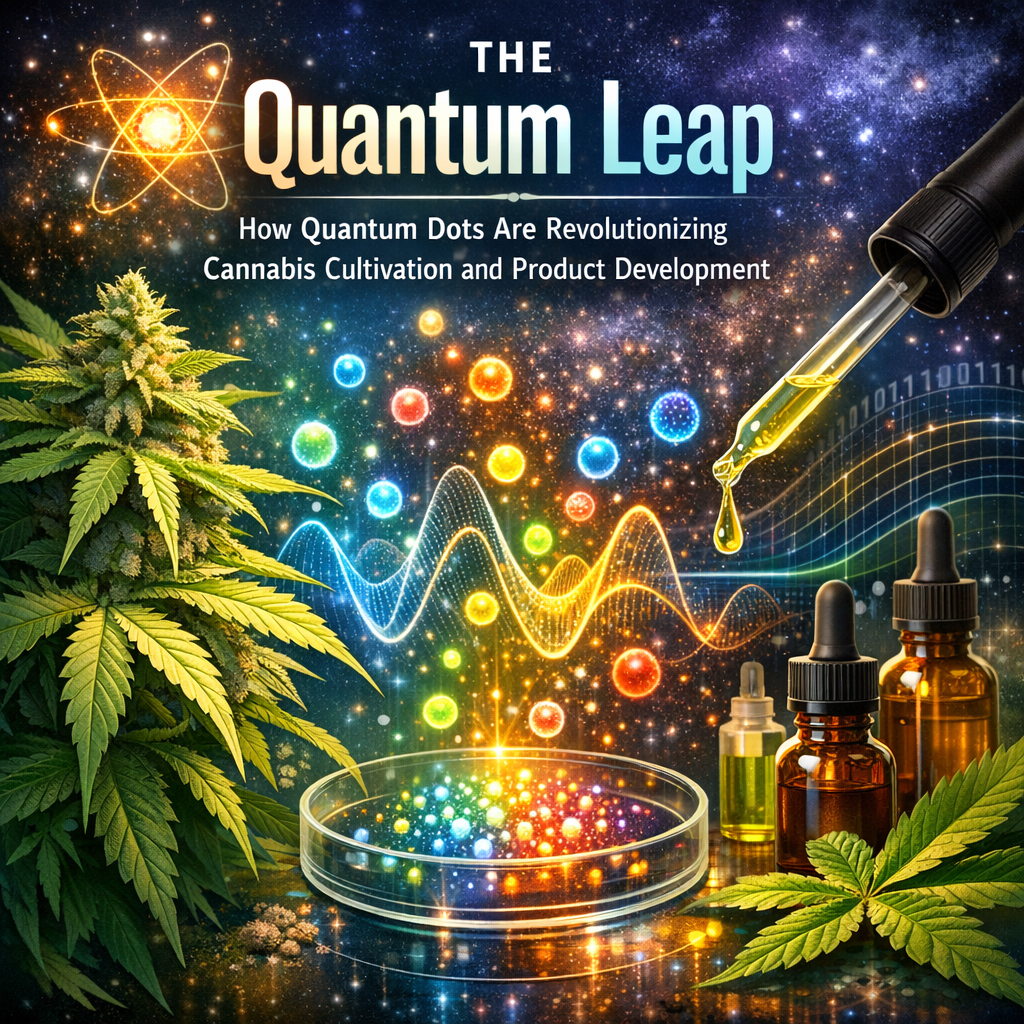
Cannabis Quantum Biology: The Cutting-Edge Science that Could Revolutionize Cultivation and Product Development
Introduction
In recent years, the cannabis industry has experienced a significant surge in interest from both consumers and professionals. As legislation evolves to accommodate the growing acceptance of cannabis, the need for innovative approaches to cultivation and product development becomes increasingly important. Enter the world of quantum biology—a pioneering field that explores the intersection of quantum mechanics and biological processes. This emerging discipline has the potential to transform our understanding of cannabis cultivation and product development, leading to more efficient methods and novel applications of this versatile plant.
Quantum biology focuses on investigating the intriguing ways in which quantum phenomena influence biological systems. These phenomena, which include quantum coherence, entanglement, and tunneling, have traditionally been associated with the realm of physics at the atomic and subatomic levels. However, recent research suggests that these principles may also play a substantial role in the intricate processes that underpin life itself, including the growth and development of plants like cannabis.
One of the profound insights gained from quantum biology is the concept of quantum coherence, which refers to the ability of biological systems to maintain highly ordered quantum states. In the context of cannabis, quantum coherence could revolutionize the way we think about plant physiology by revealing new insights into photosynthesis, nutrient uptake, and stress responses. This, in turn, could lead to unprecedented advances in cultivation techniques, allowing producers to optimize growth conditions and improve yields. Furthermore, exploring the intricacies of quantum coherence in plants could help identify specific genes or pathways that enhance these quantum effects, paving the way for genetically optimized cannabis strains designed for maximum efficiency.
Moreover, the application of quantum tunneling—another fascinating quantum phenomenon—to cannabis cultivation could unlock potential breakthroughs in plant resistance. Quantum tunneling refers to the ability of particles to pass through energy barriers that, according to classical physics, would be insurmountable. By understanding and leveraging this process, cannabis cultivators could potentially enhance their plants’ resilience to pests and diseases, reducing the reliance on chemical pesticides and promoting a more sustainable approach to agriculture. This may lead to identifying new, naturally occurring compounds in cannabis that deter pests, further reducing the need for synthetic interventions.
The exciting potential of quantum biology extends beyond cultivation and into product development. The study of how quantum mechanics influences chemical reactions and molecular interactions could lead to the creation of cannabis products with enhanced bioavailability and targeted effects. As researchers continue to explore these possibilities, the implications for both medical and recreational cannabis use are vast, with opportunities to tailor products to individual needs and preferences. This could involve creating custom cannabinoid profiles to cater to ailments ranging from chronic pain to anxiety, offering safer and more effective treatment options.
Features
A growing body of research is beginning to shed light on the potential applications of quantum biology in the field of cannabis cultivation and product development. A pivotal study conducted by researchers at the University of California, Berkeley, explored the role of quantum coherence in photosynthesis, demonstrating that quantum effects could enhance the efficiency of energy transfer in plants. This research, published in the journal [Nature](https://www.nature.com/articles/nature) outlines how understanding these processes in cannabis could optimize light absorption and improve yields in both indoor and outdoor growing environments.
Further, a recent paper published in the journal [Quantum Biology](https://quantum-journal.org) explores the implications of quantum tunneling in enzyme reactions, which are crucial for nutrient uptake in plants. By applying these findings to cannabis cultivation, scientists are exploring ways to promote more efficient uptake of nutrients, potentially leading to more robust plant growth and reduced resource inputs.
In another groundbreaking study, researchers at the University of Bristol investigated the potential impact of quantum entanglement on plant communication and defense mechanisms. Published in [Science Advances](https://advances.sciencemag.org), the study suggests that these quantum effects could play a role in how cannabis plants respond to environmental stressors. Understanding these mechanisms could guide the development of novel strategies to enhance plant resilience, reducing the need for synthetic pesticides and fostering more sustainable cultivation practices.
The integration of quantum biology into cannabis product development holds equally promising prospects. The precise control of molecular and electronic interactions at the quantum level could lead to significant improvements in cannabis extraction processes, resulting in products with superior purity and efficacy. Furthermore, advances in quantum biology could pave the way for the development of targeted delivery systems, allowing for customized or personalized cannabis formulations to cater to specific medical conditions or recreational preferences.
Conclusion
As the field of quantum biology continues to evolve, its potential impact on cannabis cultivation and product development becomes increasingly apparent. By embracing the principles of quantum mechanics, the cannabis industry stands on the brink of a new frontier, one in which cultivation practices are more efficient, products are more effective, and sustainability is prioritized. With ongoing research and collaboration between scientists, cultivators, and industry professionals, the future of cannabis in the quantum age promises transformative possibilities that could benefit consumers and the planet alike.
Concise Summary
The burgeoning field of quantum biology is poised to revolutionize cannabis cultivation and product development by applying quantum mechanics principles like quantum coherence, entanglement, and tunneling. The research suggests these phenomena can enhance energy efficiency in photosynthesis, strengthen plant resistance, and refine chemical interactions for superior product purity and targeted effects. Such innovations promise optimized growth, yields, and resilience in cannabis plants, along with personalized product formulations that better serve medical and recreational demands, moving the industry toward sustainability and efficiency on this transformative frontier.