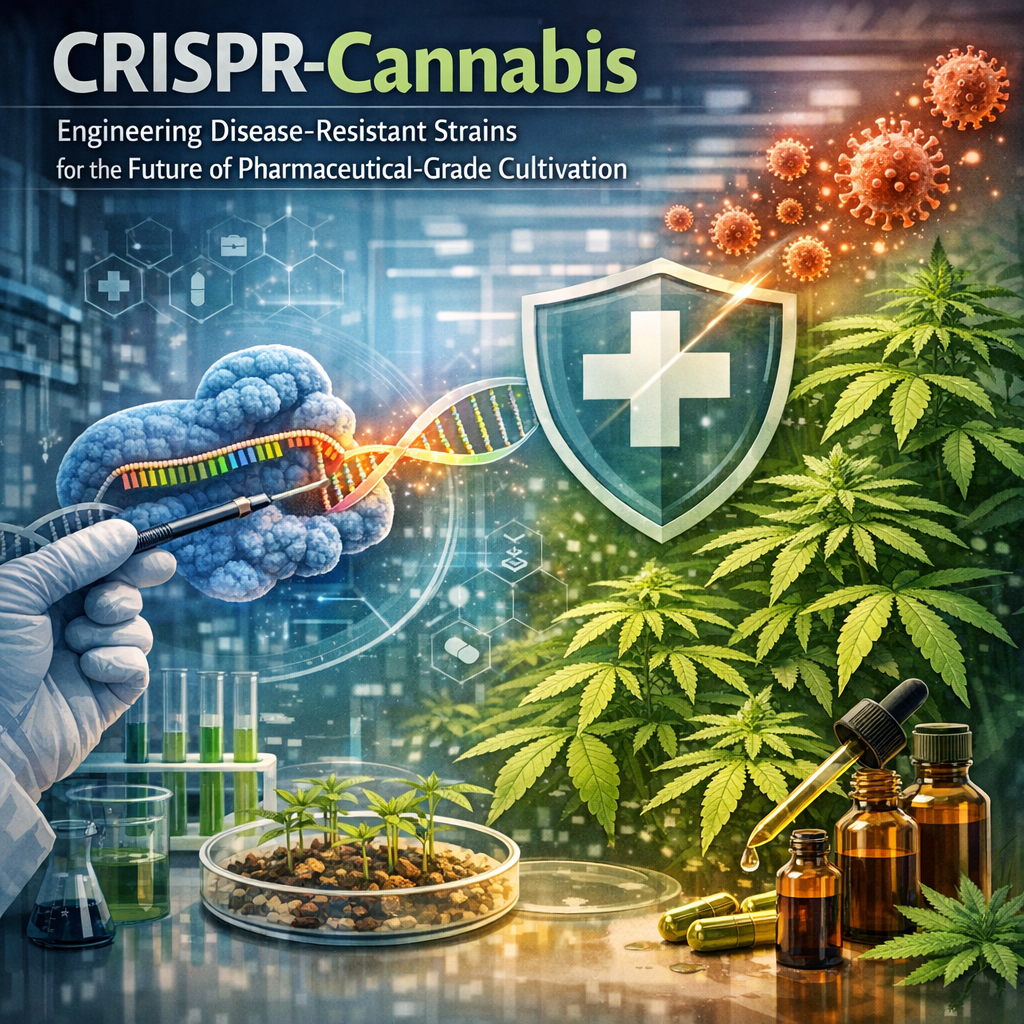
CRISPR-Cannabis: Engineering Disease-Resistant Strains for the Future of Pharmaceutical-Grade Cultivation
In recent years, the cannabis industry has experienced an unprecedented surge in innovation and research. As countries continue to adjust their regulations and embrace the therapeutic potential of cannabis, there is an increasing demand for pharmaceutical-grade cannabis products. One of the cutting-edge technologies making waves in this field is CRISPR-Cas9, a revolutionary gene-editing tool that allows scientists to modify plant genetics with unprecedented precision. This innovation stands to redefine disease-resistant cannabis cultivation, enhancing both yield and quality.
CRISPR, which stands for Clustered Regularly Interspaced Short Palindromic Repeats, is a naturally occurring system used by bacteria to defend against viruses. It involves an RNA sequence that guides the Cas9 enzyme to a specific location in the genome, where it can make precise cuts, enabling the addition, removal, or alteration of specific DNA sequences. This technology is incredibly versatile, offering potential applications across multiple fields, from agriculture to medicine.
For cannabis cultivators, the implications of CRISPR are profound. Traditional breeding techniques, while effective, are time-consuming and often result in unpredictable genetic outcomes. By contrast, CRISPR allows for targeted modifications, facilitating the development of strains that exhibit specific desirable traits, such as enhanced resistance to pathogens, improved cannabinoid profiles, and faster growth cycles. Such advancements are invaluable in the context of pharmaceutical-grade cannabis production, where consistency and quality control are paramount.
The application of CRISPR technology in cannabis cultivation is not without its challenges. Genetic modification remains a contentious topic, hampered by regulatory barriers and ethical considerations. Moreover, the complexity of the cannabis genome presents its own set of hurdles for researchers aiming to edit its DNA. However, despite these challenges, the potential benefits are difficult to ignore. CRISPR has the capacity to usher in a new era of cannabis cultivation, one where disease-resistant plants could significantly reduce the reliance on chemical pesticides, minimize crop loss, and ensure a steady supply of high-quality cannabis to meet the growing demands of the medical and recreational markets.
Features
The burgeoning field of CRISPR technology in cannabis cultivation is supported by an array of studies and research efforts aimed at elucidating its potential. Notably, a study published in *Plant Science* in 2020 demonstrated the feasibility of using CRISPR-Cas9 for precise genome editing in cannabis. The researchers successfully targeted specific genes associated with cannabinoid biosynthesis, paving the way for strains with customized cannabinoid and terpene profiles.
Another pivotal study from the *Journal of Integrative Plant Biology* explored the use of CRISPR to enhance disease resistance in plants. By targeting genes known to increase susceptibility to pathogens, such as powdery mildew and gray mold, researchers were able to develop plant strains that exhibited increased resilience. This research, while focused on crops like tomatoes and rice, holds promising implications for cannabis cultivation as well.
Furthermore, a 2021 study in [*Frontiers in Plant Science*](https://www.frontiersin.org/articles/10.3389/fpls.2021.667379/full) discussed how CRISPR could be employed to optimize secondary metabolite pathways in cannabis, streamlining the production of essential cannabinoids, terpenes, and flavonoids. This could ultimately lead to strains specifically tailored for various medical applications, from pain relief to anti-inflammatory properties.
The [Medical Cannabis Research Collaborative](https://mcrc-initiative.com/), a network of researchers and institutions focused on advancing the scientific study of cannabis, has also conducted projects assessing CRISPR’s role in enhancing plant resilience and therapeutic potential. Their work emphasizes the importance of understanding and manipulating the cannabis genome to maximize the plant’s desirable characteristics.
These studies illustrate that the integration of CRISPR with cannabis cultivation is not just theoretical but an ongoing scientific endeavor with practical implications. As research progresses, it will become increasingly feasible to produce disease-resistant, high-yield cannabis strains that meet stringent pharmaceutical standards, offering consistent and reliable products for consumers and healthcare providers alike.
Conclusion
CRISPR-Cas9 heralds a transformative era in cannabis cultivation, offering precise and reliable methods to engineer disease-resistant strains. Despite the challenges posed by ethical and regulatory landscapes, the potential for CRISPR to revolutionize pharmaceutical-grade cannabis cultivation is immense. As research continues, it promises to enhance the quality, consistency, and safety of cannabis products, paving the way for a new standard in medical cannabis production and offering untold benefits to both consumers and the industry.
References
1. [Plant Science Study on CRISPR-Cas9 in Cannabis](https://www.sciencedirect.com/science/article/abs/pii/S0168945220303545)
2. [Journal of Integrative Plant Biology on CRISPR and Disease Resistance](https://onlinelibrary.wiley.com/doi/full/10.1111/jipb.13078)
3. [Frontiers in Plant Science on CRISPR in Secondary Metabolites](https://www.frontiersin.org/articles/10.3389/fpls.2021.667379/full)
4. [Medical Cannabis Research Collaborative](https://mcrc-initiative.com/)
Concise Summary:
CRISPR-Cas9 is transforming the cannabis industry by enabling precise genetic modifications for developing disease-resistant strains and enhancing quality and yield. Despite ethical and regulatory challenges, this technology offers a path towards reliable, pharmaceutical-grade cannabis, meeting the growing demands of medical and recreational markets. With ongoing research and practical applications, CRISPR promises to enhance the therapeutic potential and cultivation efficiency of cannabis, paving the way for consistent, high-quality cannabis products.