Cryogenic Milling and Sieving for Trichome Isolation: Preserving Volatiles Prior to Solventless Extraction
Introduction
In the rapidly evolving landscape of **cannabis processing**, there is a constant quest for methods that enhance the quality, potency, and efficiency of product extraction. Among the techniques gaining momentum is **cryogenic milling**, combined with sieving for **trichome isolation**. This innovative approach promises to preserve the delicate volatiles inherent in cannabis prior to **solventless extraction**, ensuring that the end product is both potent and true to the plant’s original essence.
**Trichomes**, the tiny, glandular structures on the surface of cannabis leaves and flowers, are the source of **cannabinoids** and **terpenes** that give each strain its unique characteristics. Traditional methods of extraction risk degrading these delicate elements, especially the volatile terpenes that contribute to flavor and aroma. Solventless extraction methods, such as dry sifting or ice water separation, have sought to preserve these qualities, but optimizing the initial isolation of trichomes could significantly enhance their effectiveness.
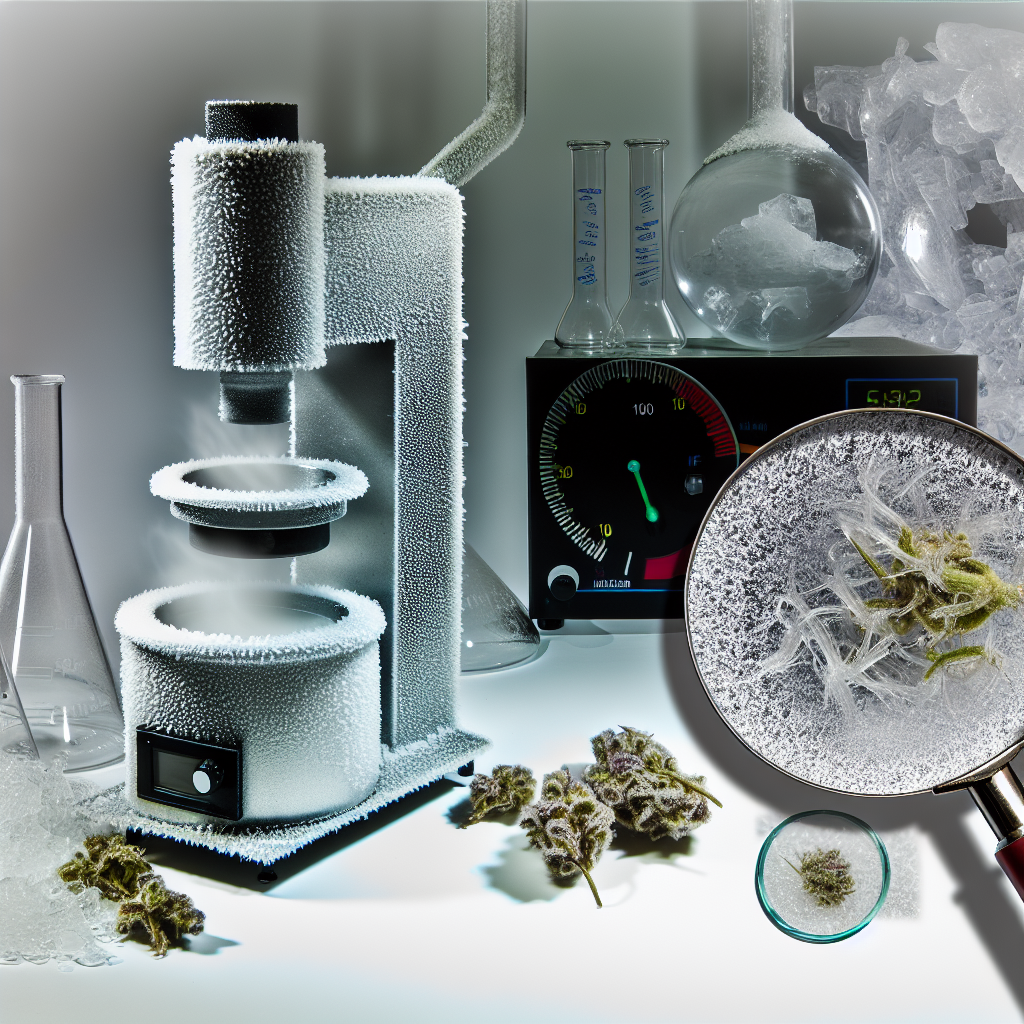
Cryogenic milling presents an intriguing solution. This process involves freezing the cannabis plant material to extremely low temperatures using **liquid nitrogen**, making it brittle and easier to break apart. This brittleness facilitates the gentle isolation of trichomes without damaging their volatile contents. The subsequent sieving process sorts these trichomes by size and purity, offering a refined product ready for high-quality solventless extraction.
Preserving volatiles is critical not only for consumer enjoyment but also for medical applications where consistent composition is crucial. The use of sub-zero temperatures in cryogenic milling minimizes the loss of terpenes, which are prone to degradation at higher temperatures. As a result, the cannabis industry is increasingly exploring this method to ensure that products meet high standards of quality and efficacy. For both consumers and professionals, understanding the potential of cryogenic milling and sieving could lead to better products and outcomes.
Features
Recent developments in **cryogenic milling** have attracted attention within the scientific community. A study published in the [Journal of Supercritical Fluids](https://www.journals.elsevier.com/the-journal-of-supercritical-fluids) demonstrated that cryogenic processing leads to a significant reduction in the degradation of **terpenes** and **cannabinoids** compared to conventional milling methods. The low temperatures employed prevent the volatilization of these compounds, thus maintaining their integrity from plant to product.
Furthermore, the methodology supports the production of uniform particle sizes through the **sieving process**, which is crucial for achieving consistency in solventless extraction techniques. A research article from [Industrial Crops and Products](https://www.journals.elsevier.com/industrial-crops-and-products) outlined how precise particle size can impact the yield and quality of extractable compounds. The controlled environment of cryogenic milling allows for tailored particle size management, which can be optimized for different extraction technologies.
In addition to improving the quality of the extracted product, cryogenic milling and sieving offer environmental benefits. **Solventless extraction** eliminates the use of chemical solvents, which can be harmful to the environment and require additional processing steps to remove residues. Instead, this method focuses on physical methods to ensure a clean end product, resonating with the growing consumer demand for **sustainable practices** in cannabis production.
The application of cryogenic milling and sieving can also extend to other arenas of cannabis processing, such as enhancing the quality of concentrates and edibles. Clinics relying on consistent cannabinoid profiles for medical treatments may find this advantageous, as maintaining the integrity of the trichomes ensures that specific cannabinoid and terpene profiles are preserved. The result is a more predictable and replicable product that aligns with the therapeutic intentions behind **medical cannabis** use.
Conclusion
Cryogenic milling and sieving for trichome isolation represent a compelling advancement in cannabis processing, promising to preserve the plant’s volatile compounds more effectively than traditional methods. By maintaining **terpene** and **cannabinoid integrity**, this technology supports both the quality of consumer products and the consistency crucial in medical applications. As the cannabis industry continues to innovate, methods like these may well set the standard for future extraction processes, ensuring safer, more sustainable, and superior products for all stakeholders involved.
Concise Summary
Cryogenic milling combined with sieving is an innovative method in **cannabis processing** that enhances the preservation of volatile compounds like **terpenes** and **cannabinoids** during **trichome isolation**. By using liquid nitrogen to freeze material, it avoids damage and ensures high-quality **solventless extraction**. Studies show that this method minimizes compound degradation, offering environmental benefits by eliminating chemical solvents. The method is beneficial for both commercial and **medical cannabis** applications, where consistent compound profiles are crucial. This process not only improves product quality but also aligns with the growing consumer demand for sustainable practices.