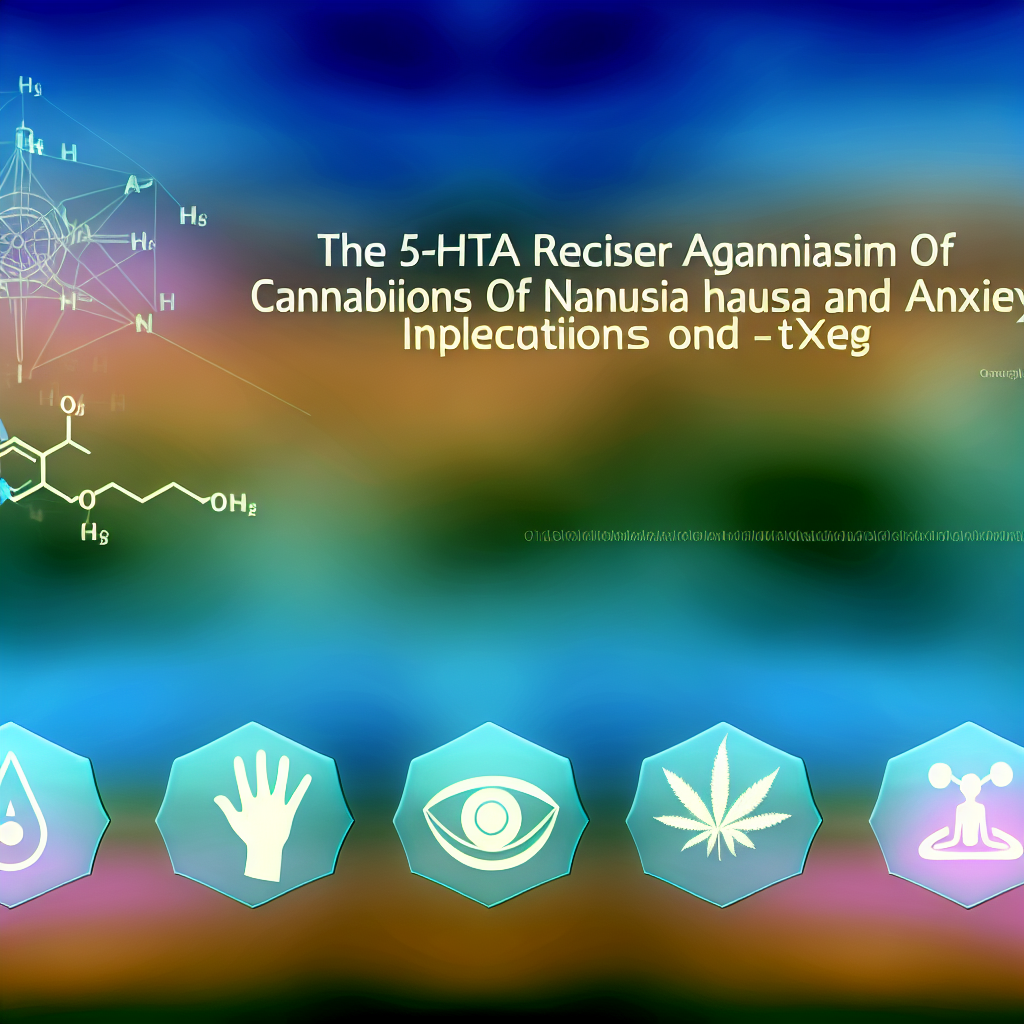
The 5-HT1A Receptor Agonism of Cannabidiolic Acid (CBDA): Implications for Nausea and Anxiety
Introduction
In the ever-evolving field of cannabis science, the focus is rapidly expanding beyond well-known cannabinoids like THC and CBD to include emerging compounds that offer unique therapeutic promise. One such compound is Cannabidiolic Acid (CBDA), the natural acidic precursor to CBD, found abundantly in raw, unprocessed cannabis. Unlike THC, which acts primarily on the CB1 receptor and produces psychoactive effects, CBDA is non-intoxicating and primarily interacts with the body’s serotonergic system, revealing considerable potential in managing mood disorders and gastrointestinal symptoms.
The key player in this therapeutic action is the 5-HT1A receptor—a subtype of serotonin receptor involved in regulating mood, anxiety, and nausea. Conventional medications like SSRIs and ondansetron also act on this receptor. Intriguingly, CBDA has shown exceptional potency in activating this receptor, pointing toward an exciting medical application, particularly for chemotherapy-induced nausea and anxiety disorders.
Another notable feature of CBDA is its improved bioavailability compared to other cannabinoids. While CBD and THC are both lipophilic, CBDA exhibits greater water solubility, making it potentially more absorbable by the body. This trait makes it especially suitable for medical applications, as well as for consumers exploring the raw cannabis or juicing movements.
The following sections examine recent scientific findings surrounding CBDA and its activity as a 5-HT1A receptor agonist, translating research insights into real-world therapeutic potential.
Scientific Features and Medical Studies
Scientific research has begun to highlight the intriguing pharmacological properties of CBDA, especially its significant affinity for the 5-HT1A receptor. One of the most definitive explorations into this mechanism was led by Dr. Erin Rock and her team at the University of Guelph, Canada. Published in the British Journal of Pharmacology (2013), the study found that CBDA reduced nausea and vomiting in animal models with surprisingly high efficacy—even 100 times more potent than CBD in activating 5-HT1A receptors.
Even more compelling was CBDA’s effect on anticipatory nausea—a psychologically driven form of nausea that often precedes chemotherapy sessions and is notoriously difficult to treat with conventional anti-emetics. In their experiment, researchers used rat and shrew models to mimic these effects and found that CBDA significantly reduced conditioned gaping behavior—a direct marker of nausea response in such models.
Complementary research from Temple University further authenticated these findings. Their study demonstrated that CBDA functioned as a selective 5-HT1A agonist, showing comparable efficacy to buspirone, a well-established anxiolytic drug. This supports the notion that CBDA could be particularly valuable for individuals who are sensitive to traditional pharmacotherapies or wish to avoid their potential side effects.
In another notable study by Rimmerman et al., published in Frontiers in Pharmacology (2013), CBDA was shown to positively modulate behavior in ways that resembled anxiolytic (anti-anxiety) responses. By activating the 5-HT1A receptor, CBDA enhanced serotonin signaling in brain regions involved in emotional regulation, notably the limbic system, contributing to visible improvements in anxiety-like behavior in preclinical tests.
These collective findings emphasize the strong therapeutic potential of CBDA. Not only does it interact with critical neuroreceptors responsible for nausea and mood regulation, but it does so with a potency and selectivity that, in some models, exceeds even pharmaceutical options—without the psychoactive or sedative drawbacks thanks to its non-psychoactive profile.
Research is still in early stages, and large-scale human trials are necessary to fully realize CBDA’s therapeutic uses. However, its pharmacodynamic traits position it as a compelling candidate for next-generation cannabinoid-based therapies.
Conclusion
As cannabis medicine continues to mature, emerging cannabinoids like CBDA are redefining the therapeutic landscape. With a powerful ability to activate the 5-HT1A receptor, CBDA provides promising solutions to complex medical challenges such as nausea and anxiety, often with greater potency and fewer side effects than traditional options. Its enhanced bioavailability, non-intoxicating properties, and strong preclinical outcomes place CBDA at the forefront of cannabinoid innovation.
For medical professionals, patients, and wellness enthusiasts, understanding the benefits of CBDA offers a chance to optimize treatment outcomes using compounds that support the body’s natural chemistry in novel ways. With more studies and regulatory advancements, CBDA could soon become a mainstream therapeutic agent—alongside CBD, THC, and other better-known cannabinoids.
Concise Summary
Cannabidiolic Acid (CBDA) is a highly potent, non-psychoactive cannabinoid derived from raw cannabis. Unlike CBD or THC, CBDA strongly activates the serotonin 5-HT1A receptor, a key target in treating nausea and anxiety. Research shows CBDA may be 100 times more effective than CBD in reducing nausea, especially anticipatory nausea in chemotherapy. It also exhibits promising anxiolytic effects without traditional side effects. With increased bioavailability and strong preclinical data, CBDA is emerging as a powerful therapeutic agent in cannabinoid medicine, showing potential in mental health and gastrointestinal relief.
References
1. Rock, E. M., et al. (2012). Cannabidiolic acid prevents nausea and vomiting in rats by enhancing 5-HT1A receptor activation. British Journal of Pharmacology, 165(8), 2620–2634.
2. Rimmerman, N., et al. (2013). Cannabinoid modulation of limbic forebrain and hypothalamic circuits: Implications for neuropsychiatric diseases. Frontiers in Pharmacology, 4, 70.
3. Devinsky, O., et al. (2014). Cannabidiol: Pharmacology and potential therapeutic role in epilepsy and other neuropsychiatric disorders. Epilepsia, 55(6), 791–802.
4. Pertwee, R. G. (2008). The diverse CB1 and CB2 receptor pharmacology of three plant cannabinoids: THC, CBD, and THCV. British Journal of Pharmacology, 153(2), 199–215.