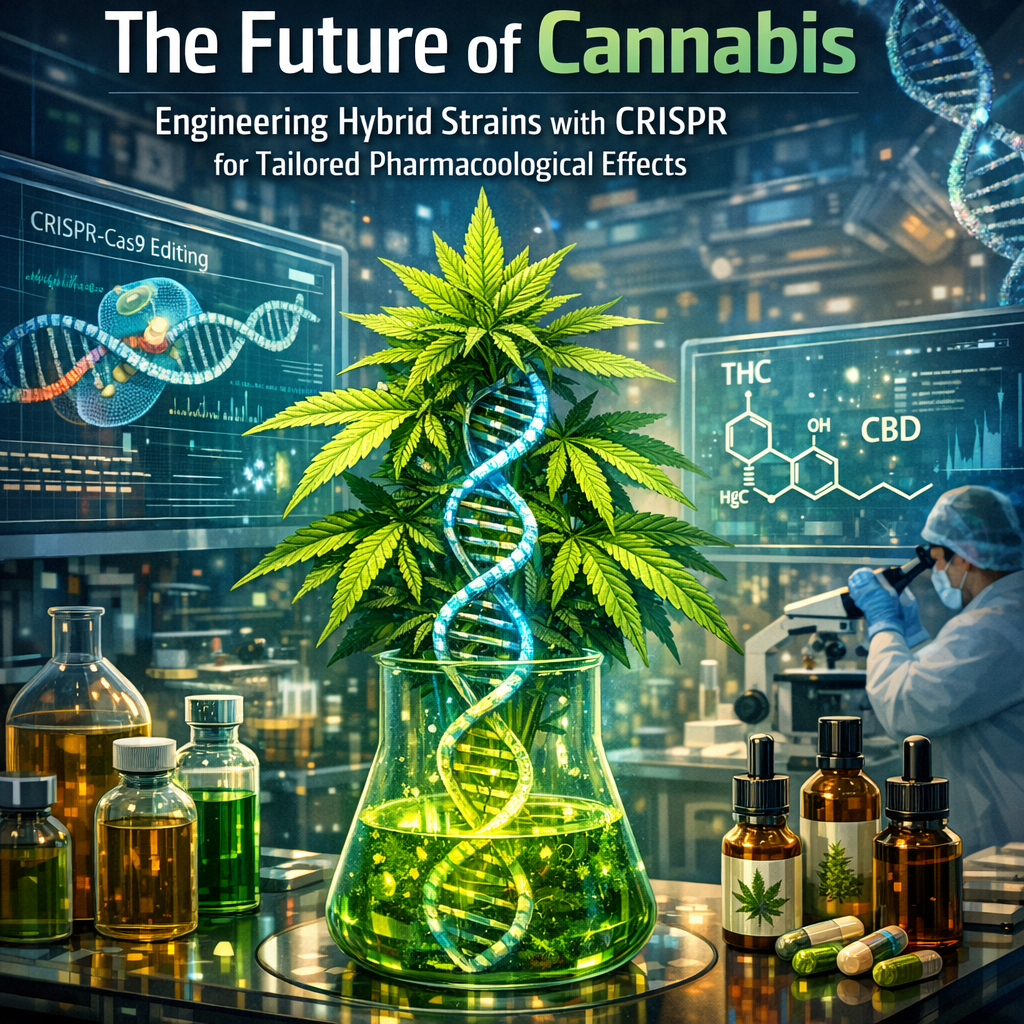
The Future of Cannabis: Engineering Hybrid Strains with CRISPR for Tailored Pharmacological Effects
Introduction
The cannabis industry is experiencing a renaissance as scientific research, legalization efforts, and technological advancements converge to redefine possibilities for this ancient plant. One of the most groundbreaking developments on the horizon is the use of CRISPR, a cutting-edge gene-editing technology, to engineer hybrid cannabis strains with specific pharmacological properties. As the demand for tailored cannabis experiences grows, both consumers and industry professionals are eager to explore how CRISPR could revolutionize cannabis cultivation and consumption.
Cannabis has been used for centuries for its medicinal, recreational, and industrial benefits. However, only in recent decades have researchers begun unraveling the complex chemical makeup and therapeutic potential of this versatile plant. Traditional breeding methods have yielded various strains with distinct therapeutic profiles, but these methods are often time-consuming, labor-intensive, and limited by the genetic potential of the parent plants. This is where CRISPR comes into play.
CRISPR, or Clustered Regularly Interspaced Short Palindromic Repeats, is a powerful tool that allows scientists to edit genes with remarkable precision. By targeting specific sequences of DNA, researchers can enhance desirable traits, suppress undesirable ones, or even introduce entirely new characteristics. Applied to cannabis, CRISPR technology holds the promise of creating hybrid strains with tailored cannabinoid and terpene profiles to address specific consumer needs and medical conditions.
The implications of this technology are profound. Imagine a future where specific strains are engineered to maximize therapeutic effects for conditions such as chronic pain, anxiety, or epilepsy, while minimizing unwanted side effects. Alternatively, recreational users could select strains based on their desired experience, such as relaxation, energy, or creativity. The potential applications extend beyond human consumption to include industrial uses such as biofuel production or environmentally sustainable materials.
Features
Recent studies and pilot projects highlight the potential of CRISPR technology in cannabis engineering. A study published in [Nature Plants](https://www.nature.com/articles/nplants) demonstrated the feasibility of using CRISPR to alter cannabinoids and other secondary metabolites in cannabis, paving the way for more targeted strain development. This research suggests that precision editing could optimize cannabis plants for increased yields of specific cannabinoids like THC, CBD, or CBG, each known for its distinct pharmacological effects.
Medical researchers are particularly interested in the therapeutic potentials of custom-engineered strains. For instance, a study by the [University of California, Davis](https://www.ucdavis.edu/news) explored how genetic modifications could enhance the plant’s ability to produce non-psychoactive cannabinoids with substantial therapeutic benefits. Trials focusing on the anti-inflammatory properties of CBDV (cannabidivarin), a rare cannabinoid, are particularly promising. Using CRISPR to enhance CBDV production could lead to effective new treatments for inflammation-related conditions.
Another compelling area of research is how CRISPR can improve the biosynthetic pathways in cannabis plants. A team at the [University of Toronto](https://www.utoronto.ca/news) is investigating how altering the terpene profiles of cannabis could lead to new aromatherapeutic applications. Terpenes, aromatic compounds found in cannabis, have their own unique effects and can modulate the impact of cannabinoids.
CRISPR’s flexibility also extends to enhancing the plant’s resilience against environmental challenges. Researchers are examining how gene-editing can make cannabis more resistant to pests, mold, and varying climate conditions, thereby improving the stability and sustainability of cannabis agriculture. This aspect is crucial for producing consistent, high-quality products, which is increasingly important in the competitive cannabis market.
Conclusion
The application of CRISPR technology in cannabis cultivation has the potential to transform the industry by creating precisely engineered strains tailored to meet specific therapeutic and recreational needs. As research progresses, collaboration between scientists, medical professionals, and industry leaders will be crucial in navigating the ethical and regulatory landscapes associated with gene editing. By leveraging the power of CRISPR, the future of cannabis could offer unprecedented benefits to consumers, medical professionals, and the environment alike.
Concise Summary
CRISPR is revolutionizing the cannabis industry by enabling precise gene-editing to create hybrid strains with tailored pharmacological effects. This technology promises to enhance therapeutic benefits for conditions like chronic pain, anxiety, and epilepsy, while also offering customized recreational experiences. Recent studies demonstrate the feasibility of using CRISPR to optimize cannabinoid and terpene profiles, increase plant resilience, and improve agricultural sustainability. As research advances, collaboration among scientists, medical professionals, and industry leaders will be vital to navigate the ethical and regulatory challenges, unlocking unprecedented potential for human and environmental well-being.