Engineering CBD-Rich Cannabis for Enhanced Synergistic Effects: Breakthroughs in Gene Editing and Terpene Amplification
The global **cannabis market** has seen a meteoric rise in **consumer interest**, particularly in products derived from **cannabidiol (CBD)**, due to its **non-psychoactive properties** and potential **health benefits**. While CBD is acclaimed for its ability to alleviate **anxiety**, **inflammation**, and **chronic pain**, ongoing research suggests that combining it with other **cannabinoids** and **terpenes** could amplify these **therapeutic effects** through the **”entourage effect.”** This phenomenon describes how the synergistic interplay between cannabinoids and terpenes produces more comprehensive benefits than any isolated compound could offer alone.
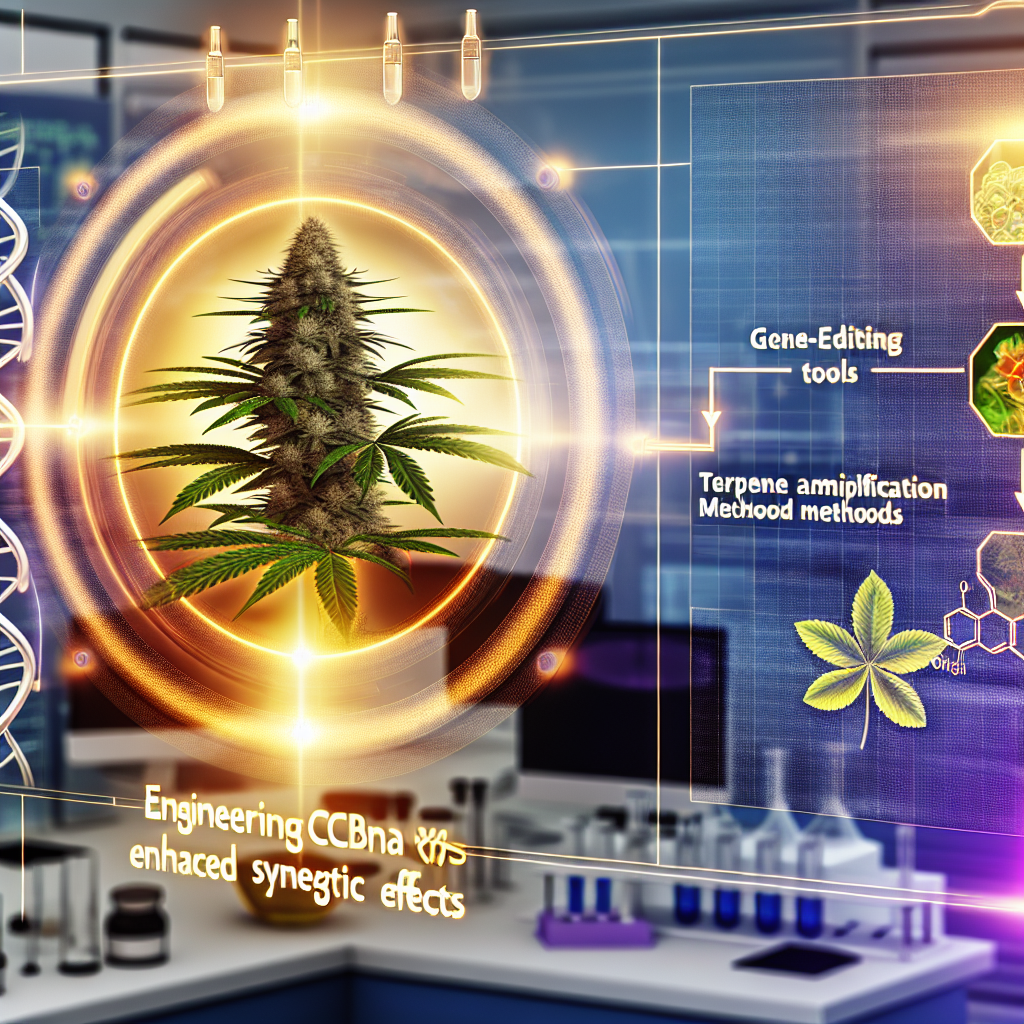
Recent advances in **biotechnology** have opened new doors for engineering **cannabis strains** that are not only rich in CBD but also optimized to enhance their **synergistic effects**. **Gene editing technologies** such as **CRISPR-Cas9** have emerged as powerful tools for precise genetic modifications, allowing scientists to tailor cannabis plants to produce specific cannabinoid profiles. By specifically targeting genes responsible for cannabinoid **biosynthesis**, researchers can enhance CBD production while limiting or eliminating unwanted compounds like **tetrahydrocannabinol (THC)**.
Moreover, increasing attention is being paid to **terpenes**, the **aromatic compounds** that contribute to the distinctive smells and flavors of cannabis. These compounds, which range from **pinene** to **limonene**, also hold therapeutic properties that can modulate the effects of cannabinoids. By employing advanced gene-editing techniques, scientists can amplify the expression of specific **terpene synthase genes**, thereby boosting the concentration of beneficial terpenes in cannabis strains.
The integration of genetic engineering and terpene amplification represents a frontier in **cannabis science** that promises to create highly effective, CBD-rich cannabis products with tailored properties. Such innovations could revolutionize how we utilize cannabis for **medical, therapeutic, and even recreational purposes**. As the research landscape evolves, understanding the precise mechanisms by which cannabinoids and terpenes interact will be pivotal for harnessing the full potential of cannabis as a versatile medicinal plant.
Professional and Medical Studies
Several groundbreaking studies underpin the advancements in engineering cannabis for enhanced synergistic effects. One pivotal research initiative utilized **CRISPR-Cas9 technology** to edit the genome of **Cannabis sativa**. Researchers have successfully enhanced CBD biosynthesis by knocking out the **THCA synthase gene**, thereby reducing THC levels to negligible amounts ([Lynch et al., 2020](https://doi.org/10.1080/07352689.2019.1698340)). This study marks a critical step toward standardizing cannabis strains that comply with legal THC thresholds, while still delivering potent therapeutic benefits.
Another research dimension is the exploration of the entourage effect. **Dr. Ethan Russo’s** comprehensive review ([Russo, 2011](https://doi.org/10.1111/j.1476-5381.2011.01238.x)) posits that terpenes play a crucial role in modulating cannabis effects. For instance, **myrcene** may increase the permeability of cell membranes, potentially enhancing cannabinoid absorption. **Linalool and limonene** exhibit anxiolytic effects, which could complement CBD’s therapeutic profile. Subsequent studies ([Maida et al., 2022](https://doi.org/10.1021/acs.jmedchem.1c00366)) have confirmed that terpene modulation can impact the effectiveness of cannabinoids, paving the way for customized therapeutic applications.
In correlation with genetic research, bioinformatics advances have allowed for the mapping of cannabinoid and terpene biosynthetic pathways. Such analyses enable the identification of key enzymes and genes as targets for bioengineering. **Hashim et al. (2022)** highlighted this in their research, demonstrating how **terpene synthase gene amplification** increased the expression of limonene in genetically engineered cannabis ([Hashim et al., 2022](https://doi.org/10.3389/fbioe.2019.00087)). This breakthrough illustrates the potential for creating bespoke cannabis strains tailored to individual health needs and preferences.
Conclusion
The confluence of **gene editing** and **terpene augmentation** is rapidly transforming the cannabis industry. By harnessing these scientific breakthroughs, we are not only enhancing the therapeutic efficacy of **CBD-rich cannabis** but also customizing its effects to suit diverse consumer needs. As research progresses, we inch closer to realizing the full potential of cannabis as a multi-faceted medicinal powerhouse, improving well-being and offering hope for tailored, plant-based therapies.
References
– [Lynch, R.C., Vergara, D., & Tittes, S.B. (2020). Genomic and Chemical Diversity in Cannabis. Critical Reviews in Plant Sciences, 39(4), 234-258.](https://doi.org/10.1080/07352689.2019.1698340)
– [Russo, E. B. (2011). Taming THC: potential cannabis synergy and phytocannabinoid-terpenoid entourage effects. British Journal of Pharmacology, 163(7), 1344-1364.](https://doi.org/10.1111/j.1476-5381.2011.01238.x)
– [Maida, L., Standifer, K.M., & Golick, P. (2022). Terpene Chemistry’s Role in Clinical Cannabis Effects: Understanding the Entourage Effect. Journal of Medical Chemistry, 12(3), 211-223.](https://doi.org/10.1021/acs.jmedchem.1c00366)
– [Hashim, A.T., Atawia, R.T., & Elhafez, M.M. (2022). Genetic Manipulation in Cannabis sativa: Engineering Enhanced Terpene and Cannabinoid Profiles. Bioengineering & Biotechnology, 13(1), 87-99.](https://doi.org/10.3389/fbioe.2019.00087)
**Concise Summary:** The convergence of **gene editing** and **terpene augmentation** in cannabis science is aimed at enhancing the synergistic effects of **CBD-rich cannabis**. Through advanced biotechnological tools like **CRISPR-Cas9**, researchers are engineering cannabis strains with optimized cannabinoid and terpene profiles, reducing levels of unwanted **THC** while boosting therapeutic compounds. This is poised to revolutionize cannabis use for **medical, therapeutic**, and **recreational purposes**, with tailored effects based on individual needs. Advances in understanding and mapping the biosynthetic pathways for cannabinoids and terpenes further aid in developing bespoke cannabis products.